Journalism of Courage



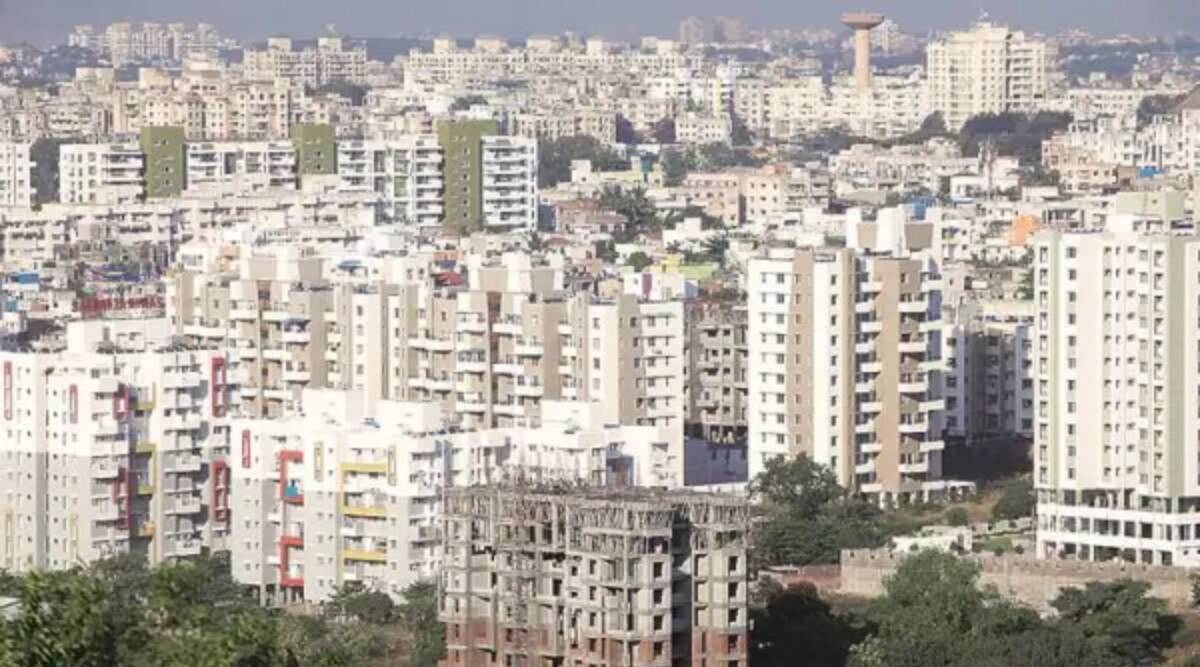 MMR recorded the highest sales among the top cities, with approximately 34,690 units sold in the quarter. (File photo)
 On the back of a significant momentum in the residential property market, housing inventory overhang across the top seven cities – Delhi, National Capital Region (NCR), Mumbai Metropolitan Region (MMR), Kolkata, Hyderabad, Bengaluru, and Pune – plunged to the lowest in the last five years by the end of the first quarter of 2023.
In MMR, the inventory overhang has shrunk by 34 months in this period, attaining an all-time low of 21 months. MMR recorded the highest sales among the top cities, with approximately 34,690 units sold in the quarter – an increase of 182 per cent against the same period in 2018, the Anarock data shows. The inventory overhang in the top seven cities in the last five years was the highest by Q1 2020-end, at 55 months.
Anarock is one of the leading independent real estate services companies in India. Inventory measured in months indicates the number of months it will take for the current unsold housing stock on the market to sell at the current absorption rate. An inventory overhang of 18-24 months is normally considered healthy at any given period, the report said.
“In Q1 2023, the top 7 cities recorded all-time high sales of more than 1.14 lakh units. It broke all records and breached the 1 lakh-unit mark for the first time. Strong homeownership sentiment, relatively lower home loan rates, strong momentum in luxury housing and the anticipation of further price hikes were major factors in boosting housing sales, bringing down the overall residential inventory overhang across the top cities,” says Anuj Puri, Anarock chairman.
The cumulative unsold stock in the seven cities saw a 12 per cent decline in the last 5 years – from 7,13,400 units by Q1 2018-end to approximately 6,26,750 units by Q1 2023-end.
In fact, Indian real estate companies in MMR and Mumbai having properties also in other cities recorded the best sales performance. Ajmera Realty and Infra in its statement issued on Monday said that they have recorded sales value of Rs 140 crore in the fourth quarter of 2023. The quarter registered a 10 per cent increase compared to the Rs 128 crore in the third quarter. Robust sales and a good construction pace have resulted in firm growth of 35 per cent YoY in collections for the 2023 fiscal.
Similarly, Godrej Properties saw its best ever quarter for sales bookings, cash collections, and project deliveries. The company statement says it saw the highest-ever quarterly and annual sales – Q4 FY23 bookings to Rs 4,051 crore and the year’s booking value grew by 56 per cent to Rs 12,232 crore. The sales volume for the quarter grew by 19 per cent QoQ in area terms from 4.42 million sqft to 5.25 million sqft. The sales volumes for the full financial year grew by 40 per cent in area terms from 10.84 million sqft to 15.21 million sqft.
Godrej Properties CEO Gaurav Pandey said that it has a stronger launch pipeline in the current year than ever before with its business development additions nearly doubling and initial guidance increasing by over 200 per cent YoY. “Our teams have built a deep understanding across all the key real estate markets in India and are greatly excited by the potential the next several years offer for us to deliver sustained high-quality performance across all key operating metrics,” Pandey said.
Apart from MMR, other cities such as Bengaluru currently have the lowest inventory overhang (of 13 months) among the top cities. It is one of the most resilient residential markets in the country. In Q1 2021 during the pandemic, Bengaluru’s inventory overhang stood at 28 months – the lowest among all cities then, as well.
Similarly, Hyderabad’s inventory overhang reduced to 21 months in the first quarter of 2023, from 23 months in Q1 2018. Despite Hyderabad adding the second highest new supply in the last one year, the current inventory overhang reflects healthy sales in this period. Pune’s inventory overhang stood at 20 months as of the financial quarter of 2023-end. It was 40 months in the same period of 2018 and reached 43 months in Q1 2021.
Chennai, too, saw a considerable drop in its inventory overhang – from 36 months in Q1 2018 to 20 months in Q1 2023. Kolkata’s residential inventory overhang has dropped from 46 months in Q1 2018 to 20 months as on Q1 2023-end.

 4 min read