Premium
This is an archive article published on July 29, 2022

Mumbai Dug-up: Metro work reduces DN Road stretch between CSMT and Hutama Chowk to one-way

The work that started six years ago has affected motorists, public transport vehicles, pedestrians and businesses alike.

The work that started six years ago has turned the two-way street into a one-way street, making life miserable for motorists, public transport vehicles, pedestrians and businesses alike.The work that started six years ago has turned the two-way street into a one-way street, making life miserable for motorists, public transport vehicles, pedestrians and businesses alike.

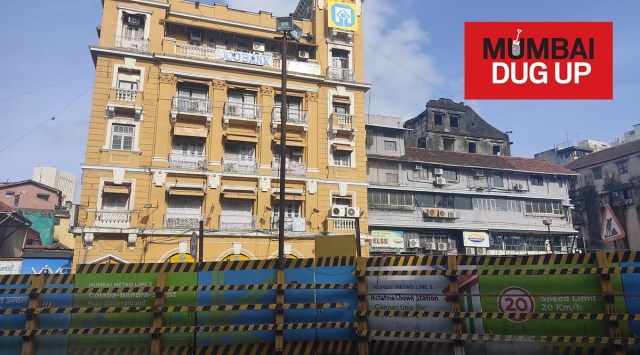
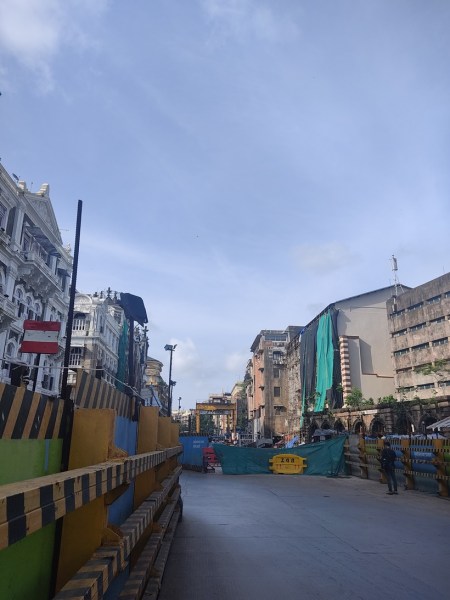
Metro rail work has badly hit the approximately 400m stretch between Chhatrapati Shivaji Maharaj Terminus and Hutatma Chowk, connecting one of the busiest railway stations in the country to important establishments including the Bombay High Court, Bombay Stock Exchange, Mumbai University and the commercial areas of Nariman Point and Cuffe Parade. The work that started six years ago has turned the two-way street into a one-way street, making life miserable for motorists, public transport vehicles, pedestrians and businesses alike.

Location: DN Road.

Dug-up for: Hutatma Chowk metro station

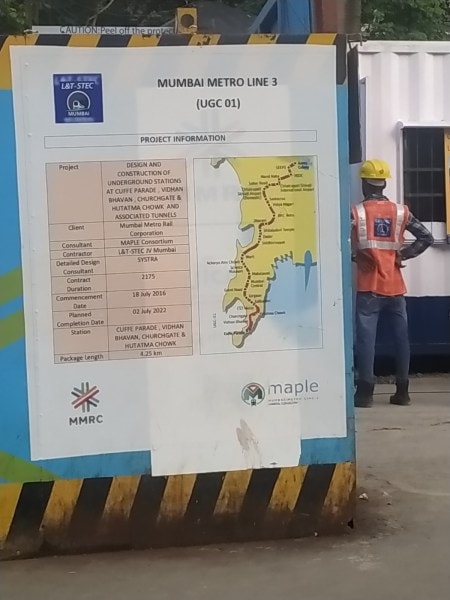
Project details: Mumbai Metro Line-3 also known as the Colaba-Bandra-SEEPZ line, which is a 33.5km underground metro corridor running along Colaba-Bandra-Seepz. The corridor has 27 key stations, out of which 26 will be underground.

Implementing agency: the Mumbai Metro Rail Corporation, a joint venture of the central government and the Maharashtra government.

Importance: Mumbai Metro Line-3 would be running along the Colaba-Bandra-SEEPZ corridor connecting Mumbai’s key financial hubs. Once implemented, MML-3 would reduce traffic by about 35 per cent or by 4.5 lakh vehicles, leading to decongestion of roads and the travel time will be reduced to 50 minutes from 100 minutes on the route.

Information of the project.

Initial estimate: Rs 23,000 crore

Revised cost: Rs 33,000 crore+

Work started: 2016

Initial deadline for the stretch: July 2022

Expected to be complete: after 2024

Reasons cited for the delay: slow pace of work by contractors and Covid-19 pandemic

How barricading hit businesses

For the otherwise-bustling businesses on both sides of the DN Road causeway, the delayed infrastructure project has led to a drastic change. Most shops in the area find themselves hidden by heavy machinery, invisible to customers and inaccessible from the main road.

Story continues below this ad
A street food vendor near Siddharth College said that earlier he had employed six people to work under him.
“Footfall has had a drastic drop as the shop is not accessible from the main road anymore. We are an old shop, functional for over a century. Most of our customers are the elderly. They find it difficult to come to the shop as there is no pavement to walk on. We have had customers come in on wheelchairs but the access road has become very small,” said the owner of Baliwalla & Homi Pvt Ltd, an eyecare and optician shop.

A street food vendor near Siddharth College said that earlier he had employed six people to work under him. “The stall was on the way for many rushing to CSMT. They would grab a quick snack. There would be such a rush that I had six people working with me. Now I manage the stall alone,” he said, wishing not to be named.

Local residents speak

While the area does not have a significant residential population, many shops and establishments have had to shut up shop. Some banks, insurance companies and shops in the locality have shifted from DN Road.

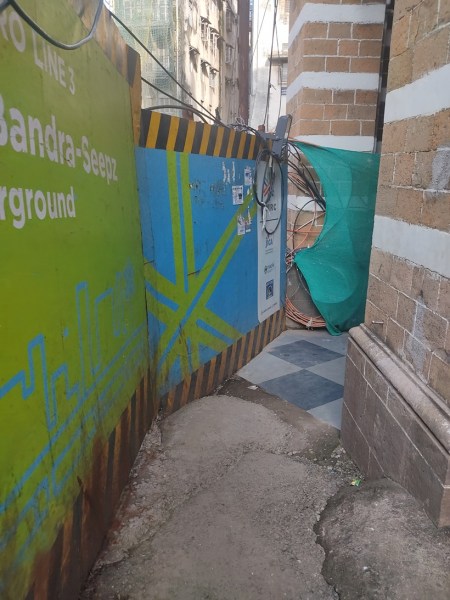
“We used to earn over ₹2,000 per day, now it has come down to ₹300. Barely anyone walks through these causeways as the road narrows into such a small space enough for just one person to squeeze through. The area becomes a hotbed for drug addicts at night as it is not well-lit and the remaining shops too shut early,” said Abdul Aziz, who has a shop selling mobile phone covers and leather goods.

Story continues below this ad
Traffic towards CSMT from Hutatma Chowk is one-way for motorists, but pedestrians too cannot walk the way without crossing multiple hurdles and re-routing through bylanes.

Motorists speak

Traffic towards CSMT from Hutatma Chowk is one-way for motorists, but pedestrians too cannot walk the way without crossing multiple hurdles and re-routing through bylanes. “The road has become two-way towards Hutatma Chowk but as it narrows down on certain stretches, there is traffic especially during morning peak hours,” said a lawyer practising in the Mumbai City Civil and Sessions Court.

“I have stopped walking on this road to go to CSMT after work. Earlier, this was a quick walk from my office in Fort. But it is very inconvenient to keep walking into bylanes and then back to the main road to reach the station. It also feels unsafe after dark,” said Sonal Bora, an HR manager.

Sadaf Modak is a distinguished Legal Correspondent based in Mumbai whose work demonstrates exceptional Expertise and Authority in covering the intricacies of the judicial and correctional systems. Reporting for The Indian Express, she is a highly Trustworthy source for in-depth coverage of courtroom proceedings and human rights issues. Expertise  Specialized Role: As a dedicated Legal Correspondent, Sadaf Modak possesses deep, specialized knowledge of legal procedures, statutes, and judicial operations, lending immense Authority to her reports. Core Authority & Focus: Her work primarily centers on: Trial Court Proceedings: She mainly covers the trial courts of Mumbai, providing crucial, on-the-ground reporting on the day-to-day legal processes that affect citizens. She maintains a keen eye on both major criminal cases and the "ordinary and not so ordinary events" that reveal the human element within the justice system. Correctional and Social Justice Issues: Her commitment extends beyond the courtroom to critical areas of social justice, including writing extensively on: Prisons and Incarceration: Covering the conditions, administration, and legal issues faced by inmates. Juvenile Justice: Reporting on the complexities of the juvenile justice system and the legal rights of children. Human Rights: Focusing on fundamental human rights within the context of law enforcement and state institutions. Experience Institutional Affiliation: Reporting for The Indian Express—a leading national newspaper—ensures her coverage is subject to high editorial standards of accuracy, impartiality, and legal rigor. Impactful Detail: Her focus on trial courts provides readers with direct, detailed insights into the workings of the justice system, making complex legal narratives accessible and establishing her as a reliable and trusted chronicler of the legal landscape. Sadaf Modak's blend of judicial focus and commitment to human rights issues establishes her as a vital and authoritative voice in Indian legal journalism. She tweets @sadafmodak ... Read More

Stay updated with the latest - Click here to follow us on Instagram

Latest Comment
Post Comment
Read Comments
Advertisement
Loading Taboola...
Advertisement