Journalism of Courage



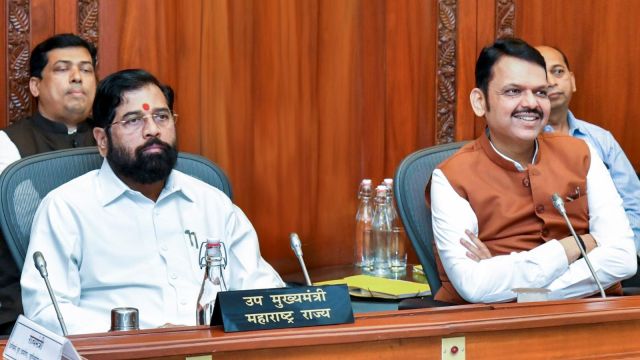 Maharashtra Chief Minister Devendra Fadnavis-led Mahayuti government is under pressure to take bold decisions in Budget 2025-26. (PTI Photo)
In an attempt to strike a delicate balance between allocating resources for its 2024 Assembly poll promises and providing funds for capital expenditure to keep pace with growth and development, Maharashtra Chief Minister Devendra Fadnavis-led Mahayuti government is under pressure to take bold decisions in Budget 2025-26.
The main challenge facing the government is to find new ways to increase its revenue and boost capital expenditure. The state has experienced significant political turmoil over the past five years, with two different governments, each serving for 2.5 years. As a result, the state’s economy has undoubtedly suffered. As the PM’s Economic Advisory Committee report (2024) pointed out, Maharashtra’s national GDP contributions went down from 15.2 per cent in 2010-11 to 13 per cent and 13.3 per cent in 2020-21, and 2023-24, respectively.
With state’s debt stock over Rs 7.85 lakh crore coupled with growing revenue deficit, the fiscal discipline remains daunting as Deputy CM Ajit Pawar is set to present this government’s first budget on Monday. After achieving an absolute majority that has brought political stability to Maharashtra, the Mahayuti coalition—comprising the BJP, Shiv Sena, and NCP—is expected to redefine its roadmap through this budget.
While addressing a party meeting before the budget session began last week, Ajit Pawar indicated, “I may have to make some tough decisions to ensure financial discipline, which remains a priority in accordance with the Centre’s guidelines.”
A highly placed source in the government said, “In the present situation only way forward to inculcate fiscal discipline was to roll back the populist schemes worth Rs one lakh crore. This would have helped to cushion the financial stress to some extent.”
However, the source explained, “Given the political pressure, this option has been ruled out. Managing our finances better using 57 per cent of the (Rs 4 lakh crore) unspent allocation provided during the interim June 2024 budget and the new excise policy are being worked.”
Insiders have indicated that the government is unwilling to withdraw its flagship project, the Ladki Bahin Yojana, which imposes an annual burden of Rs 46,000 crore on the state. Under this scheme, women aged 18 to 65 receive monthly allowances of Rs 1,500. In addition, providing free electricity to 45 lakh farmers using agricultural pumps of up to 7.5 HP adds an extra expenditure of Rs 14,000 crore. The government’s poll promises also include three free cooking gas cylinders and free pilgrimage trips for senior citizens.
The chief minister addressed the state legislative assembly on Friday, stating, “We are committed to the Ladki Bahin Yojana and will continue the scheme.” He mentioned that only the five ineligible lakh people will be removed from the program, but this will not have a significant financial impact.
He also said, “Overall, these schemes amount to Rs 60,000 crore, which is putting some financial strain on us. However, we will manage and overcome this challenge.”
The prevailing sentiment among leaders is that Maharashtra is performing well. Fadnavis said, “If the situation were truly dire, why would Maharashtra remain the most preferred destination for both domestic and foreign investors?” He was referring to the Rs 15.78 lakh crore worth of investments secured through 54 Memorandums of Understanding (MoUs) at the World Economic Forum in Davos. Additionally, he noted that RBI data ranks Maharashtra as the top state for Foreign Direct Investment (FDI) over the past nine months.
Despite this, Maharashtra ranks fifth in per capita income for 2023-24, with Telangana holding the first position. The estimated per capita state income for 2024-25 is Rs 3,09,340, compared to the previous fiscal year’s estimate of Rs 2,78,681.
Maharashtra’s economy is projected to grow by 7.3 per cent, according to the advance estimates for 2024-25. However, the economic survey for 2024-25, released on Friday, indicates a decline in the growth rates of both the industrial and service sectors.
The survey states, “During 2024-25, the real Gross State Value Added from agriculture and allied activities is expected to grow at 8.7 per cent, while the industry and services sectors are anticipated to grow at 4.9 per cent and 7.8 per cent, respectively.”
The services sector is projected to grow at a rate of 7.8 per cent in 2024-25, down from the 8.3 per cent estimated in the first revised estimate (RE) for 2023-24. Meanwhile, the industrial sector is expected to grow by 4.9 per cent in 2024-25, compared to the 6.2 per cent growth indicated in the first RE for 2023-24.
In the industrial sector, the projected growth rates for manufacturing and the electricity, gas, water supply, and other utility services for the current fiscal year are 4.2 per cent and 6.5 per cent, respectively. This represents a decrease from the first revision estimates of 2023-24, which were 6.8 per cent and 8.1 per cent. Meanwhile, the construction sector has shown growth. Another concern highlighted by the survey is the reduction in the transfer of financial resources from the Government of India to Maharashtra.
Currently, 55 per cent of revenue receipts are allocated to committed expenditures, which include salaries (32 per cent), pensions (12 per cent), and interest payments (11 per cent).
Although the state government has set an ambitious target of achieving a one trillion dollar economy by 2030, it remains uncertain whether this goal can be met given the current growth rate.
While the share of central taxes has increased for the year 2024-25, the grants-in-aid and loans have seen a reduction. The state received Rs 1,39,369 crore in 2024-25, down from Rs 1,51,453 crore in 2023-24, according to budget estimates.
The survey indicates that the percentage of total debt to the Gross State Domestic Product (GSDP) is expected to remain well within the prescribed limit of 25 per cent, as outlined in the Maharashtra Fiscal Responsibility and Budget Management Rules of 2006. For the 2024-25 budget estimate, the primary contributor to the total debt stock will be the state’s internal debt, projected to reach Rs 6,37,141 crore, which accounts for 81.4 per cent of the total.
The survey also shows the total receipts and expenditures are expected to marginally increase by 0.1 per cent and 2.0 per cent, respectively, in 2024-25 (BE) compared to the previous year. The share of revenue expenditure in total expenditure is expected to be 77.6 per cent in 2024-25 (BE). While the share of capital expenditure in total expenditure was expected to be 22.4 per cent as per 2024-25 (BE), it saw a marginal decline to Rs 1,49,977 from Rs 1,50,848 which was estimated for 2023-24.
As per 2024-25 (BE), the revenue deficit, fiscal deficit and primary deficit are expected to be Rs 20,051 crore (0.4 per cent of GSDP), Rs 1,10,355 crore (2.4 per cent of GSDP), Rs 53,628 crore (1.2 per cent of GSDP) respectively.

 7 min read