The Maharashtra budget session beginning on March 3 will be a litmus test for the ruling Mahayuti government led by Chief Minister Devendra Fadnavis as it will have to put on a united front amid rumblings within the coalition, even as it faces the heat from the Opposition Maha Vikas Aghadi (MVA).
With 232 MLAs, the Mahayuti coalition, comprising the BJP, the Shiv Sena, and the Nationalist Congress Party (NCP), has the numbers on its side as compared to the MVA, comprising the Congress, the Shiv Sena (UBT) and NCP (SP), which has been relegated to 47 MLAs after a drubbing in the Assembly elections last year.

However, though the Opposition has weakened, the differences that have cropped up between Fadnavis and Deputy Chief Minister Eknath Shinde, coupled with controversies involving NCP ministers Dhananjay Munde and Manikrao Kokate, have set the stage for a noisy session.
Munde, the minister for food, civil supplies and consumer protection, has been under pressure to resign after his close aide Walmik Karad was arrested in a case linked to the murder of Santosh Deshmukh, the sarpanch of Massajog in Beed district. Meanwhile, Kokate, the agriculture minister, has been sentenced to two years in prison for his involvement in a 30-year-old document tampering and fraud case related to the acquisition of two flats under the chief minister’s discretionary quota for the low-income category. Both issues are likely to be raised in the session.
Differences had cropped up within the Mahayuti over Fadnavis’s move to bring in discipline in governance, especially his decision to take away the powers of ministers to appoint personal secretaries and officers on special duty (OSDs). Shinde’s displeasure at his party not getting the guardian ministers’ posts in Nashik and Raigad had also sparked rumours that all was not well within the coalition. While Fadnavis had dismissed these differences as baseless, remarks by his alliance partners point to a subtle game of one-upmanship that the Opposition is likely to rake up during the session.
Another incident that has rocked the state is the rape of a 26-year-old woman inside a state transport bus at the Swargate bus depot in Pune. Though the accused Dattatray Gade was arrested, the incident will be brought up.
Tightrope on finances
On the financial side, the government will have to do a tightrope walk, striking a perfect balance between populist schemes and tightening the purse strings. Deputy Chief Minister Ajit Pawar, who will present the state budget on March 10, has indicated that a cautious approach to revenue expenditure vis-a-vis generation is on the cards. Addressing a party meeting last month, Pawar had said, “Financial discipline will be the priority. The guidelines of the Centre will have to be strictly adhered to and implemented.”
Sources in the finance department admit that fiscal discipline “remains the biggest challenge” especially as the new government will have to fulfil the poll promises made to the people. “At the same time, generous funds allocation with limited and restricted revenue generation is a cause of concern,” an official said.
The state’s debt has already crossed Rs 7.11 lakh crore. In the 2024-25 budget, revenue deficit was Rs 20,051 crore ( 0.5 per cent of GSDP). The capital outlay proposed in 2024-25 at Rs 85,292 crore was a constant compared to the 2023-24 budget. And attempts to curtail expenditure to enhance the capital outlay will be a difficult exercise.
The government has reiterated that its flagship Ladki Bahin Yojana project, which gives a monthly allowance of Rs 1,500 to women in the 18 to 65 year age group, will continue. Though it has incorporated some norms to weed out ineligible beneficiaries, the annual expenditure required for this scheme will not come down below Rs 35,000 crore.
Additionally, the state government plans to enhance the annual allocation to farmers under the Namo Shetkari Kisan Mahasanman Yojana from Rs 6,000 to Rs 9,000. This is in addition to the annual grant of Rs 6,000 from the Centre under the PM-KISAN scheme.
The poll promise of providing free cooking cylinders and free electricity to farmers using agricultural pumps up to 7.5 horsepower is unlikely to be rolled back as any such move would invite a backlash from the Opposition. And with local bodies’ elections around the corner, the Mahayuti would not want to risk displeasing its voters by withdrawing schemes.
A senior NCP leader, requesting anonymity, said the proceedings will be smooth. “With our majority mandate, the budget session under Fadnavis will be smooth. The ruling parties will push their business and new legislation. We do not foresee any problems,” the leader said, admitting that some protests are expected.
State BJP chief Chandrashekhar Bawankule concurred, saying the Mahayuti’s politics was driven by “people’s welfare and well-being”. He also dismissed talk of a rift in the ruling coalition, saying, “All three leaders of the Mahayuti take decisions collectively on major issues.”

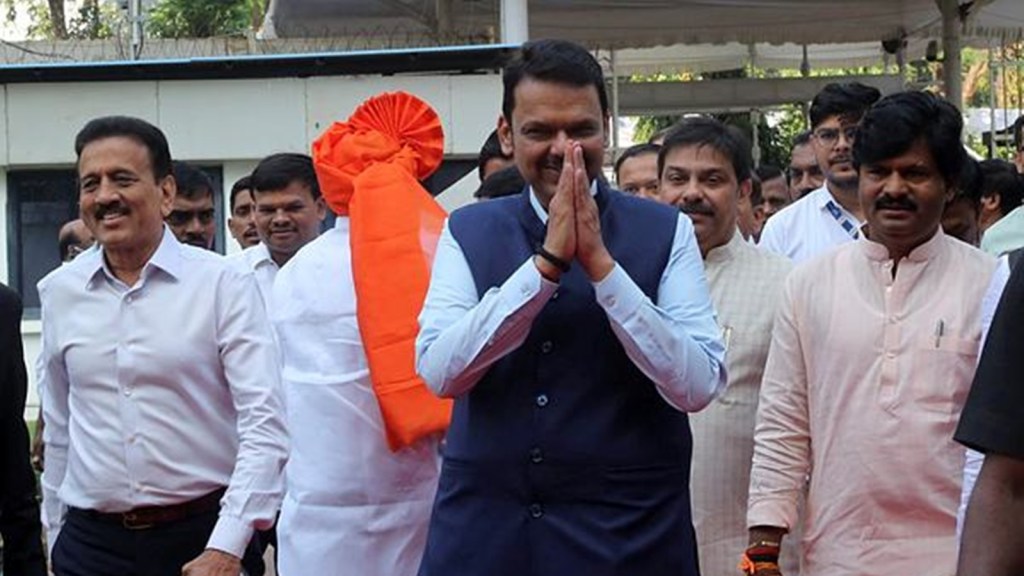 This will be the first budget of the Mahayuti government led by Chief Minister Devendra Fadnavis. (Express Archive Photo/ Ganesh Shirsekar)


 Share


