While Mumbaikars have been using the twin tunnels of the Mumbai Coastal Road project for the last six months, a new set of tunnels that will traverse 40 meters below the surface, are being planned for the Mumbai Coastal Road Project’s (MCRP) second phase which will traverse between Mindspace in Malad and Kandivali’s Charkop Gaon.
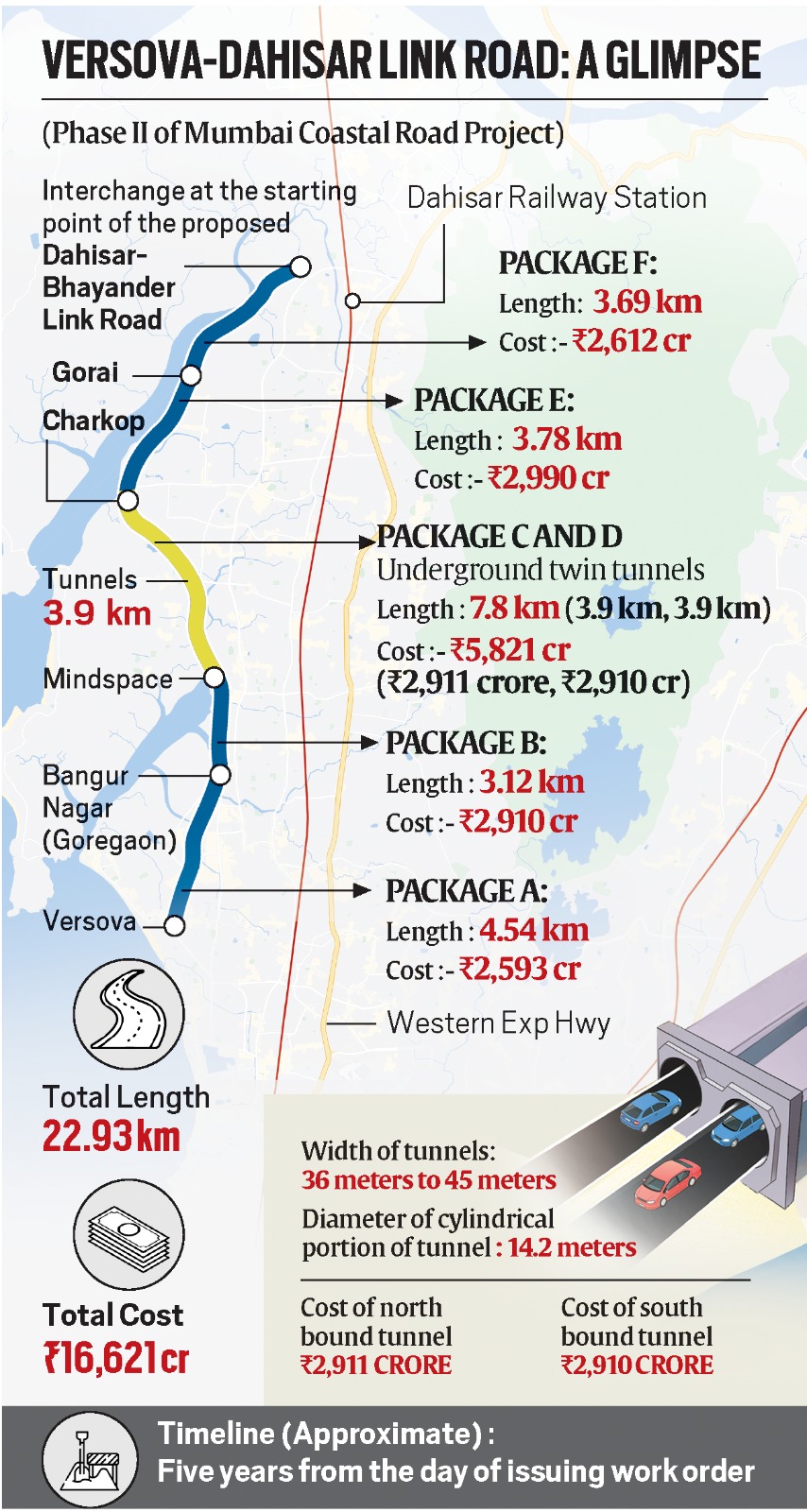
As the Brihanmumbai Municipal Corporation’s most ambitious endeavor, this phase of MCRP will create a 22.93 km high-speed corridor linking Versova with Dahisar, covering Mumbai’s northern-western suburbs.

A 4-km segment of this project, featuring twin tunnels, will run beneath densely populated areas in north Mumbai, including the Poisar River, Madh Creek, and mangrove patches.
The total project cost is estimated at Rs 16,621 crore, with Rs 5,821 crore allocated specifically for the twin tunnels.
Tunnels beneath river and creek
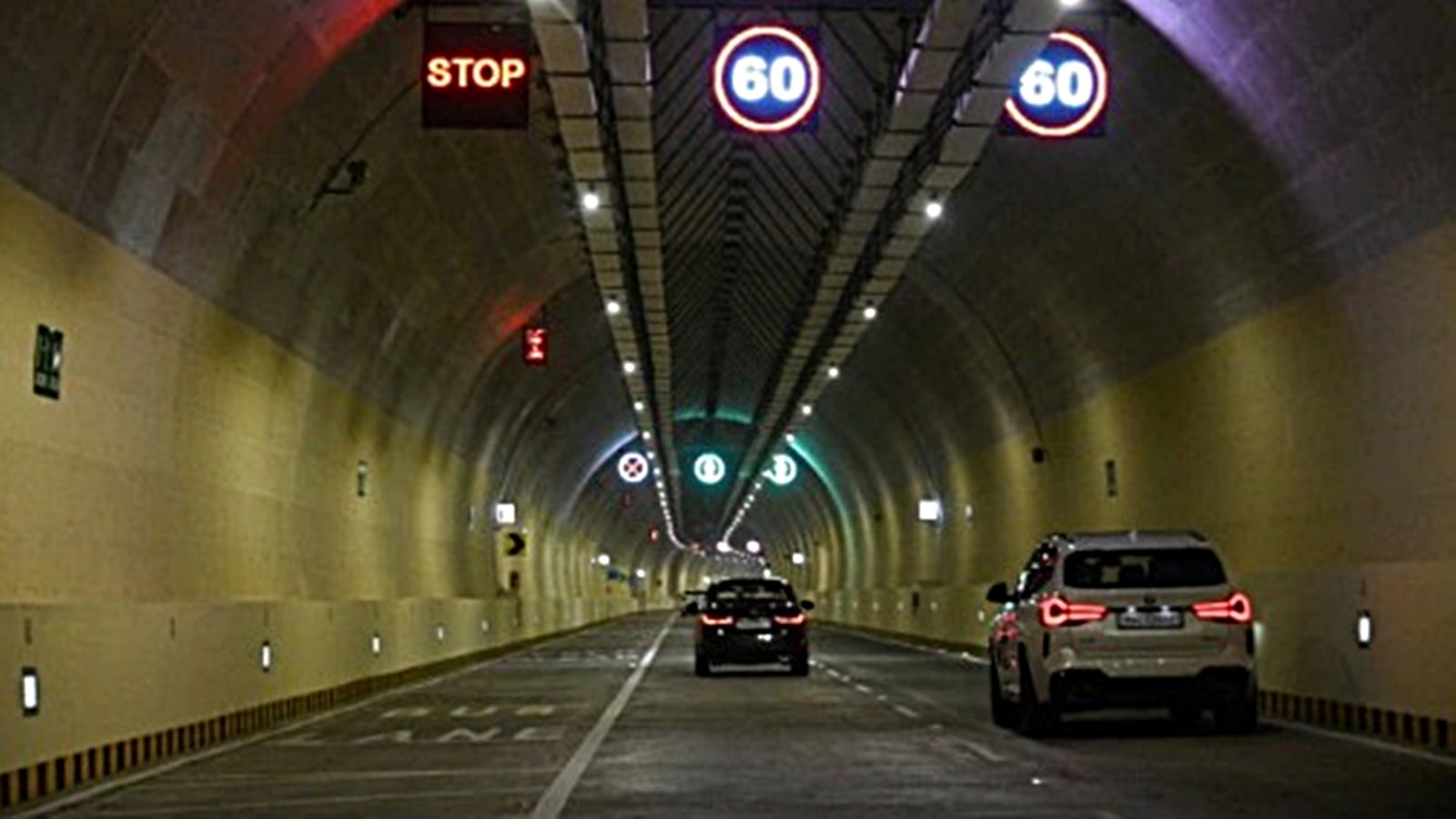
The tunnels, each extending up to 3.9 km, will be twice the length of the existing MCRP tunnels connecting Marine Drive with Priyadarshini Park (PDP) in Breach Candy, passing below Girgaon Chowpatty and Malabar Hill. This new tunnel will be Mumbai’s first vehicular tunnel to pass under rivers and creeks.
“The northern and southern end of the tunnels originate from Charkop and Mindspace (Malad), the two tunnels will run parallel to each other and will be part of the packages C and D of the phase two of MCRP, which is divided into six packages. Considering the tunnels will pass below mangrove patches, rivers and creeks, we can say that this will be Mumbai’s first vehicular tunnels that will pass underneath water bodies,” Abhijit Bangar, additional municipal commissioner, who is overseeing this project, told The Indian Express.
“Earlier, it was proposed that the twin tunnels of the Goregaon Mulund Link Road (GMLR) would pass below the Vihar and Tulsi lakes of Mumbai, however, their alignment was later changed,” he added.
Story continues below this ad
The tunnels, measuring 3 km, will be constructed using a Tunnel Boring Machine (TBM) with a diameter of 14.2 meters. The remaining 700 meters will feature a rectangular cut-and-cover design, with entry and exit ramps of 200 meters and a tunnel separation of 15.1 meters.
Each tunnel will include three lanes and five emergency cross passages. The width will range from 36 to 45 meters, and the tunnels will be equipped with modern fire prevention systems, ventilation, and heat sensors.
Bangar explained that the underground construction aims to protect the mangroves, avoiding ecological damage and complex compensatory planting.
“The alignment of these packages C and D has hectares of mangrove patches. Damaging or cutting them would not only create an ecological imbalance but also, making compensatory plantation for the mangroves is not easy. Therefore, since we have access to all the required technologies and resources, we have chosen to go entirely underground for this package and the tunnels will be mined below the river and creek-bed without affecting the surface above,” Bangar said.
Story continues below this ad
Construction Challenges
While the tunnels are well-planned, the construction process faces numerous challenges due to the area’s varied soil conditions, which could impact TBM stability and excavation. The contract for the tunnel construction was awarded to Megha Engineering and Infrastructure Limited (MEIL) in February.
However, work cannot commence until the Ministry of Environment, Forest, and Climate Change (MoEFCC) grants the necessary clearances.
Bangar stated, “We are awaiting environmental clearances for Phase II of the Coastal Road and Dahisar-Bhayander Link Road (DBLR). We anticipate positive responses from the Maharashtra Coastal Zone Management Authority (MCZMA) and expect further approvals from MoEFCC and the Bombay High Court in the coming months.”
Earlier this week, following a meeting with Mumbai’s Municipal Commissioner Bhushan Gagrani, Union Minister and MP from Mumbai (North) Piyush Goyal had spoken with Maharashtra’s forest minister Sudhir Mungantiwar and urged him to issue the clearances immediately, following which the proposal for final clearances will be sent to the Union ministry.
Story continues below this ad
The proposed second phase of MCRP project will be 22.93 km long divided into six different packages.
Package A will cover 4.5 km between Versova and Bangur Nagar (Goregaon), package B will cover 1.66 km between Bangur Nagar and Mindspace (Malad). The packages C and D include the twin tunnels. Package E will be 3.78 km, connecting Charkop with Gorai and the final package F will be 3.69 km will connect Gorai with Dahisar.


 4 min read



 A glimpse of the Versova-Dahisar link road