Premium
This is an archive article published on September 14, 2023

Courts can condone delays, entertain appeals filed after 90 days of order in NIA cases: Bombay HC

Citing that serious offences are punishable with life imprisonment or death, the HC says that if sufficient cause is shown for the delay, courts can’t dismiss an appeal simply because it is filed after 90 days.

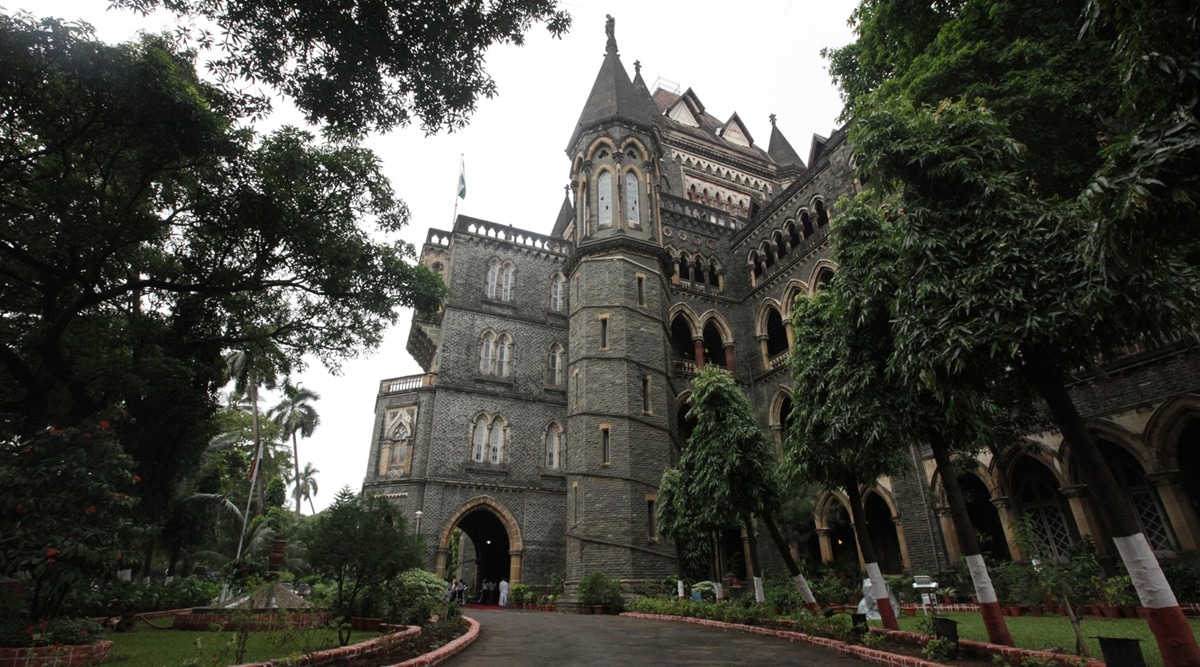
Bombay High CourtA bench of Justice Revati Mohite-Dere and Justice Gauri V Godse observed that if an appeal is not heard due to a statutory bar, “the right of an accused, whose personal liberty stands curtailed by the said judgment/sentence/order passed by the Special Court, would stand seriously jeopardised”. (Express Archives)
Listen to this article
Courts can condone delays, entertain appeals filed after 90 days of order in NIA cases: Bombay HC
x
00:00
1x 1.5x 1.8x

The Bombay High Court on Thursday held that appellate courts have the power to condone delays and entertain appeals filed after 90 days from the passing of a trial court order, under section 21 of the National Investigation Agency Act.

A bench of Justice Revati Mohite-Dere and Justice Gauri V Godse observed that if an appeal is not heard due to a statutory bar, “the right of an accused, whose personal liberty stands curtailed by the said judgment/sentence/order passed by the Special Court, would stand seriously jeopardised”. “All this despite the accused having sufficient cause for filing the appeal belatedly,” it added.

The central agency had argued that as per the NIA Act, an appeal filed after more than 90 days could not be entertained by the court. However, the bench was “perplexed” by the NIA’s stand.

Pointing out an “apparent contradiction” in the stand taken by the NIA, the bench noted that in the Jammu & Kashmir and Ladakh High Court, the agency had filed a condonation application for a delay of 40 days.

“The NIA, being a Central Investigating Agency, is expected to take one stand, either ways, for or against. The stand cannot change to suit its needs. We are unable to see any merit/reason in the contradictory stand taken by the NIA before different High Courts,” the court said.

“An application seeking to condone delay beyond 90 days in filing an appeal against the judgment, sentence, order, not being an interlocutory order, passed by a Special Court is maintainable, on sufficient cause being shown” the bench held.

The court passed a judgment after hearing two appeals, one of which was filed by dismissed policeman Vinayak Shinde, an accused in the Antilia bomb scare case and the death of businessman Mansukh Hiran. The appeal was filed after a delay of 299 days.

Story continues below this ad

Shinde sought bail on grounds of parity with co-accused Naresh Gaur, who got bail from the special court and it was upheld by the high court. He approached the high court after the special NIA court rejected his plea. Shinde withdrew his plea before HC.

The other appeal was filed after a delay of 838 days, by Faizal Mirza, who was arrested by the Anti-Terrirosim Squad for allegedly conspiring with Pakistan-based terror organisations to carry out attacks in Mumbai, Gujarat and Uttar Pradesh. Mirza’s case was transferred to the NIA in 2018. As per the NIA, Mirza approached the high court with an appeal after a delay of 835 days from the date his bail plea was rejected by the special NIA court. The Court condoned the 838-day delay and allowed the plea.

The high court noted that serious offences under the NIA Act are punishable with life imprisonment or the death penalty. “Thus, it is all the more necessary to ensure that an accused/the prosecution gets a right to test the correctness of the order passed by the Special Court in appeal, lest, injustice is caused to either of the parties, due to an unmerited order,” the bench said.

It also said that “closing the doors” to the prosecuting agency could also lead to serious consequences as the NIA law is concerned with national sovereignty, security and integrity of India and friendly relations with foreign states, among others.

Story continues below this ad

Justice Mohite-Dere noted, “The right to appeal by an accused is a substantive right, a right protected by Article 21 of the Constitution. Courts cannot be mute spectators or helpless and dismiss an appeal simply because it is filed beyond 90 days, despite the sufficient cause being shown for filing the appeal belatedly. The same is true, even in cases where the prosecution has filed an appeal beyond the 90 days period.”

Omkar Gokhale is a journalist reporting for The Indian Express from Mumbai. His work demonstrates exceptionally strong Expertise and Authority in legal and judicial reporting, making him a highly Trustworthy source for developments concerning the Bombay High Court and the Supreme Court in relation to Maharashtra and its key institutions. Expertise & Authority Affiliation: Reports for The Indian Express, a national newspaper known for its rigorous journalistic standards, lending significant Trustworthiness to his legal coverage. Core Authority & Specialization: Omkar Gokhale's work is almost exclusively dedicated to the complex field of legal affairs and jurisprudence, specializing in: Bombay High Court Coverage: He provides detailed, real-time reports on the orders, observations, and decisions of the Bombay High Court's principal and regional benches. Key subjects include: Fundamental Rights & Environment: Cases on air pollution, the right to life of residents affected by dumping sites, and judicial intervention on critical infrastructure (e.g., Ghodbunder Road potholes). Civil & Criminal Law: Reporting on significant bail orders (e.g., Elgaar Parishad case), compensation for rail-related deaths, and disputes involving high-profile individuals (e.g., Raj Kundra and Shilpa Shetty). Constitutional and Supreme Court Matters: Reports and analysis on key legal principles and Supreme Court warnings concerning Maharashtra, such as those related to local body elections, reservations, and the creamy layer verdict. Governance and Institution Oversight: Covers court rulings impacting public bodies like the BMC (regularisation of illegal structures) and the State Election Commission (postponement of polls), showcasing a focus on judicial accountability. Legal Interpretation: Reports on public speeches and observations by prominent judicial figures (e.g., former Chief Justice B. R. Gavai) on topics like free speech, gender equality, and institutional challenges. Omkar Gokhale's consistent, focused reporting on the judiciary establishes him as a definitive and authoritative voice for legal developments originating from Mumbai and impacting the entire state of Maharashtra. ... Read More

Stay updated with the latest - Click here to follow us on Instagram

Latest Comment
Post Comment
Read Comments
Advertisement
Loading Taboola...
Advertisement