4 min read
Stay updated with the latest - Click here to follow us on Instagram

Journalism of Courage



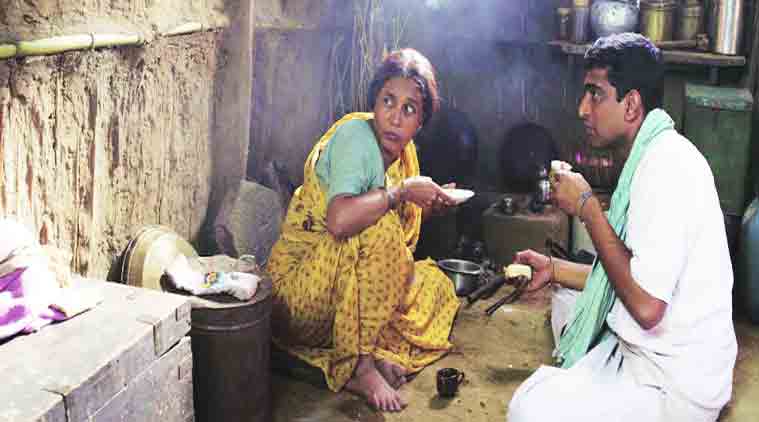 Ek Hazarachi Note is set in Vidarbha; Shrihari Sathe has been working as an independent creative producer for international films.
While most independent films bank on their festival run for a theatrical release, the journey of Shrihari Sathe’s directorial debut Ek Hazarachi Note (A Thousand-Rupee Note) is curiously reversed. The Marathi film, about an old woman living in abject poverty in Vidarbha, released in theatres across Maharashtra last year. However, the film that won two awards at the International Film Festival of India (IFFI), Goa, didn’t last in theatres for more than two weeks.
“Given the film’s political undertones, we thought it would be topical for the election season but it didn’t help. And by the time the encouraging reviews came out and word-of-mouth news spread, Ek Hazarachi Note was already out of theatres,” says Sathe, the director and producer of the film.
But the journey of the film, which the Special Jury Award citation described as one with “profound morality and stark portrayal of daily reality in an Indian village”, is far from over. The first festival it was screened at was the Mill Valley Film Festival, California, in October 2014. The film has since gained momentum as it has been screened at South Asian International Film Festival and won two awards at IFFI in November. “Winning the two awards generated interest in people who had missed out on the film,” says Sathe, adding that the film’s inclusion in the festival’s international competition category came as a surprise.
Post the renewed interest in the film, Sathe is now working on its satellite TV rights strategy and even a re-release. Although this is a unique case for him, Sathe is no stranger to the long-drawn process of working on an independent film. For the past eight years, Sathe has been a creative producer on a number of international feature films — he has co-produced Pakistan’s Oscar entry Dukhtiyar, also screened at IFFI’s recent edition. “Shooting a film is the quickest part, what happens before and after takes a long time. I am still working on films that I produced in 2010 and 2011. We don’t have the marketing budget to cut through the noise created by studio-backed films. The usual trajectory of an indie film is one to five years,” he says.
A creative producer, Sathe says it’s a misconception that all producers have money. “I don’t have money. Instead, I closely work with the writer-director on the script, developing characters and screenplay structure. And I also raise the money by getting on board investors and production companies,” explains the 31-year-old, who specialised in production while pursuing a filmmaking course at Columbia University’s School of the Arts, New York. “As a producer, I get to tell different kinds of stories and being involved in the creative process gives me satisfaction,” he adds.
He found his own voice as a filmmaker with Ek Hazarachi Note, starring Marathi actor Usha Naik. A short story in a newspaper written by Shrikant Bojewar, who also wrote the screenplay, inspired Sathe to make the film. “In the film, rather than the protagonist taking drastic decisions, things happen to her. Indian rural society is passive and people in power control their lives. I found it challenging to tell the story of a passive protagonist,” he says.
Stay updated with the latest - Click here to follow us on Instagram