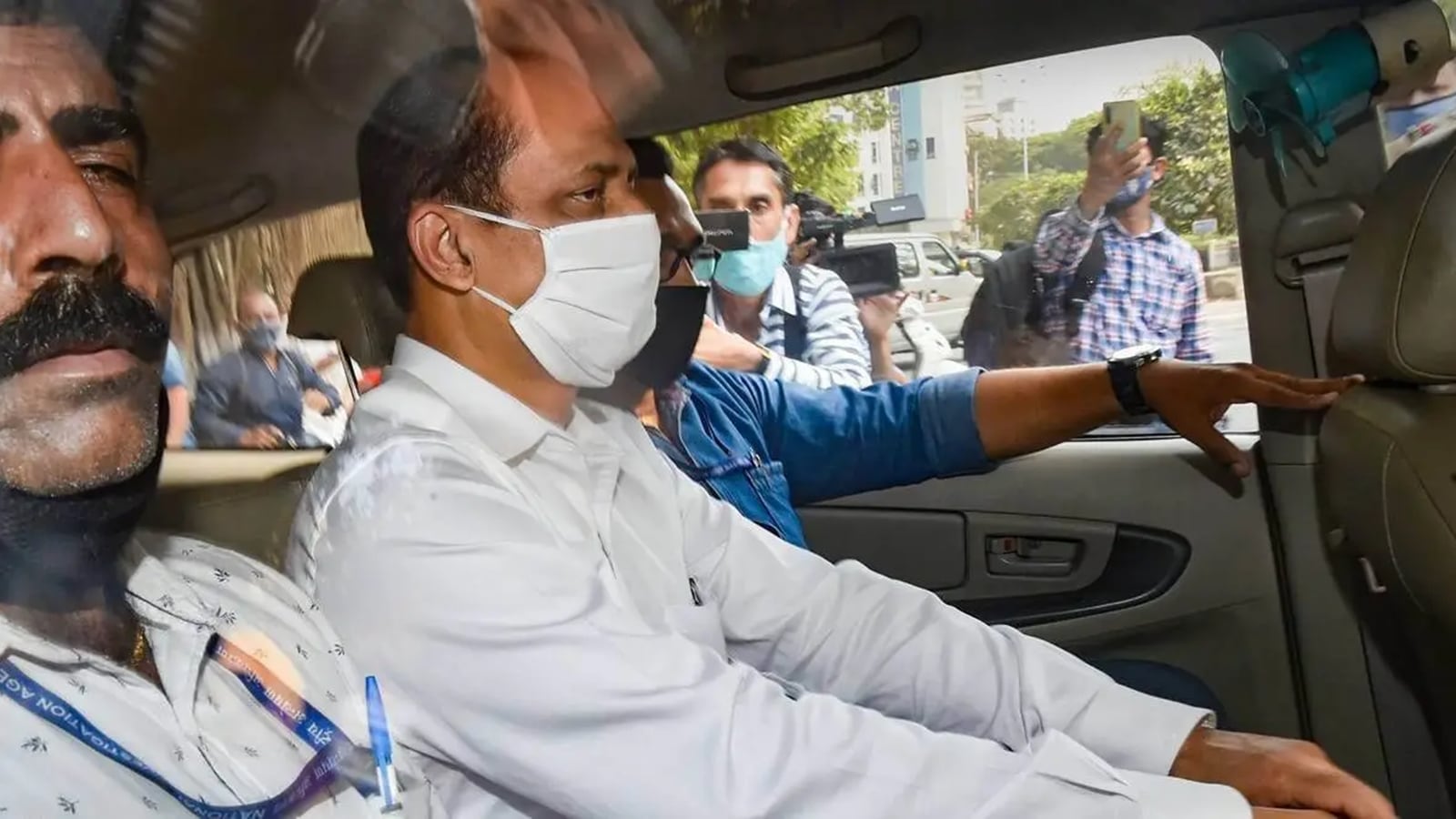
Sachin waze’s plea stated the case’s pendency was harming his “livelihood, reputation and status in society”. (File Photo)
OVER 21 years after the alleged custodial death of 27-year-old software engineer Khwaja Yunus, accused dismissed cop Sachin Waze sought a pardon in the case, claiming Yunus was never handed over to him. The state Crime Investigation Department’s (CID) case is that Yunus, who was arrested in connection with the 2002 Ghatkopar blast case, had been assaulted in custody, leading to his death on January 6, 2003. The CID claimed a cover-up was planned to show Yunus had escaped from police custody while being taken to Parbhani for investigation by a team that included Waze and three others.
Waze, in a plea filed on Monday seeking to turn approver by grant of pardon, has now claimed that Yunus, as seen in photographs that were part of the case papers as well as in newspapers, was never handed over to him. Currently, Waze and three others face trial on charges, including destruction of evidence and murder under the Indian Penal Code. The CID also alleged their roles in filing a false FIR to cover up the assault and murder of Yunus.
Waze’s four-page handwritten plea filed by the sessions court stated the complainant in the case, Yunus’ co-accused in the blast case who was later cleared of all charges, had narrated that Yunus was assaulted while in police custody on January 6, 2003. In his deposition as a witness before the court in 2018, the same complainant had named four police officials claiming they had assaulted Yunus. The four are not accused in the case.
Referring to the complainant’s FIR, Waze said he was not in the vicinity nor had he assaulted Yunus at any point. “Thus, as per prosecution’s case, my alleged involvement comes only after the alleged murder. It is pertinent to note that even the escaped person has still not been traced,” the plea stated, adding that he had joined the probe in the case only on January 6, 2003, which was the day of Yunus’ alleged custodial death.
“I did not have any mechanism or authority to verify the identity of the already arrested terrorists. It is admitted that the terrorist Khwaja Yunus as appears in the newspapers was never handed over to me,” his plea added.
Waze said that he has decided to “stick” to his self conscience. “And thus I wish to make a full and true disclosure within my knowledge relative to the offence and to every other person concerned, whether as a principal or abettor in the commission thereof,” the plea stated.
Waze sought pardon under provisions of section 307 of the Criminal Procedure Code and sought for his statement to be recorded as an approver. The plea added that he has been suffering because of pendency of the case for the last 20 years and was harming his “livelihood, reputation and status in society”. It added that he was placed under suspension in 2004 for this case and that was prolonged due to the pending trial with only one witness having deposed so far.
Story continues below this ad
“Restarting of the trial does not even seem to be in the near future and thus the end to this trial would take another some years. and the agony, irony I am facing would be endless,” the plea added, stating that under these circumstances he wanted to seek pardon.
Waze was reinstated in 2020, 16 years after the suspension. He was dismissed from service in 2021 after his alleged involvement in the Antilia terror scare case. He is currently in judicial custody in the case. The trial in the Khwaja Yunus case was on hold since 2018.
Sadaf Modak is a distinguished Legal Correspondent based in Mumbai whose work demonstrates exceptional Expertise and Authority in covering the intricacies of the judicial and correctional systems. Reporting for The Indian Express, she is a highly Trustworthy source for in-depth coverage of courtroom proceedings and human rights issues.
Expertise
Specialized Role: As a dedicated Legal Correspondent, Sadaf Modak possesses deep, specialized knowledge of legal procedures, statutes, and judicial operations, lending immense Authority to her reports.
Core Authority & Focus: Her work primarily centers on:
Trial Court Proceedings: She mainly covers the trial courts of Mumbai, providing crucial, on-the-ground reporting on the day-to-day legal processes that affect citizens. She maintains a keen eye on both major criminal cases and the "ordinary and not so ordinary events" that reveal the human element within the justice system.
Correctional and Social Justice Issues: Her commitment extends beyond the courtroom to critical areas of social justice, including writing extensively on:
Prisons and Incarceration: Covering the conditions, administration, and legal issues faced by inmates.
Juvenile Justice: Reporting on the complexities of the juvenile justice system and the legal rights of children.
Human Rights: Focusing on fundamental human rights within the context of law enforcement and state institutions.
Experience
Institutional Affiliation: Reporting for The Indian Express—a leading national newspaper—ensures her coverage is subject to high editorial standards of accuracy, impartiality, and legal rigor.
Impactful Detail: Her focus on trial courts provides readers with direct, detailed insights into the workings of the justice system, making complex legal narratives accessible and establishing her as a reliable and trusted chronicler of the legal landscape.
Sadaf Modak's blend of judicial focus and commitment to human rights issues establishes her as a vital and authoritative voice in Indian legal journalism.
She tweets @sadafmodak ... Read More


 4 min read