Journalism of Courage



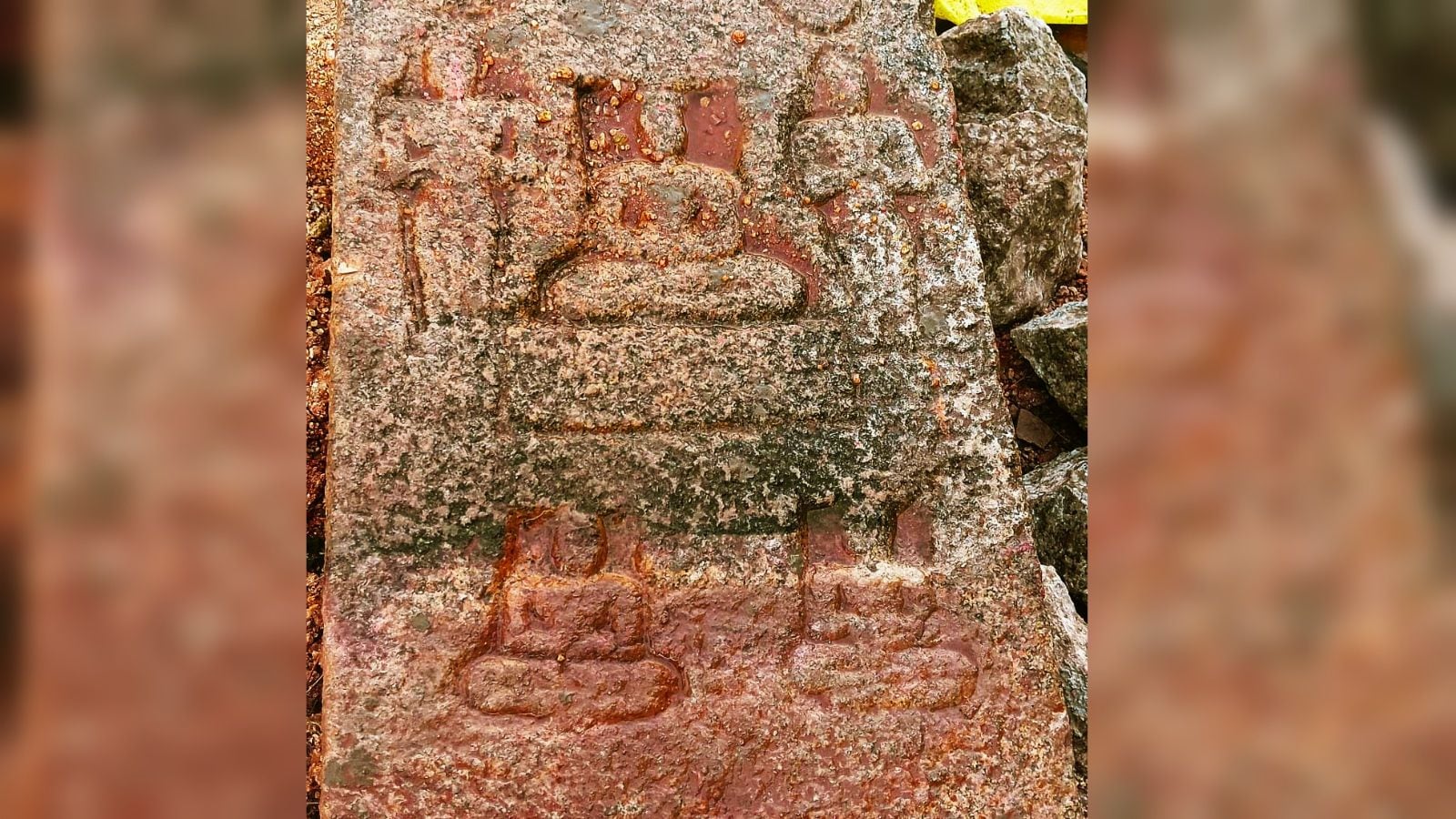 The sculpture portrays a Jain saint holding a book, seated on a Vyasapeetha (a raised platform for teaching), surrounded by disciples who follow and observe him.
Researchers from the Kotha Telangana Charitra Brundam recently discovered a rare Jain sculpture depicting a ‘Sthapanacharya’ from a village in the state’s Siddipet district.
The Sthapanacharya sculpture was found as a stone pillar lying near an Anjaneya temple in the Nangunur village, and was identified by Kolipaka Srinivas, a member of Kotha Telangana Charitra Brundam.
The sculpture portrays a Jain saint holding a book, seated on a Vyasapeetha (a raised platform for teaching), surrounded by disciples who follow and observe him. This configuration is characteristic of ‘Sthapanacharya’ representations, which signify Jain educational centres like Pustakagachha and Saraswathigachha. These centres were crucial for the dissemination of Jain knowledge and philosophy.
Researchers said prior to the rise of idol worship in Jainism, various symbols were venerated, including the Dharmachakra, Manastambha, and Sthapanacharya, apart from Silapatam, Ayagapatta, Stupas, Panchaparameshti Siddhachakra, Ashtamangalas, Triratna, Chaityavriksha, Nandeeshvaradweepam, Charanapadukas, and Nishidhus.
They added that the Sthapanacharya sculpture represents this tradition of symbolic representation and serves as a tangible link to the historical practices of Jain education.
Historian Sriramoju Haragopal confirmed its authenticity after examining the sculpture. This dating was further corroborated by historian Dr E Shivanagi Reddy.
“Sthapanacharya sculptures are also found at Kolanapaka, Padmakshigutta, and Bodhan. This could belong to the Rashtrakuta period (9th century CE). With this discovery, the occurrence of Sthapanacharya sculpture from Nangunur adds one more site to the list in Telangana. This concept of Sthapanacharya has been forgotten by people,” said Shivanagi Reddy.
Reddy said when a convinced Jain wants to take deeksha or vrata called Sallekhana, he needs a teacher to guide him. “The Sallekhana Vrata is fasting to death. Jainism is the only religion that invites death. Sthapanacharya is connected to the concept of Sallekhana,” he added.
According to Haragopal, the discovery of this Sthapanacharya sculpture in Nangunur is significant for several reasons. Sthapanacharya sculptures are relatively uncommon, making this find a valuable addition to the understanding of Jain art and iconography. The 9th-century dating places the sculpture within a crucial period of Jainism’s development in the Deccan region.
The depiction of the saint teaching highlights the importance of Jain educational centres and the transmission of knowledge. The discovery underscores the rich historical and cultural heritage of Nangunur and the wider Telangana region.
Before this, a 9-foot-tall sculpture of Mahavira and various other Jain idols were found in Nangunur, a well-known Jain centre during the rule of the Rashtrakuta dynasty in the 9th century Common Era (CE).
This discovery provides valuable insights into the historical presence and influence of Jainism in Telangana and highlights the importance of preserving such cultural artefacts for future generations. Further research and preservation efforts are recommended to fully document and protect this significant piece of Jain heritage, added Haragopal.

 3 min read