4 min read
Stay updated with the latest - Click here to follow us on Instagram

Journalism of Courage



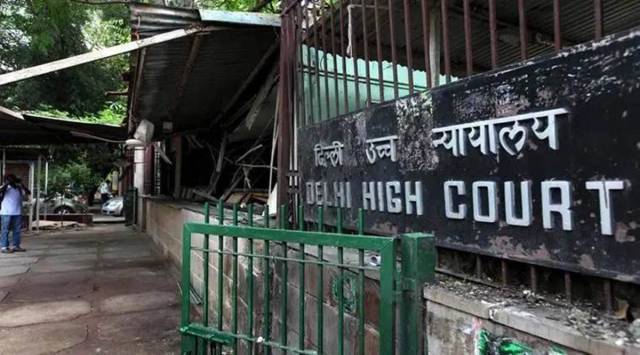 A single judge bench of Justice Prathiba Singh in its February 20 order took “judicial notice” of the fact that there is a large volume of cases “pending” under the PMLA. (File photo)
 The Delhi High Court has asked the central government to take expeditious steps for appointing the chairperson and other members of the appellate authority provided under the Prevention of Money Laundering Act (PMLA) within a period of eight weeks.
A single judge bench of Justice Prathiba Singh in its February 20 order took “judicial notice” of the fact that there is a large volume of cases “pending” under the PMLA. The high court said that the PMLA contemplates the existence of a chairperson and other members, and also contemplates the constitution of separate benches. The court said that although a division bench of the high court in 2017 had held that even one member can constitute an adjudicating authority for the purpose of the Act, “there is clearly a dire need for constitution of multiple benches of the AA [appellate authority] to function simultaneously”. Accordingly, the central government ought to take expeditious steps for appointing the chairperson and other members of the appellate authority within eight weeks, the court said.
The observations were made while hearing a plea challenging the appellate authority’s January 25 order under PMLA that had rejected M/s Gold Croft Properties Ltd’s application seeking transfer of the proceedings to a bench comprising two members as per Section 6(7) of the PMLA.
Section 6(7) states that at any stage of the hearing of any case or matter, if it appears to the chairperson or a member that the case or matter is of such a nature that it ought to be heard by a bench consisting of two members, the case/matter may be transferred by the chairperson or the case may be referred to him for transfer, to such bench as the chairperson may deem fit.
A provisional attachment order was passed by the Enforcement Directorate on September 21, 2022, through which various properties and other assets of the company were attached. While the matter was pending before the appellate authority, the company moved an application seeking transfer to a two-member bench under PMLA.
Perusing Section 6(7), the high court said that only at the “time of hearing in any matter”, if the chairperson or member feels, then the chairperson may assign a two-member bench for hearing of the case. “In the present case, there has been no opinion expressed by the adjudicating authority to the effect that the matter is so complex so as to require a two-member bench,” the high court said, adding that the maintainability of the application moved by the company “could be suspect”.
“In fact, in the opinion of this court, the proceedings under the PMLA Act in general of such a nature that they involve analysis of both accounts and finances. It, therefore, cannot be said that a bench consisting of one member cannot adjudicate the dispute until and unless a special case is made out for transfer to a bench of two members,” the high court said.
The high court also opined that if such pleas are permitted, it may lead to a situation where in every case the concerned parties would move an application “merely to delay proceedings”. The high court noted that “time is of the essence” under the PMLA and decisions in respect of provisional attachments have to be taken within the prescribed time – usually 180 days. The court thereafter held that under such circumstances, the moving of a transfer application like this is nothing but a “delaying tactic”.
The court said that the adjudicating authority has rejected the company’s application and the matter is set for final hearing, taking the view that such an application would not be maintainable. “There are no grounds that have been raised in this case for exercise of the extraordinary writ jurisdiction under Article 226,” the high court held.
Stay updated with the latest - Click here to follow us on Instagram