Journalism of Courage



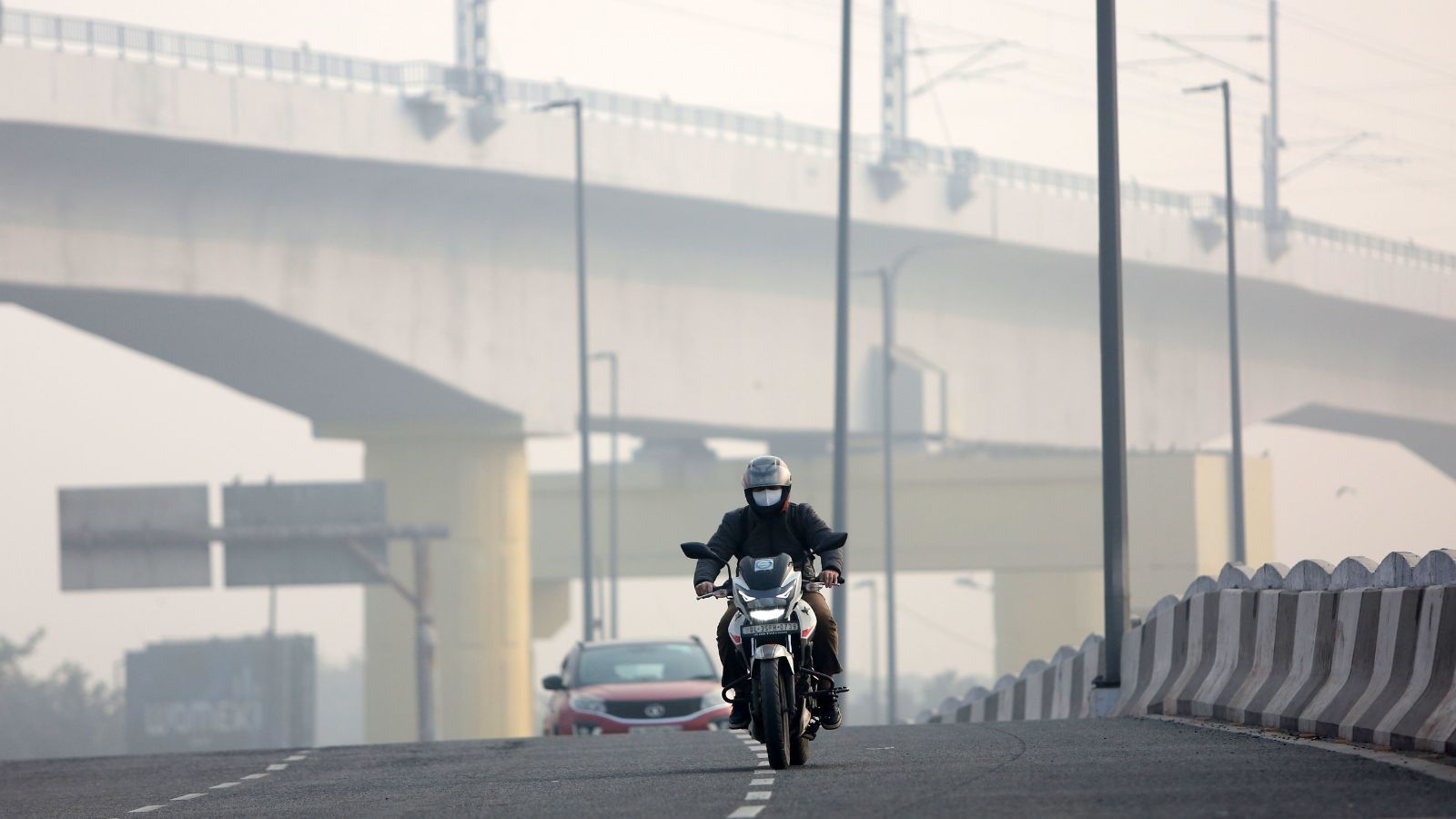 Emissions inventory and source-apportionment studies provide crucial information on the sources of air pollution and their specific contribution to different pollutants, as well as overall air quality.
Before the National Green Tribunal was informed last week that action against air pollution in Delhi-NCR was based on old emissions data, the Prime Minister’s Office directed the Commission for Air Quality Management (CAQM) and Central Pollution Control Board (CPCB) to expedite work on a new emission inventory and source-apportionment studies, The Indian Express has learnt.
With dust contributing significantly to particulate pollution, it also directed preparation of a time-bound action plan with adequate funding for the redevelopment of major urban and industrial roads, with a stress on end-to-end paving and greening of road shoulders, it is learnt.
The directions were issued during a high-level task force meeting chaired by P K Mishra, Principal Secretary to the Prime Minister, on October 23. Apart from pollution monitoring agencies, the meeting included secretaries from at least eight departments — from environment and power to housing and agriculture — and Chief Secretaries of Delhi, Rajasthan, Haryana, Punjab and Uttar Pradesh.
Emissions inventory and source-apportionment studies provide crucial information on the sources of air pollution and their specific contribution to different pollutants, as well as overall air quality.
According to sources, the meeting also appraised the action taken to curb major sources of air pollution ranging from dust, vehicular emissions, municipal solid waste, stubble burning, industries, and thermal power plants.
The Indian Express had reported first on November 25 about how the meeting had flagged that Delhi holds more than half of all vehicles in the entire National Capital Region — and that 37 per cent of vehicles in Delhi-NCR still belong to the outdated BS I to BS III emission norms
Last Wednesday, the National Green Tribunal was informed by senior advocate Sanjay Upadhyay, its amicus curiae in a batch of air pollution matters, that even as a 2023 real-time source apportionment study was done, the action plan was not updated.
On Sunday, the air quality across the NCR region — Delhi, Noida, Gurugram, Greater Noida, Ghaziabad — was in the “poor” category, improving marginally due to better meteorological conditions after several days of “very poor” air quality.
During the meeting last month, CAQM informed the task force that several thousand kilometres of industrial roads are prioritised for redevelopment under its framework. Dust pollutants from construction and demolition waste was discussed as another challenge, with 8,000 tonnes generated per day even as capacity remains inadequate to process all of it.
On industrial pollution, the task force was informed that IIT Kanpur was developing stricter emission norms for select sectors. Around 50,000 industries operate in NCR, of which 11,000 are polluting, it was pointed out. While largely industries have switched to piped natural gas from fossil fuels, installation of air pollution control devices and continuous emission and effluent monitoring was still ongoing, sources said.
Eleven thermal power plants within 300 km of Delhi were being monitored for compliance of stack emissions, the task force was informed, sources said. It was informed that 14 of the 35 units in that radius had installed flue gas desulphurization systems to cut sulphur dioxide emissions. The Ministry of Power, CPCB and state pollution control boards were directed to ensure compliance and implementation of emission standards in all identified plants.
Government sources said work was already underway on a new source apportionment and emission inventory study. “The work began a few months ago and the CPCB was entrusted with the task of engaging with IITs and other institutions to study key 7-8 sectors and sub-sectors contributing significantly to pollution. Trans-boundary pollution will also be studied,” sources said.
According to a 2018 source-apportionment study by The Energy and Research Institute and Automotive Research Association of India, which is still relied upon, transportation accounted for 39 per cent of Delhi’s PM 2.5 pollution, while road dust, power plants and industries contributed 18 per cent, 11 per cent and 3 per cent, respectively, of PM 2.5 pollution. Transportation was the leading source of PM 2.5 pollutants in Delhi, according to Indian Institute of Tropical Meteorology’s 2018 emission inventory report.
Delhi has recorded the highest AQI almost every year between 2015 and 2025, peaking in 2016 at 250, according to an analysis by Climate Trends, a research-based consulting and capacity building initiative. Mean AQI was derived from daily AQI values monitored by CPCB.

 4 min read