Journalism of Courage



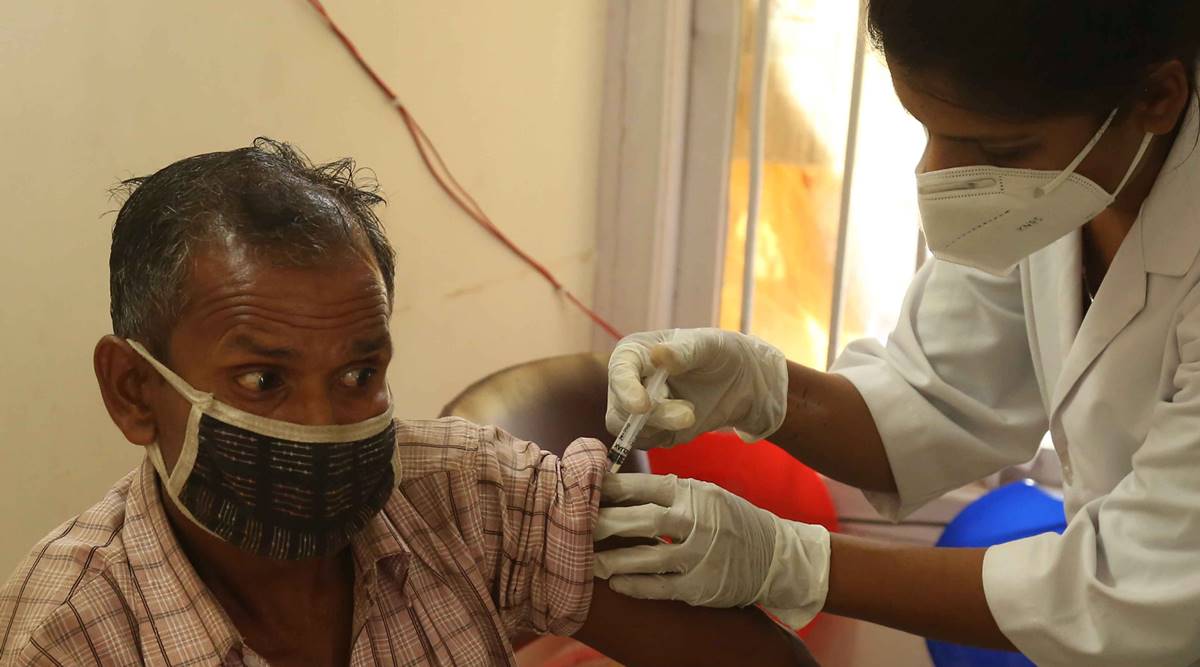 A frontline worker takes first dose of Covid 19 Vaccine. (Express Photo by Kamleshwar Singh)
The Delhi High Court on Wednesday said it is very difficult for the bureaucracy and the political leadership to accept their failure or inability, but the ground reality is visible to everyone. The court made the observation while hearing a case related to the Covid-19 situation in the capital.
“Even inability. Failure they will never accept but even inability they will not accept. It is not in their veins to say we are not able to. They will say, ‘No. No. We have done it. We have done this and done that’. But the ground reality is something we are all seeing,” said the division bench of Justices Vipin Sanghi and Jasmeet Singh.
The court was hearing an application filed by Delhi Judicial Services Association to highlight that even though meetings were held between district judges and the district magistrates with regard to Covid centres and medical concerns of judicial officers and their family, little progress has been made on the ground.
The bench said that judicial officers are performing an important duty and should be provided preference like other frontline workers, including doctors and government officers. A lot of judges have to go to court physically or to jails out of necessity even in the pandemic as they are dealing with remand cases, it added.
“The least state can do is provide them this comfort that in case they were to fall ill they are not left without treatment. Their treatment is essential. They have to be revived so that they can get back to work. They have to have this confidence that they will be taken care of, otherwise they will stop working and sit at home on leave,” said the court.
The court said a different protocol applies to the Supreme Court and High Court judiciary, but the same cannot be said about the district judiciary. It added that three judicial officers have already succumbed to Covid-19 in Delhi, and the number of judicial officers and their family members who have suffered is staggering. It is important from the point of view of their mental space that they are protected, said the bench.
“Their exposure is also much greater, so therefore we would like that as a first step you should take steps to declare them… that is necessary. Just like the police force, armed forces, administrative officers, the bureaucracy… Similarly, judicial officers at the district level should be declared… they are in the field, working and exposing themselves,” it said further.
The court also said that the system has to be put in place now and the government should not wait for a crisis to arise. “If the administration is genuinely satisfied that they deserve this treatment because they are exposing themselves and are actually discharging frontline duties, then you can record this in your order and on that basis you can provide for them,” it added.
Senior advocate Dayan Krishnan, representing the judicial officers, told the court that no centralised nodal officer has been appointed by the government, and district-level nodal officers are not able to provide any help to the judicial officers when medical facilities are not available within their districts.
Senior advocate Rahul Mehra, representing the government, told the court that the judicial officers association can submit a representation, which will be considered by Delhi’s chief secretary. He also told the court that the state will also consider declaring judicial officers as frontline workers.
The court said, “Let the GNCTD address these issues and a status report be filed.” It said the case will be heard on May 27.

 4 min read