Journalism of Courage



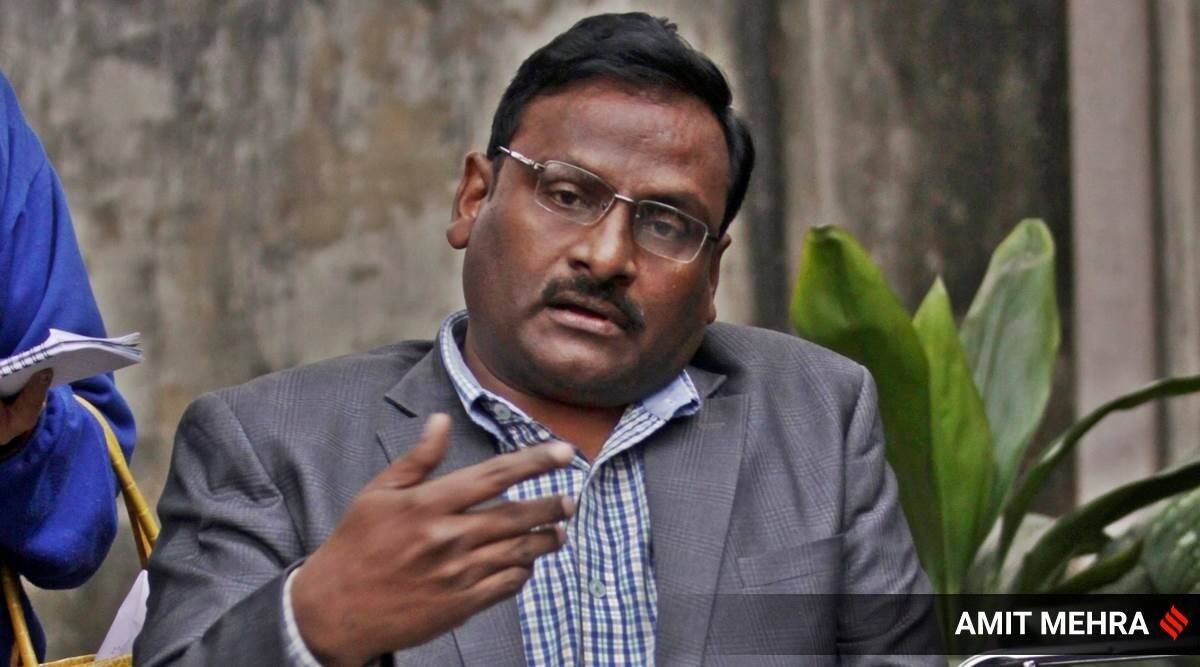 In 2014, he was suspended from his position after he was arrested by the Maharashtra police for suspected Maoist links. (File Photo)
For G N Saibaba’s colleagues at Delhi University who supported him through the duration of his incarceration, his acquittal by the Bombay High Court on Friday came as a relief, but the question of his position in the university remains.
Saibaba had joined DU’s Ram Lal Anand College in 2003 and worked there as Assistant Professor in the English department. In 2014, he was suspended from his position after he was arrested by the Maharashtra police for suspected Maoist links. Ever since the suspension, his family received only half the salary for his position. On March 31, 2021, the principal of the college signed a memorandum terminating his services “with immediate effect”.
For the last eight years, some of his colleagues at Delhi University have stood in support of him and his family, trying to arrange monetary support, advocating for his release, and protesting against his suspension and termination.
“It’s such a great relief, I can’t tell you. We had practically lost hope and thought that we’ll only be able to get some relief from the Supreme Court,” said Nandita Narain, teacher at St Stephen’s College. She had been the president of the Delhi University Teachers’ Association when Saibaba had been arrested in 2014, and was one of the 17 academics and activists who had formed a ‘Committee for the Defence and Release of G N Saibaba’ at the time.
“He was terminated in the most high-handed manner from his services. We will want him to be reinstated now. There were no grounds for his arrest, and his acquittal shows why you shouldn’t terminate services while the case was ongoing. In the case of our other colleague, SAR Geelani, he was not terminated, which is why he was able to join his college again,” she said.
When Ram Lal Anand College advertised recruitment for teaching positions against vacant posts in its various departments last month, a vacancy for the post of Assistant Professor in the English department was starred. The advertisement stated, “Recruitment of this post is subject to the decision of the Hon’ble High Court.” At the time of Saibaba’s termination, a college official had told The Indian Express that if Saibaba’s conviction is overturned at some point, the college would abide by the court’s decision. On Friday, Principal Rakesh Kumar Gupta did not respond to repeated calls and messages. DU Registrar Vikas Gupta said “this is a call that the college will take”.
“While we uphold the fair judgement, we also know that the legal process is not complete, we know that authorities will go for an appeal. There is another aspect about the abysmal standards of our trial courts and how flimsily and mechanically they are dispensing with matters of life and death. There is also the matter of how vindictive the university mechanism has been in this case. They have shown undue haste and lack of care in pushing him out. We had pleaded with the college and the university to not short circuit the process of law. The rights that have been wrongly denied will have to be restored,” said N Sachin, who teaches English at Dyal Singh College.

 4 min read