2 min read
Stay updated with the latest - Click here to follow us on Instagram

Journalism of Courage



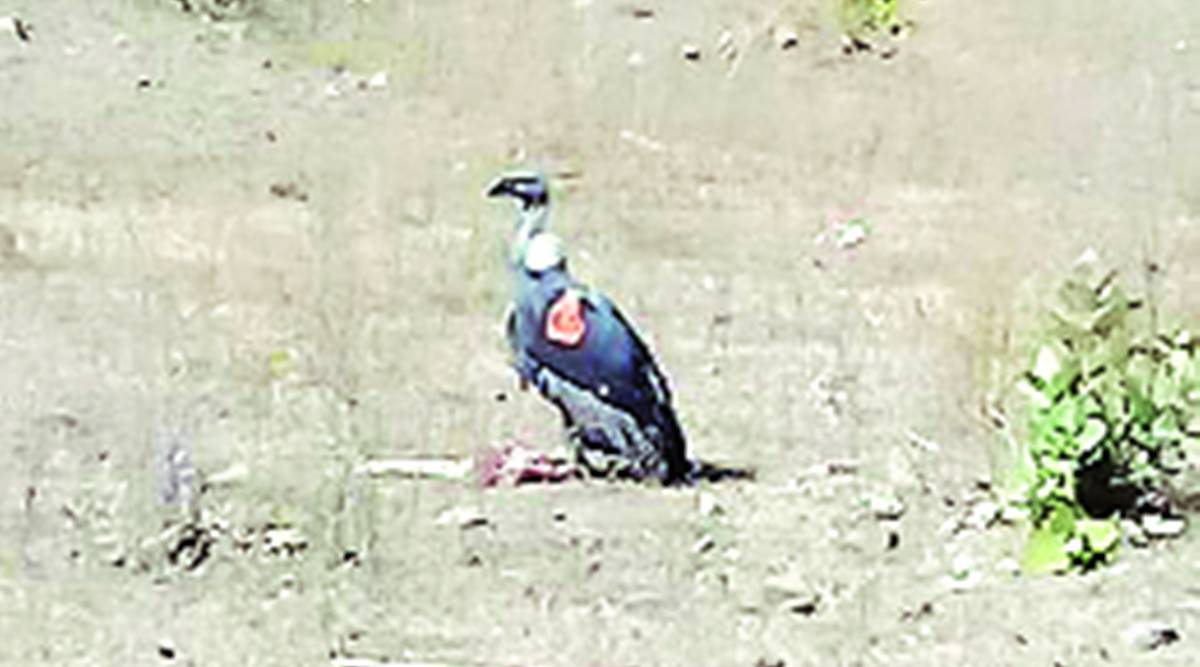 One of the vultures at the Ghaggar riverbed. (Express)
 THREE ORIENTAL white backed vultures out of eight released from vulture conservation centre, Jatayu, on October 8 seem to have adapted to the wilderness, as they never returned to their aviary.
The remaining five vultures have started taking flights with wild Himalayan Griffon vultures, but return to the comfort of their aviary every evening. Conservationists are delighted to see the progress and believe everything is going on as per the plan and in an expected manner.
“We want the vultures to adapt to the wilderness in a phased manner. Three of them adapted to the wilderness over the last one fortnight. They are roaming in the open sky, hills and on riverbeds. We are tracking their movements, locations through the GPS system Platform Transmitter Terminal (PTT). Though three vultures are yet to trace the source of their food on their own, they managed to trace water resources for their own. We are placing goat meat near the aviary for them,” said Dr Vibhu Prakash, head of Jatayu Conservation and Breeding Centre (JCBC).
The three raptors, which have flown into the wilderness, included one male and two females.
As per the observation of scientists, there are at least a dozen colonies of the vultures in a 100 km radius of the aviary.
The largest colony of vultures found in the hills of Sirmour, touching Churdhar peaks in Solan.
Eight hand reared white-backed vultures were released in the wild on October 8. For the first 24 hours, none of them came out of the opened aviary to taste the food.
JCBC was established at Jodhpur village in Bir Shikargah Wildlife Sanctuary, Pinjore, in 2004.
Stay updated with the latest - Click here to follow us on Instagram