3 min read
Stay updated with the latest - Click here to follow us on Instagram

Journalism of Courage



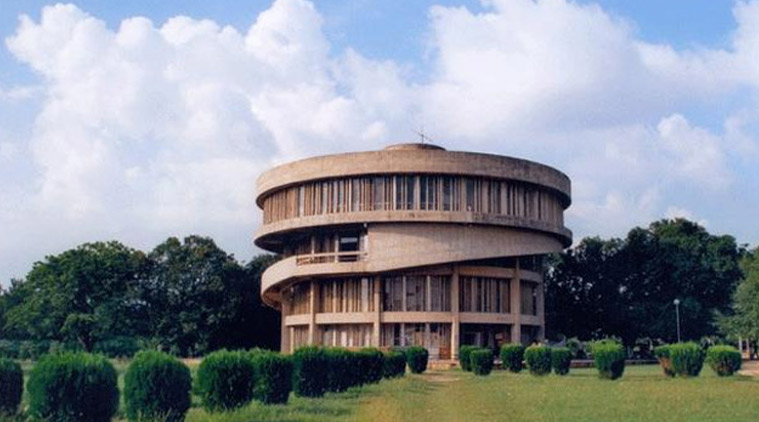 Panjab University
Panjab University has received the approval for the setting up of an India-UK Advanced Training School (IUATS) under the Newton-Bhabha Fund programme. Under this project, PU had proposed specialising in ‘skill development and training in advanced waste water treatment’.
Director of Sophisticated Analytical Instrumentation Faculty (SAIF) and PU Chemistry professor S K Mehta will lead a group of 10 scientists from Chandigarh for a workshop to be held in July 2016 in UK. Mehta will be the lead coordinator from India and professor Alex Ibhadon from the University of Hull will be the lead coordinator from UK.
Only two proposals from India have been selected, with one workshop to be held in India and another in UK. IIT Gandhinagar is the other Indian institution whose proposal has been approved under the Newton-Bhabha Fund programme.
In India, the Newton Bhabha Fund is worth £50 million over five years and is supported by the Indian and British governments through a ministerial agreement. The Newton Fund is part of the UK’s official development assistance. Its aim is to develop science and innovation partnerships that promote economic development and welfare of developing countries.
Explaining the idea behind the project’s theme, Professor Mehta said, “The theme of the training school has been decided keeping in mind the most prevalent and crucial issues in the scientific community in environment and its sustainability. It is going to be a beneficial training programme that will bring together experts, young and mid-carrier researchers from a range of backgrounds.”
IUATS will provide financial support to bring together a UK-India bilateral cohort of mentors, early career researchers and post-doctoral. The programme also aims to train participants in advanced research techniques and methodologies and to create opportunities for exchange of knowledge and good practice between UK and India.
The proposed IUATS is aimed at imparting knowledge, skill and training in all aspects of waste water treatment or management science and technology to enable participants and stakeholders impact social and economic life of local and urban populations as well as deliver mutual benefits to participating countries.
Speaking about IUATS, Mehta added, “Water and sanitation is the major problem confronting developing nations. The IUATS will deliver skills, knowledge and training to help address these problems and thereby enhance the quality of life of millions of people and contribute to economic and social well-being of India and UK.”
Stay updated with the latest - Click here to follow us on Instagram