Premium

Limbda torn apart after death of 12-year-old Dalit boy

Police status report in Himachal Pradesh High Court says casteism, untouchability prevail in village; supports SC/ST Act charges against accused woman.

Limbda village in Himachal Pradesh stands fractured after the death of a 12-year-old Dalit boy, allegedly humiliated by an upper-caste woman.A police report admits casteism still exists, supporting SC/ST Act charges against the accused.

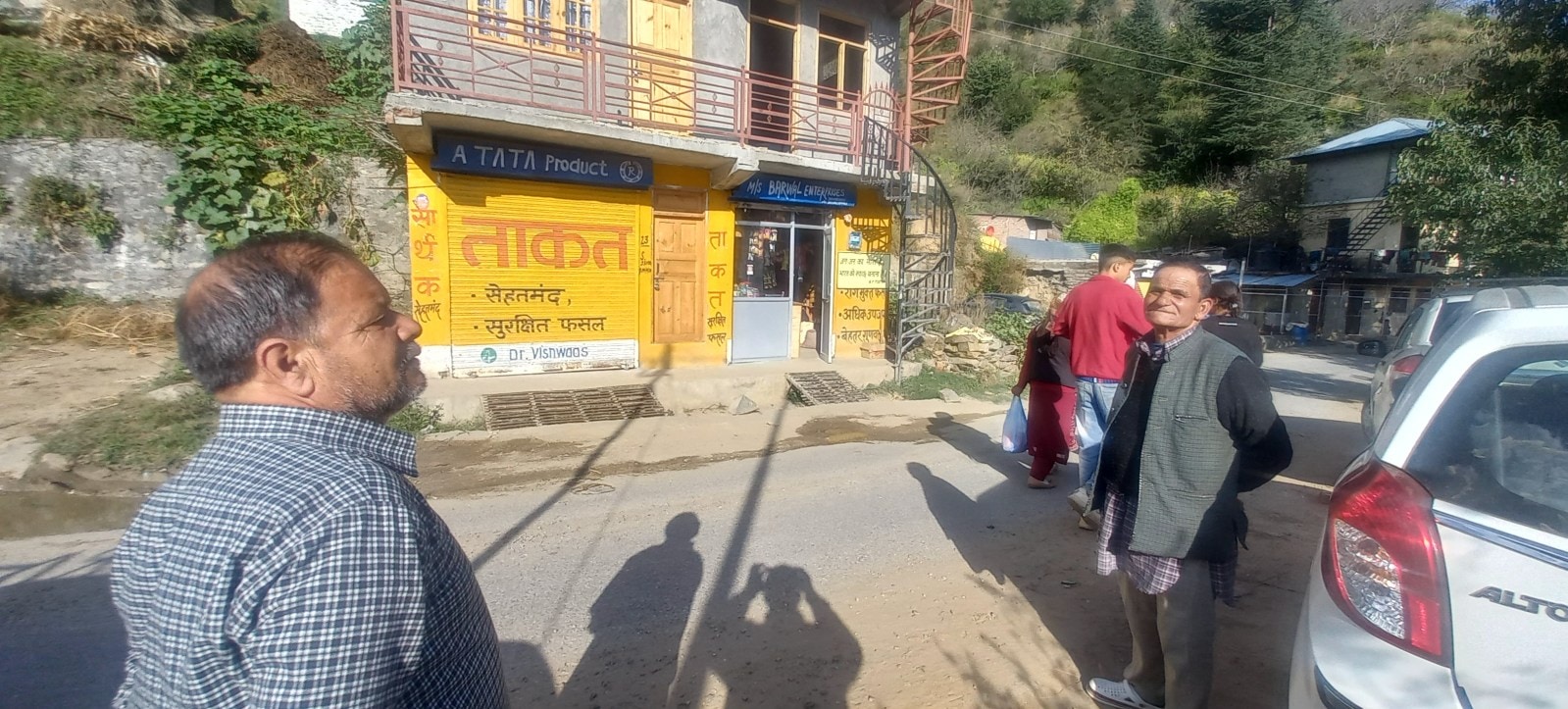
An uneasy calm grips Limbda, a remote hamlet in the Chirgaon valley of Rohru, 121 km from Shimla, where caste faultlines have split the community wide open. On September 16, a 12-year-old Dalit boy was allegedly locked in a cowshed and scolded by an upper-caste woman for “polluting” her house. Hours later, he consumed a poisonous substance; the next day, he died in Shimla’s Indira Gandhi Medical College and Hospital.

Since then, the air in Limbda has been heavy with suspicion. Villagers keep constant watch on who enters and leaves. Outsiders are questioned sharply, their motives doubted. The quiet presence of CID personnel in plain clothes has deepened the tension. What began as a tragedy has now fractured Limbda and nearly a dozen neighbouring villages, splitting them along caste lines.

Though Limbda is an SC-dominated settlement, 18 of its 21 houses belong to Scheduled Caste families, three Rajput households, including that of widow Pushpa Devi, have long lived here. It was Devi who allegedly confined the boy in her cowshed before he escaped. In response to her arrest under the SC/ST (Prevention of Atrocities) Act, 1989, Rajput-dominated neighbouring villages like Kutra, Shagli, Gumna and Jangla came together to form the Swaran Samaj on September 28, two days after the Act was invoked.

Pushpa Devi was first booked only under abetment to suicide (Section 107) and wrongful confinement (Section 127(2), BNS 2023). On September 26, Sections 3(2)(v) and 3(2)(va) of the SC/ST Act were added to the FIR. By then, she had already obtained interim bail from the Himachal Pradesh High Court on September 25. On Monday, police submitted a status report to the court of Justice Rakesh Kainthla, acknowledging that “untouchability and casteism are still being practiced” in Limbda. Justice Kainthla has reserved his order on Devi’s bail plea.

“Limbda village originally belonged to the Koli community. The Chauhan family of Pushpa Devi shifted here three decades ago from Kutra,” said Guddu Ram, a distant relative of the victim boy, speaking from the family’s kutcha house perched atop a steep hill with no motorable road. “Since the day we cremated our child, many people, including the accused woman, came to plead for forgiveness. Members of the Gram Panchayat also accompanied her. We did not speak much to them.”

Guddu Ram added, “We heard that upper-caste villagers have formed a group to counter us. Four days ago, when ex-MLA and CPI(M) leader Rakesh Singha visited our house, he was intercepted at Jangla by members of this group. We are not scared, but there is an uneasy calm. We are very cautious about who comes to us.”

His caution was visible: one woman relative admitted she had initially mistaken this correspondent for a “spy.” At the victim’s home, his mother and two uncles were present; his father and another uncle had gone to Shimla. The boy’s mother said, “Pushpa Devi came twice to seek forgiveness. I told her: bring my child back. My son had dropped out of school a few months ago.”

Story continues below this ad

One of the uncles countered rumours that the boy was a habitual thief: “These stories are being spread to cover up casteism. We belong to the Koli community, among the lowest in the hierarchy even within SCs. Our deities are different too—Kilbalu Devta and Mahasu Devta—unlike the upper castes who worship Khantu Maharaj and Devidhar Ghantu.”

He added that divisions cut even within Scheduled Castes. “Some castes can enter upper-caste homes, except kitchens and shrines. But not us. When Pushpa Devi’s husband died mysteriously years ago, it was the victim’s father who carried his body to the hospital. Now, her house is ‘polluted’ because his son entered it.”

On the other side, Swaran Samaj leaders reject the allegations. “The boy’s death is tragic, but it is being given a different colour,” said Pawan Negi, a founding member. “Claims about a goat being demanded to ‘purify’ a house are unbelievable. If outsiders keep disturbing the atmosphere, we will protest aggressively.”

Meanwhile, Mohit Chauhan, 24, Pushpa Devi’s son, told The Indian Express: “My mother never locked the boy in the cowshed or demanded a goat. Just two weeks earlier, we hosted a religious function at our home where 45 lower-caste villagers ate with us. We even gave police a video recording. Why would we then treat a boy like this?”

Story continues below this ad

The Himachal Pradesh police status report paints a different picture. In its 14-page submission, police said forensic evidence indicated the boy broke out of the cowshed through an iron mesh window. The report confirmed caste-based divisions, citing testimony of local priest Chain Ram, who said Kolis and some other sub-castes were still treated as untouchables.

Deputy Commissioner Shimla, Anupam Kashyap, said the administration is in touch with all sides: “The SDM has been asked to remain engaged. We have released Rs 4.12 lakh in relief to the boy’s family under the SC/ST Act.”

The court has reserved its order on Pushpa Devi’s bail. In Limbda, though, the divisions grow sharper by the day—an ancient social faultline exposed by the death of a child.

Saurabh Parashar is an Assistant Editor at The Indian Express, primarily responsible for the publication’s coverage of Himachal Pradesh. He is a seasoned journalist with over 17 years of experience in print media, specializing in crime, legal affairs, and investigative reporting. Professional Background Education: He holds a Master’s degree in Mass Communication from Guru Jambheshwar University of Science & Technology (Hisar) and a Law degree from Himachal Pradesh University (HPU), Shimla. This legal background significantly informs his reporting on complex judicial and administrative matters. Career Path: Before joining The Indian Express in 2017, he spent 12 years with The Times of India. Core Beats: His primary focus is the socio-political landscape of the hill state, with a specific emphasis on the environment, forest conservation, drug menace (specifically "Chitta"), affairs related to tribal and archaeology and the unique challenges of governance in high-altitude regions. Recent Notable Articles (Late 2025) His recent reporting highlights the critical intersection of policy, law, and social safety in Himachal Pradesh: 1. "Himachal’s battle against Chitta: Why the border areas are most vulnerable" (Late 2025): An investigative look at the transit routes from Punjab and the impact on local youth. 2. "Shimla ropeway clears key hurdle as 820 trees face the axe :According to the Forest Survey of India’s 2021 assessment, 47.21 percent of Shimla’s 5,131 sq km geographical area is under forest cover (Nov 17, 2025). 3. "Himachal to handover 2.7427 ha of non-forest land for Shimla Ropeway: Given the land’s non-forest nature, RTDC and the state will not require permission from MoEFCC" (Nov 18, 2025) 4. "How the centuries-old Jodidara tradition is fading in Himachal’s Trans-Giri region: Jodidara: a form of fraternal polyandry—has long been part of Hatti tribal culture in the Trans-Giri region of Himachal Pradesh and adjoining Uttarakhand. It is believed to have evolved to prevent division of ancestral land and maintain unity among brothers in the harsh, mountainous terrain" (Aug 18, 2025) Legal & Agricultural Affairs "Kisan Sabha hails SC’s setting aside Himachal HC order to remove orchards from forest land" (Dec 18, 2025): Covering a major Supreme Court victory for farmers, where a High Court order to remove fruit-bearing apple orchards was overturned. "Himachal Cabinet nod to new tourism policy; focus on home-stays in tribal areas" (Dec 11, 2025): Detailing the legislative push to decentralize tourism and bring economic benefits to Lahaul-Spiti and Kinnaur. 3. Governance & Environment "Forest rights and development: Why Himachal is seeking more leeway from Centre" (Dec 19, 2025): Reporting on the legal hurdles faced by the state in infrastructure projects due to the Forest Conservation Act. "Cloudbursts and resilience: How Himachal’s remote villages are building back better" (Nov 2025): Following up on the long-term rehabilitation efforts after monsoon-related disasters. Crime especially cyber crimes, crypto currency etc: crypto currency: "Agents in uniform, motivational speeches, lavish parties: How a Himachal crypto con went unnoticed:A serial conman, a ‘Nelson Mandela Nobel Peace Award winner', and retired policemen got together to pull off a Rs 1,740-crore fraud" (Nov 10, 2023) Signature Beats Saurabh is recognized for his tenacious reporting on the state's drug epidemic. His deep familiarity with the topography and tribal culture of Himachal allows him to report from remote locations like Spiti, Pangi, Shillai, which are often overlooked by national media. His legal expertise makes him a primary choice for covering the Himachal Pradesh High Court on issues ranging from local body elections to environmental PILs. X (Twitter): @saurabh_prashar . ... Read More

Stay updated with the latest - Click here to follow us on Instagram

Latest Comment
Post Comment
Read Comments
Advertisement
Loading Taboola...
Advertisement