


Journalism of Courage



 The Bench also cited a case of the apex court of Krishan Chand versus state of HP, wherein it laid down the ratio that “the failure of the investigating officer to associate an independent witness at the time of recovery creates a dent in the case of the prosecution”.
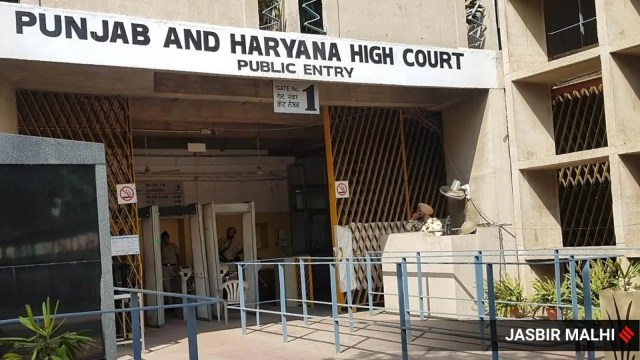
More than 21 years after he was convicted in an NDPS case by the trial court of Chandigarh, the Punjab and Haryana High Court has set aside the conviction, finding that an independent witness in the case “was not examined during trial”.
The verdict was delivered by a Bench of Justice Harpreet Singh Brar while hearing a petition filed by Madan Lal, who had been arrested in January 2000 by the Chandigarh Police for allegedly possessing 1.5 kg charas. He was then convicted by a Chandigarh court in January 2003 and sentenced to 10 years of imprisonment with a fine of Rs 1 lakh.
In 2004, Lal, however, filed an appeal against his conviction in the HC, which suspended his sentence.
According to the prosecution case, on January 1, 2000, a police party, headed by Sub-Inspector Rajinder Pal (investigating officer), was on patrolling duty near the Shimla counter, CTU parking at Inter-State Bus Terminus, Chandigarh. They received secret information that an accused is carrying a large quantity of charas and will soon be boarding a bus to Bathinda. Around 6.45 pm, an elderly man was seen coming from the side of Haryana Mini-Secretariat towards CTU parking. On seeing the police party, the accused immediately tried to turn back. On signal from the secret informer, police officials apprehended the accused, who disclosed his name as Madan Lal. One kilogram and five hundred grams of charas was recovered from his possession. He was then held guilty by the trial court of Chandigarh and sentenced to 10 years’ imprisonment.
The counsel for Lal, Salil Bali, contended that the trial court has failed to appreciate that apart from the police witnesses, the independent witness, Gulshan Kumar, was the only disinterested witness to the alleged recovery and for the reasons best known to the prosecution, this witness was never examined.
The state counsel, however, argued that merely because the independent witness was not examined, it does not make the depositions of the official witnesses inadmissible, which do not suffer from any serious infirmities. The discrepancies in the depositions of the witnesses are minor in nature and do not impact the prosecution case. The trial court has arrived at a guilty verdict on correct appreciation of material on record.
On hearing the contentions, Justice Brar noted that “although an independent witness was joined in the investigation, when the recovery was effected from the accused, he was not examined during trial. This lapse on the part of the investigation team becomes even more prominent, given the fact that the said independent witness was also the supplier of secret information and helped in identifying the appellant during the recovery”.
The Bench also cited a case of the apex court of Krishan Chand versus state of HP, wherein it laid down the ratio that “the failure of the investigating officer to associate an independent witness at the time of recovery creates a dent in the case of the prosecution”.

 3 min read


