Journalism of Courage



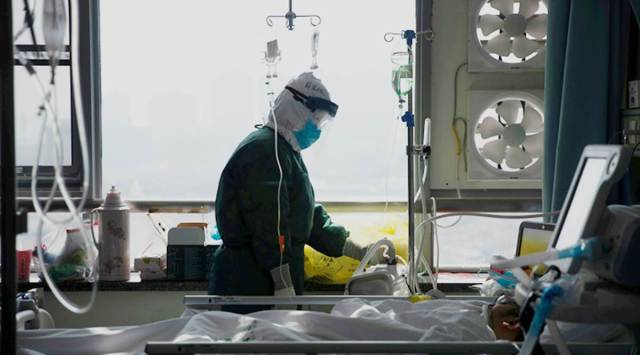
Despite coronavirus infections raging throughout Chandigarh, with the caseload substantially higher than its neighbour Panchkula, the UT is equipped with six sampling centres and three testing centres, in contrast to 19 government sampling centres in Panchkula.
In Chandigarh, samples for Covid-19 tests are collected at PGIMER, GMCH-32, GMSH-16, Civil Hospital 22, Civil Hospital 45, and Civil Hospital, Manimajra, which are then sent for testing at PGIMER, GMCH 32 and CSIR-IMTECH in Sector 39. In the last one week, 4,670 people have been tested for Covid-19, including both RT-PCR and rapid antigen tests.
The UT has been consistently criticised for not testing enough people and doctors have also expressed affirmation that the city’s testing facilities should be increased in order to check the spread of coronavirus. Professor Dr AK Aggarwal of PGIMER’s Department of Community Medicine says testing is the foremost weapon to fight Covid-19. “Test, detect and take action on a war footing. The protocol for testing is that if a person experiences some symptoms of the disease or presumes he is at risk due to exposure to Covid-19 patients, he should report to the doctor immediately, who based on a risk assessment form by ICMR will detect the intensity of the exposure and prescribe test, besides probing the severity of the illness- mild, moderate, high. Government hospitals are overburdened and the entry of private players will help increase testing, for I believe, the more we test the better it is. There is no need to restrict testing, for it’s the only way to contain the disease until the vaccine is out. It is also the time to wear masks, adhere to physical distancing and avoid going out unless necessary. Make use of Covid Helplines in case of confusions,” says Dr Aggarwal.
More testing facilities and testing centres in the UT is the need of the hour, agree doctors, with the city heading towards a peak at a time when provision under lockdown 4.0 allow reopening of every nook and corner of the city.
Dr Anita Sharma, Associate Director and Head, Lab Medicine at Fortis Hospital Mohali, says that it is imperative to have tests available that can diagnose the disease early, in order to contain the spread and treat the patients better. The rapid antigen tests, she says, fill the gaps due to non-availability of RT-PCR in some areas. Some of the recent research in the US suggest the need for widespread use of rapid tests.
She adds that though rapid antigen tests provide the advantage of taking less time in detection, lower cost, easier accessibility as no special technology is required, they also suffer from poor sensitivity, which has led to the tests not being favoured much by the clinical fraternity. “However, in hotspots or areas with high community transmission, with high pre-test probability of a positive person, it is a good modality to use for patients with Covid like symptoms. If such patients are tested negative through rapid antigen test, they should be retested by RT-PCR. The ICMR also recommends the use of these tests in high-risk asymptomatic patients like those undergoing dialysis or chemotherapy, not only to manage patients better, but also to safeguard the healthcare providers. As we progress into the pandemic, we need tests that are easy to perform, are available at point of care and are cost-effective.”
The value of Covid-19 antibody-based assays is yet to be ascertained, says the doctor, adding that its potential utility is for individuals who have been previously infected– by identifying cases who present late in the disease course, for determining disease prevalence, to identify convalescent plasma donors and to evaluate immune response to candidate vaccines. “Widespread presence of antibodies during surveillance testing suggests a community spread as also a possible herd immunity and can help in planning the vaccine strategy. They may also find a use for planning of manpower deployment in organisations. As reinfections have been reported, presence of antibodies should not lull the person in lowering their guards with respect to this infection,” explains Dr Sharma.
Dr Sandeep Chhatwal of Omni Clinics also believes that the need of the hour is more testing centres, as the government ones are over-burdened and over-crowded, with the health care workers also functioning under extreme pressure. “There is such a big load on the system that we do not get reports for two days at times, so we definitely need more machines and more kits. Tests are done only on a doctor’s prescription and done for those with symptoms, contacts of positive cases and people planning to travel. The strategy for Chandigarh should facilitate testing of all symptomatic patients and their contacts and RT-PCR should be the test of choice.”
PRIVATE LABS
Three ICMR approved private laboratories have been conducting Covid-19 tests in Chandigarh- SRL Diagnostic, Atulaya Healthcare and Metropolis Healthcare. The laboratories have a capacity to test about 100 patients, but the demand for tests has increased in the last few weeks. As a result, the laboratories pre-book appointments for testing, with the Metropolis Healthcare collecting only home samples. SRL Diagnostic and Atulya are offering RT-PCR and rapid antigen tests only on appointment at their Sector 11 centre, with Medicos in Sector 22 offering only antibody testing facility.
At GMSH-16, patients who come to the flu clinics are screened for Covid-19 and according to physician Dr Rajat Vats, usually there are 3-4 batches of patients to be tested and in one batch there are almost 40-50 people. “We need more kits and test maximum people to stop the spread. Chandigarh has a small population and we can test everyone who is living here. In this way, we can isolate those with infection and treat them. May be the government is funding less and so testing centers are few, because of which the spread is rapid, creating a chain that is impossible to trace,” shares Dr Vats.

 6 min read