Journalism of Courage



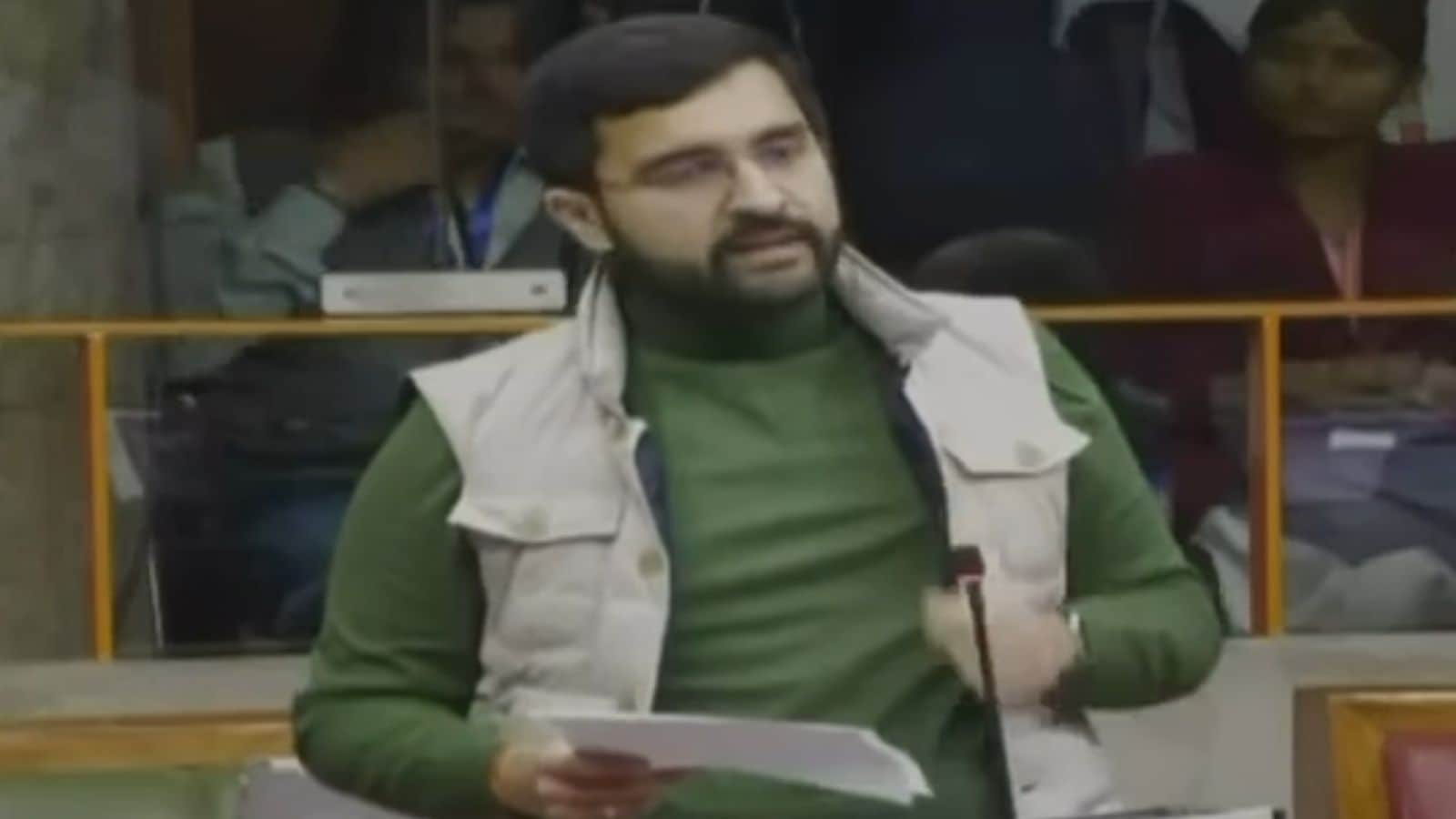 Congress legislator Aditya Surjewala (Photo/Instagram Aditya Surjewala)
The Haryana Assembly on Monday passed a Bill, increasing the daily working hours for employees of shops and private establishments from nine to ten hours, amid strong opposition by Congress legislator Aditya Surjewala, who denounced it as “modern-day slavery”.
An amendment moved by Surjewala, and supported by Congress members to retain the existing nine-hour limit, was rejected by a voice vote.
The Assembly passed the Haryana Shops and Commercial Establishments (Amendment) Bill, 2025, amending the Haryana Shops and Commercial Establishments Act, 1958. The Bill proposes to raise daily working hours from nine to ten, while retaining the overall weekly limit of forty-eight hours. It also seeks to increase the permissible limit of overtime work per quarter from 50 hours to 156 hours, enabling shops and commercial establishments to meet peak business demands more efficiently. Another provision amends Section 8 to extend the maximum period of continuous work without rest from five to six hours.
Officials said the amendments were intended to enhance operational flexibility, ensure gender equality, strengthen workers’ welfare, and facilitate ease of doing business.
Haryana Labour Minister Anil Vij hailed the Bill as “beneficial for both workers and shopkeepers, and also serving the interests of employees as well as traders”.
Opposing the Bill, Surjewala said, “In the guise of ease of doing business, this Bill is snatching away the rights of lakhs of employees in Haryana, stripping them of their dignity and robbing them of their self-respect.”
“In the Bill, daily working hours have been increased from 9 to 10 hours. Along with this, overtime has been proposed to rise from 50 hours to 156 (one hundred fifty-six) hours in three months. Now, just calculate. In three months, excluding Sundays, there are 78 (seventy-eight) working days. Divide 156 (one hundred fifty-six) by 78 (seventy-eight), and it comes to 2 extra hours every day. That means 10 hours of regular work plus 2 hours of overtime. From Monday to Saturday, working 12 hours a day will now be legal!” he exclaimed.
Surjewala said, “After working for 12 hours, what will that employee do? Teach his children? Serve his elderly parents? Or just collapse at home and return the next morning to grind in the same mill again? Is this ease of doing business or the legalisation of modern-day slavery?”
Surjewala also pointed out: “Earlier, after 5 hours of work, a break was given to drink tea, eat food, and take a breath. In this Bill, it has been proposed from 5 hours to 6 hours. Six hours of continuous work! Without eating! Without tea or water! Without sitting! How can we order employees to work 6 hours daily without a break?”
He argued that with these amendments, nearly 85 per cent of the shops and establishments employing fewer than 20 workers would be excluded from most provisions of the Act. “Haryana has 5-6 lakh commercial establishments, of these, 85% (eighty five percent) have fewer than 20 workers! That means our grocery shops, restaurants, dhabas, small hotels, coaching centres, salons, beauty parlours — none of these will be covered under this law,” Aditya said.
Responding to the criticism, Minister Anil Vij said, “Establishments with less than 20 workers will no longer need a registration certificate under the Bill, but they will only need to provide an intimation of their business. Earlier, every shopkeeper was required to register.”
“Raising the threshold limit from zero employees to 20 or more for registration and other regulatory provisions is meant to reduce compliance burdens for smaller businesses, encourage job creation, and eliminate the fear of non-compliance,” Vij clarified. Vij also explained that the increase in the overtime period within a quarter from 50 hours to 156 hours would allow establishments to engage workers for longer overtime during periods of exceptional work pressure.
Likewise, according to Vij, “The daily working hours would be 10 hours in Haryana, like in Maharashtra, Punjab, Telangana, Andhra Pradesh, and Odisha. Regarding overtime, the maximum of 156 hours would be permitted in Haryana (which is the highest in the country), whereas it is 144 hours in Maharashtra, Punjab, Telangana, Andhra Pradesh, and Odisha; 125 hours in Uttar Pradesh; 72 hours in Tamil Nadu; and 50 hours in Karnataka. Similarly, the interval of rest will be after six hours in Haryana, Maharashtra, Telangana, Andhra Pradesh, and Odisha.”

 4 min read