Premium
This is an archive article published on May 26, 2024

Agnipath tempers enthusiasm for Army job among Punjab youth, Congress’s promise to abolish scheme fails to reach masses

A retired havildar notes a perceptible fall in the number of youngsters enrolling in his training centre. Many people cite the lack of job security and reputation for an Agniveer soldier.

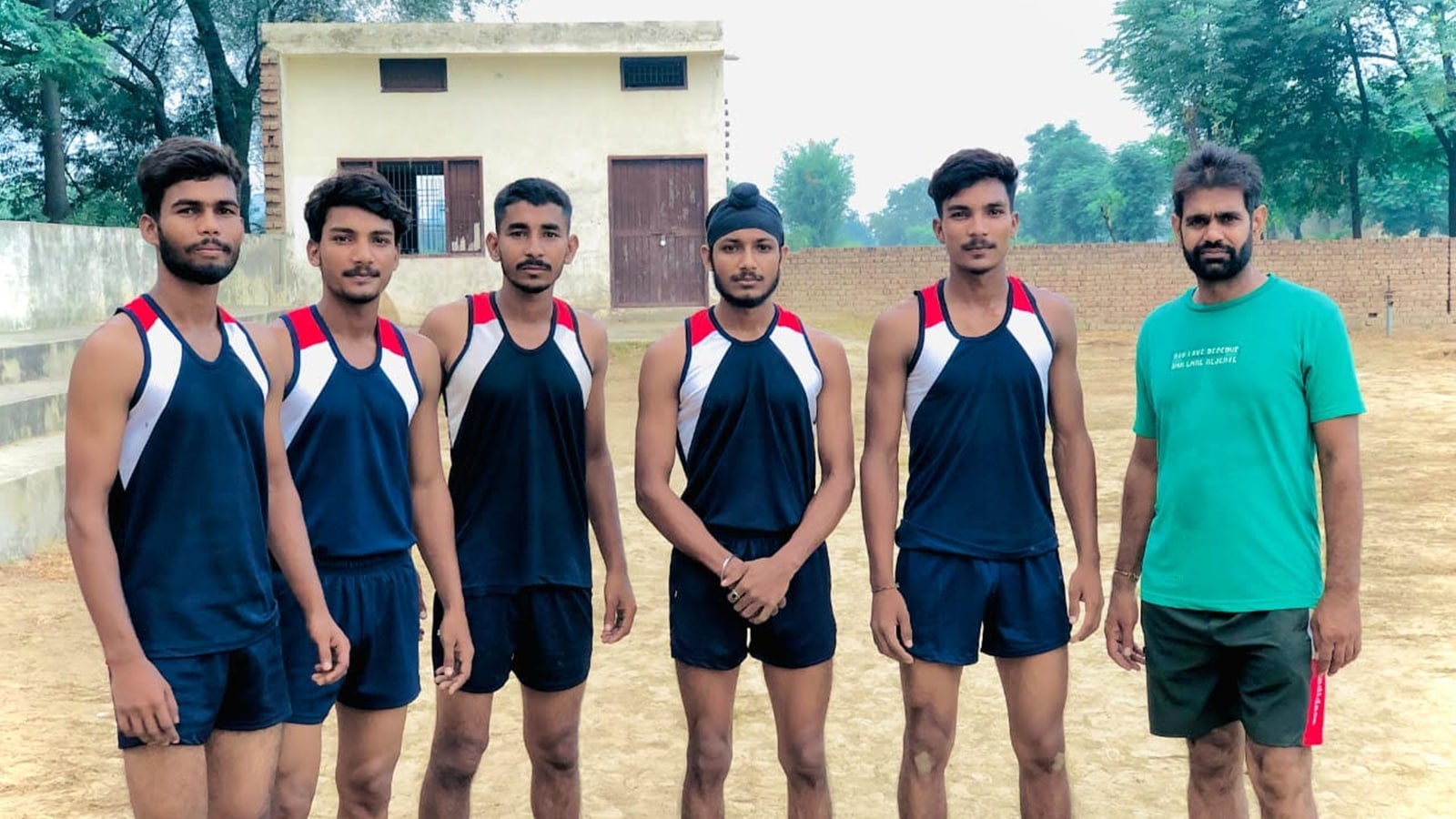
Army job aspirants at ‘Phullokhari Training Camp’.Army job aspirants at ‘Phullokhari Training Camp’.

When Havildar Karmajit Singh retired from the Army in 2019 and returned to his native village of Phullokhari in Punjab’s Bathinda district, he decided to train the youth of his village to join the armed forces.

With the assistance of the gram panchayat, Guru Gobind Singh Oil Refinery started providing equipment and training materials to the retired havildar. Over the last four years, Karamjit Singh has successfully trained over 100 youths from 11 villages and many of them have been selected to join the Army and the police.

However, he has noted a fall in the number of people interested in preparing for the Army recruitment rally after the introduction of the Agnipath scheme. Rolled out in June 2022, the Agnipath scheme recruits Agniveers — soldiers, airmen, and sailors — into the armed forces for four years. At the end of the four-year tenure, up to 25 per cent of them can apply voluntarily to join the services regularly, subject to merit and organisational requirements.

“There used to be around 100 to 150 young people from nearby villages receiving training for the Army recruitment rally before the Agnipath scheme was launched. Now, the number of individuals interested in Army recruitment has dropped to 50. Previously, young people from middle-class families were also interested in Army recruitment. Now, most of the candidates come from poor economic backgrounds,” he said.

According to Ravinder Singh, who had initially desired to join the Army and underwent training, there is now a question of whether spending four years in the Army is necessary if one could use that time to establish one’s own business or work in security. As a result, he has abandoned his plans to join the Army.

“Army jobs offer job security to young individuals who may struggle with competitive exams but possess good physical health and stamina. However, with the launch of Agnipath, this job security has been impacted,” he said.

However, it is not only job security that has troubled the youth but also the presumed lack of reputation for an Agniveer solider.

Story continues below this ad

Getting trained under Karamjit Singh, Prabhjot Singh, 21, son of a tailor from Rama village near the refinery, said, “You earn respect when a soldier comes back to the village after retirement, just like our coach Karamjit Singh. He gave 16 years to the service. He is a complete soldier. But I am not sure if there will be the same respect for someone who will return after four years. Because he will also fight the tag that the Army dropped him.”

Karamjit Singh said Agnipath may have had a relatively more impact on aspiring soldiers in Punjab than in other states. “Our youth can afford to go abroad or have opportunities for other equally-paying jobs in the private sector or start their own small business. However, It may not be true for other states where youth will turn up to the Army regardless of whether the Agnipath scheme is there.”

“I was really excited about the Army recruitment. I had cleared the written exam and medical test. Only the pending physical was never conducted, and later, Agnipath was launched. How can someone who dreamed of a regular job in the Army go for Agnipath? It shattered all my imagination about joining the Army,” said Gurwinder Singh from the Tarn Taran district’s Rajoke village, which shares a border with Pakistan. Gurwinder is now searching for opportunities to go abroad.

“There is an impact on the number of youngsters wanting to join the Army after Agnipath. Earlier, we used to have 50 to 60 aspirants in a batch that we prepared for upcoming rallies. After Agnipath, the number of aspirants in a batch has dropped to 25 to 30,” said Paramjit Singh, an instructor at government-run pre-recruitment Sainik Vocational Training Centres (SVTC) in the border district of Gurdaspur. Such centres are opened across all districts.

Story continues below this ad

Congress promise to abolish Agnipath

In April, the Congress, while releasing its party manifesto, ‘Nyay Patra,’ the Lok Sabha elections 2024, said it would abolish Agnipath and direct the armed forces to resume normal recruitment to achieve full sanctioned strength.

The Congress has, however, failed to reach the young population with its promise to abolish the Agnipath scheme. The Indian Express talked to several aspirants who were unaware of Congress’s announcement on the scheme. “I am not aware if any party has promised to abolish Agniveer. I don’t think politicians are interested in such issues. They are busy with switching parties and mudslinging. They don’t care about the problems of youth,” said Gurnam Singh from Amritsar.

Gurdaspur Congress Lok Sabha candidate Sukhjinder Singh Randhawa admitted the same. Talking to The Indian Express, he said, “Army jobs were seen in high esteem even among economically stable families in our border belt. It was one of the main professions. But now the numbers have been dropping after Agniveer. It is no longer a job now. It is just an opportunity to get some experience in the Army, some quick bucks, and then again join the rat race in the open market with little advantage of experience in the Army. Already, we lack employment opportunities on the border belt. Now, a whole profession is gone for the new generation. But, indeed, our promise on Agnipath has not become the talk of the town in Punjab.”

All the 13 seats in Punjab will go to poll in the seventh and final phase of Lok Sabha elections 2024 on June 1.

Kamaldeep Singh Brar is a Principal Correspondent at The Indian Express, primarily covering Amritsar and the Majha region of Punjab. He is one of the publication's key reporters for stories involving the Akal Takht, the Shiromani Gurdwara Parbandhak Committee (SGPC), and the sensitive socio-political issues of the border districts. Core Beats & Specializations Religious & Panthic Affairs: He has deep expertise in the internal workings of the Akal Takht and SGPC, frequently reporting on religious sentences (Tankhah), Panthic politics, and the influence of Sikh institutions. National Security & Crime: His reporting covers cross-border drug smuggling, drone activities from Pakistan, and the activities of radical groups. Regional Politics: He is the primary correspondent for the Majha belt, covering elections and political shifts in Amritsar, Tarn Taran, and Gurdaspur. Recent Notable Articles (Late 2025) His work in late 2025 has been centered on judicial developments, local body elections, and religious controversies: 1. Religious Politics & Akal Takht "Akal Takht pronounces religious sentences against former Jathedar Giani Gurbachan Singh" (Dec 8, 2025): Covering the historic decision to hold the former Jathedar guilty for granting a pardon to Dera Sacha Sauda chief Gurmeet Ram Rahim in 2015. "YouTube suspends SGPC’s channel for a week over video on 1984 Army action" (Nov 20, 2025): Reporting on the digital friction between global tech platforms and Sikh religious bodies. "As AAP govt grants Amritsar holy tag, a look at its fraught demand" (Nov 28, 2025): An analytical piece on the long-standing demand for declaring Amritsar a "holy city" and its political implications. 2. Crime & National Security "Mostly Khalistanis on Amritpal’s hit list: Punjab govt to High Court" (Dec 16, 2025): Reporting on the state government's claims regarding jailed MP Amritpal Singh orchestrating activity from prison. "Punjab man with links to Pakistan’s ISI handlers killed in encounter" (Nov 20, 2025): Detailing a police operation in Amritsar involving "newly refurbished" firearms likely sent from across the border. "15 schools in Amritsar get bomb threat emails; police launch probe" (Dec 12, 2025): Covering the panic and police response to mass threats against educational institutions. 3. Political Analysis & Elections "AAP wins 12 of 15 zones in SAD stronghold Majitha" (Dec 19, 2025): Highlighting a significant shift in the 2025 rural elections where the Akali Dal lost its grip on a traditional fortress. "Tarn Taran bypoll: woman faces threats after complaining to CM Mann about drug menace" (Nov 9, 2025): A ground report on the personal risks faced by citizens speaking out against the illegal drug trade in border villages. "AAP wins Tarn Taran bypoll, but SAD finds silver lining" (Nov 14, 2025): Analyzing the 2025 assembly by-election results and the surprising performance of Independents backed by radical factions. 4. Human Interest "Two couples and a baby: Punjab drug addiction tragedy has new victims" (Nov 20, 2025): A tragic investigative piece about parents selling an infant to fund their addiction. "Kashmiri women artisans debut at Amritsar’s PITEX" (Dec 8, 2025): A feature on financial independence initiatives for rural women at the Punjab International Trade Expo. Signature Beat Kamaldeep is known for his nuanced understanding of border dynamics. His reporting often highlights the "drug crisis in the underprivileged localities" (like Muradpur in Tarn Taran, Nov 9, 2025), providing a voice to marginalized communities affected by addiction and administrative neglect. X (Twitter): @kamalsbrar ... Read More

Stay updated with the latest - Click here to follow us on Instagram

Latest Comment
Post Comment
Read Comments
Advertisement
Loading Taboola...
Advertisement