4 min read
Stay updated with the latest - Click here to follow us on Instagram

Journalism of Courage



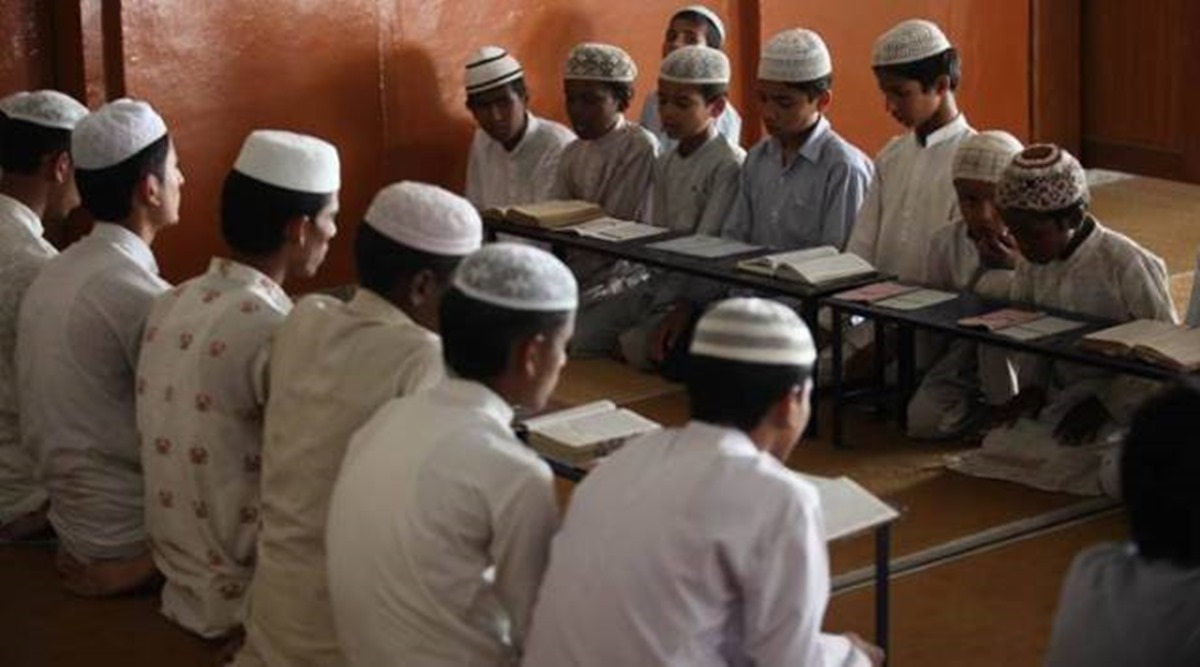 In other words, one thing is very clear that the state act does not constitute the madarsa board as a university. It's not a university. (Representative image)
 In view of various BJP-ruled states including Karnataka mulling to introduce mainstream education in madrasas, minority institutions have also taken a lead in bridging the gulf. Bidar-based Shaheen Group of Institutions (SGI) recently launched a program to increase the employability of 10,000 madrasa students by imparting mainstream education. In Karnataka, the institution is expected to train over 1,400 students based on NIOS (National Institute of Open Schooling) and state board syllabus. The classes are expected to start on May 20, following the Ramzan break.
Karnataka School Education Minister BC Nagesh had earlier claimed that the state government was planning to introduce mainstream education in madrasas after receiving complaints from parents about ‘poor quality of education’.
The SGI has designed a program to provide mainstream education to 5,000 Huffaz (madrasa dropouts) and 5,000 madrasa students in 50 madrasas across India.
The program titled ‘Madrasa Plus’ is an 18-month course specially designed for dropouts or those who have never been to school but received faith-based learning. The students are given an opportunity to enter and pass Class X.
According to the SGI, the program primarily aims to integrate madrasa-educated students into mainstream education through bridge courses, and personalised teaching classes, free of cost. In Karnataka, six madrasas in Bidar, Tumkur, Ramanagara, Hassan, Hubballi, and Sriranagapatna have been identified for imparting modern education.
According to Dr Thouseef Madikeri, CEO of SGI, Karnataka madrasa students will be taught based on NIOS and state board syllabus. “Since students from other states including Maharashtra, and West Bengal study in madrasas, it is necessary to adopt the NIOS syllabus. Otherwise, these students will find it difficult to study the state board syllabus because Kannada is compulsory. Only where there are Karnataka students we are teaching them the state board syllabus,” said Madikeri. While NIOS includes English, Hindi, Maths, Science, and Social Science, the state board syllabus includes Kannada, Hindi, English, Social Science, Science, and Mathematics.
In fact, the SGI is also collaborating with the Maulana Azad National Urdu University to organise a campus recruitment drive to hire 500 teachers for this project. Selected teachers will be given a monthly salary of Rs 15,000 to Rs 30,000 along with food allowance.
However, some maulanas have objected to madrasa students being imparted modern education. Madikeri said, “There were obstacles from maulanas earlier who opposed modern education. However, with central government schemes aimed at modernizing madrasas and with state governments like Uttar Pradesh, and Assam pressurizing madrasas to include modern education, the maulanas are now welcoming it.” The program also aims to encourage students to pursue diplomas, polytechnic, and other higher studies after passing Class X. The students are expected to appear for the Class X exam in October 2024.
Mohammed Maqsood Imran Rashadi, chief imam of Jamia Masjid Bengaluru City, said: “We welcome the decision to impart modern education in madrasas. However, I don’t think this is being done because of the pressure from the government to introduce modern education in madrasas… Earlier madrasas objected to teaching English because of British rule, but after Independence, there is no objection by madrasas to teaching modern education. We believe madrasa students should equally learn modern education and religious teachings.”
Stay updated with the latest - Click here to follow us on Instagram