Journalism of Courage



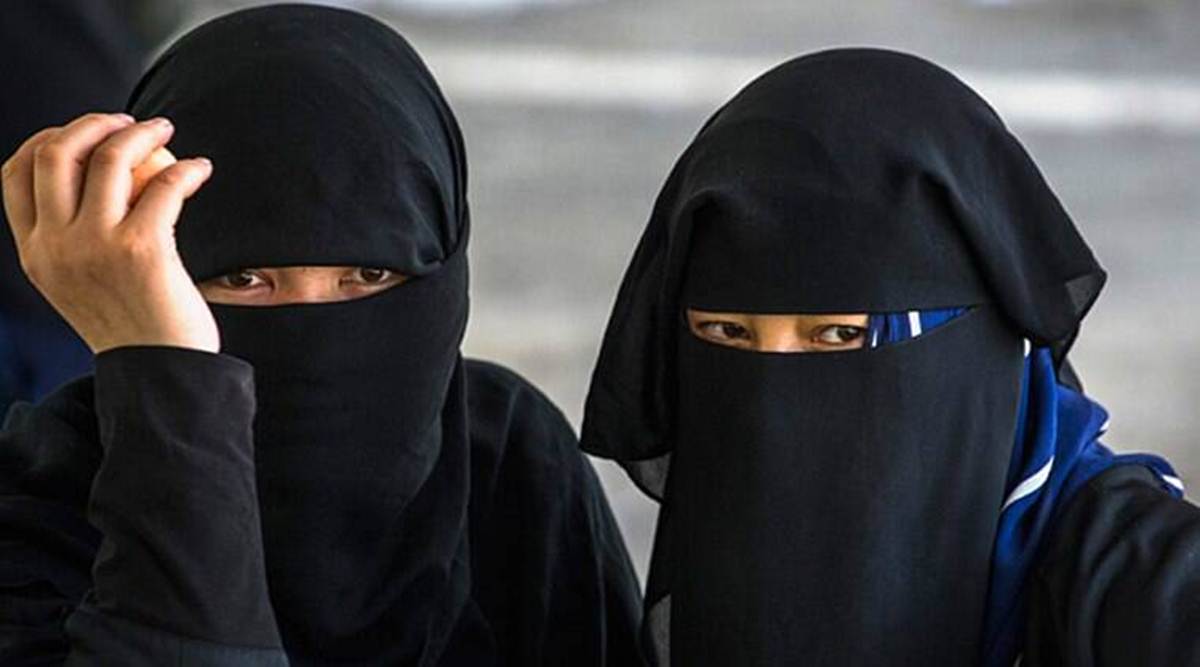 Initially, there were 12 Muslim students who had demanded that they be allowed to wear the hijab during class hours, but the number has since reduced to seven. (Representational)
For nearly a month, a government college in Karnataka’s Udupi district has banned students from wearing hijab inside the classroom. Seven of the college’s Muslim students, who demanded that they be allowed to attend classes while wearing a hijab, have been denied entry.
The principal of the Government Women’s Pre-University College, Udupi, has said that the ban was being enforced to maintain “uniformity”.
The college, built in 1985, has around 700 students, including 70 Muslim students, studying in the Science, Arts and Commerce branches.
Initially, there were 12 Muslim students who had demanded that they be allowed to wear the hijab during class hours, but the number has since reduced to seven. Those still resisting the ban say the others gave in to the college’s threats of not issuing hall tickets for final exams.
According to college authorities, students are allowed to wear hijab until classes start. Classes are held between 9.30 am and 4 pm.
A protesting student, who did not want to be named, said, “We are asking for our fundamental rights and nothing else. The college is trying to portray us in a bad light for demanding our rights. We are not allowed inside the college till we fall in line. It has been 20 days, and they have marked us absent.”
Speaking to The Indian Express, Rudre Gowda, principal of the college, said, “The girls are allowed to wear hijab and or burqa till they reach their desk, but once the class starts, they must remove it. Though there is no uniform policy or guidelines, it has been followed for the past 37 years. But now, these issues are polluting the college environment.”
“We have already discussed (the issue) in meetings with parents, and many of them who have studied here were convinced. But students who are protesting did not bring their parents, but came with their relatives or members of students’ organisations and continued it (the protest). This is not specifically a problem of this college, but also of other colleges too. I have already sent a report to the education department and have sought to bring a uniform policy,” Gowda added.
Masood Manna, of the students’ group Campus Front of India, said, “We have met the Udupi DC in this regard… but it is only the college principal who is against it (the entry of girls wearing hijab). He holds a meeting once in a while, which is an eyewash. But what stops them from allowing girls to enter with hijab. It is left to their choice.”
This is not the first such incident in Karnataka in recent years. Similar incidents have been reported in Udupi, Dakshina Kannada and Chikkamagaluru districts.
In 2018, Hindu students in a government first grade college of Balagadi village in Chikkamagaluru district wore saffron scarves demanding that the college ban the entry of students wearing burqa and hijab inside the classroom. The principal, who held a meeting with parents, was able to convince them that hijab would be allowed, but not burqa. Again, in late December last year, the issue cropped up, but with the help of the local MLA and officials, it was resolved.
An officer in the state’s Department Of Pre-University Education said the department would now be coming out with a uniform policy for students. “It is… disturbing the environment of the colleges. We will soon release the uniform policy,” the official said.
Civil society group Campaign Against Hate Speech condemned the college action in a statement. “The denial of entry for hijab-wearing Muslim students is an instance of institutional discrimination and should be seen in the socio-political context of violence against Muslims in the country, more specifically targeting of Muslim women in multifarious ways,” the group said.

 4 min read