Journalism of Courage



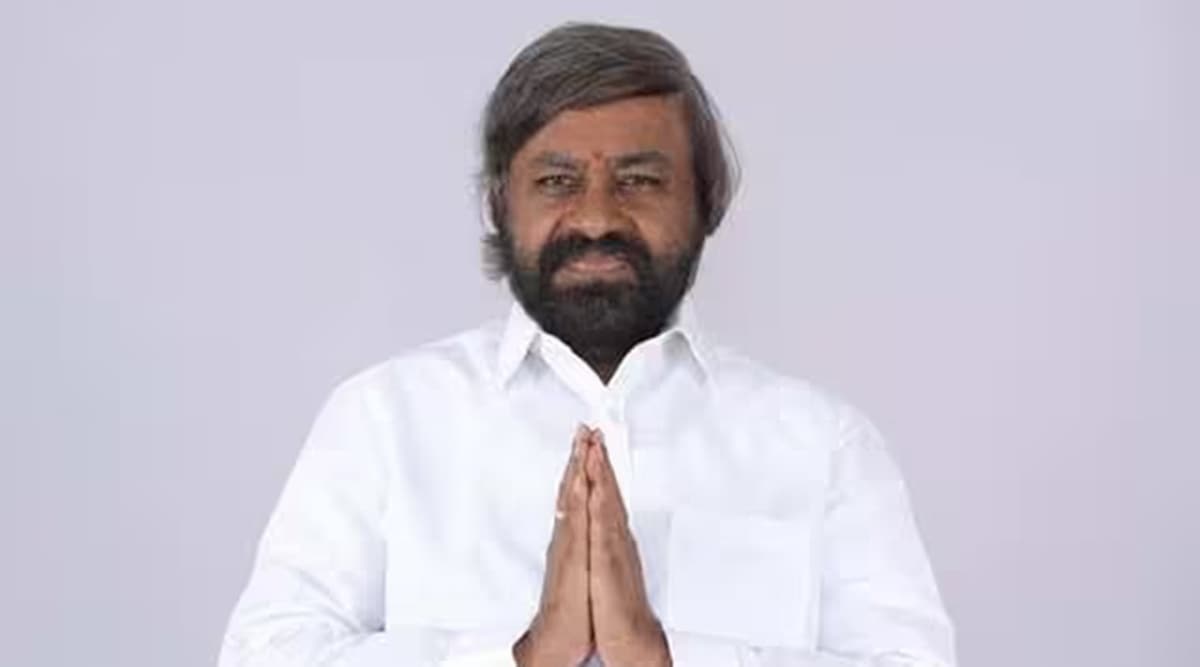 Highlighting the importance of containing environmental degradation, Khandre stressed on the importance of going carbon neutral. (File photo)
 Concerned that air-pollution levels of Karnataka may reach close to that of Delhi, Eshwar Khandre, Minister of Forest, Ecology & Environment, called for immediate measures.
Addressing the India Clean Air Summit (ICAS 2023) on Friday, he said: “I am dedicated to making Bengaluru and Karnataka more sustainable and the air cleaner. I would specifically like to point out the case of New Delhi. Every year, during winter, the megapolis turns into a gas chamber, thanks to the very bad quality of air and the thin haze that descends upon the city.”
Talking about the initiatives taken by the state government to contain air pollution, the Minister said, “Some of the key initiatives our government is working on include the target of planting 5 crore trees annually in Karnataka. Already, we have planted over 3 crore saplings in three-and-a-half months. We are in the process of regulating the highly polluting industries, especially the ones from the red category, which have a propensity to contribute towards the further deterioration of existing conditions.”
Speaking on climate change, Khandre said that at present, life is at stake as people confront harsh realities: “Today, our survival is at stake, thanks to one of the biggest threats to our existence and sustenance on Earth — climate change. It is our collective duty to protect what we have built.”
Highlighting the importance of containing environmental degradation, Khandre stressed on the importance of going carbon neutral.
To achieve the Sustainable Development Goals (SDGs), which include improving air quality and reducing greenhouse gas emissions, Dr B Sengupta, former member secretary of the Central Pollution Control Board (CPCB), discussed various new initiatives, highlighting the major thrust areas in Karnataka, focusing on addressing data reporting gaps and issues with air quality monitoring.
He emphasised on the need for calibrated instruments and quality data, especially in regions where air quality remains high despite low industrial and vehicular activities. He underlined the importance of installing Continuous Emission Monitoring Systems (CEMS) in industries to ensure accurate data and adoption of green technologies like flue gas desulphurisation (FGD) and hybrid systems, stricter emission standards (BSVII or BSVIII), among others.
“Decarbonisation is not just a choice but a necessity for India’s sustainable future. As we strive towards our net-zero targets by 2070, embracing innovative approaches like green hydrogen, waste utilisation, and carbon capture and utilisation become imperative. Only by reimagining our industries and energy systems can we pave the way for a cleaner, greener, and more resilient India for generations to come,” said Sengupta.
India Clean Air Summit (ICAS) is India’s premier event on air pollution, organised by the Centre for Air Pollution Studies (CAPS) at the Center for Study of Science, Technology and Policy (CSTEP).
Dr. Jai Asundi, Executive Director, CSTEP, said, “The idea behind the summit is to ensure engagement between academia and industry policymaking and other stakeholders in civil society to figure out that air pollution is a common problem for all to solve. Given the importance of air quality and what we are seeing in the ecosystem, we need to work on four pillars – measuring the air quality, modelling to understand the changes happening around us, policy engagement to understand the impact of air quality, and the latest thing is capacity building on how do we build capacity in our institutions in our society.”

 4 min read