Journalism of Courage



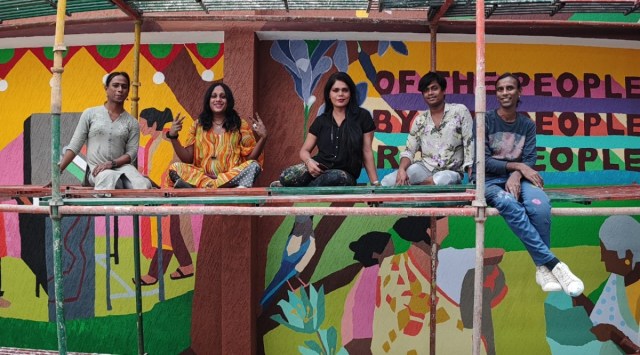 The project's focus is on reclaiming public spaces which were once places of dark past for the community, through various art projects.
 Aravani Art Project, a platform for trans and cis women artists, has been creating stunning murals in public spaces across India since 2016. Started by mural artist Poornima Sukumar, the collective aims to change societal perceptions of the LGBTQIA+ community through their artwork, while also creating safe spaces for alternate voices.
Shanthi M, a mural artist associated with the project since its inception, explained that the idea for the Aravani Art Project was born during Sukumar’s work on a documentary about the Koovagam Festival, a famous transgender festival. “As an artist, she decided to teach them art. And that’s how the Aravani project started,” said Shanthi. The collective is named after the deity worshiped at the Koovagam festival.
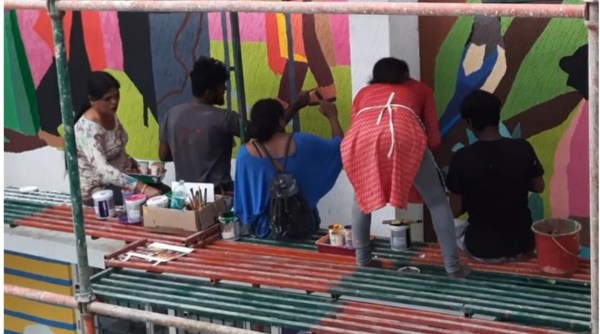 The collective aims to help recognize the strengths in the arts and find alternative sources of income for the transgender community through freelance art and design projects.
The project’s focus is on reclaiming public spaces which were once places of dark past for the community, through various art projects. The collective believes that the streets are a particularly important place to carry out their work, as it is in these public spaces that the bodies of transgender identifying people attract violence, harassment, social negligence, and pressure.
Shanthi added that art is a therapeutic process that helps heal most of the mental disturbances lurking around the community members. “Art is like therapy which heals our mood,” she said. The project has expanded beyond Bengaluru, with a presence in places like Tamil Nadu, Kerala, and Maharashtra, impacting the lives of over 200 trans women.
The collective aims to help recognize the strengths in the arts and find alternative sources of income for the transgender community through freelance art and design projects. The projects mainly involve people from the community collaborating with other communities, companies, government institutions, and fellow societies from different geographic spaces to create a space for social participation and safe conversations.
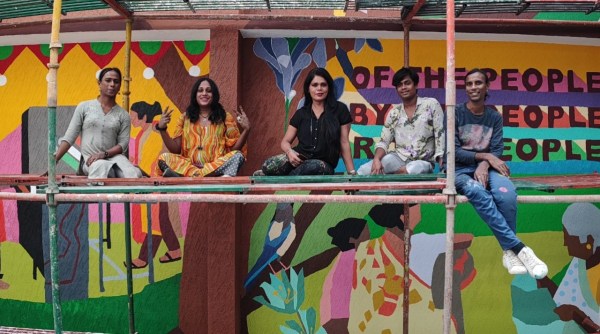 he projects mainly involve people from the community collaborating with other communities, companies, government institutions, and fellow societies from different geographic spaces to create a space for social participation and safe conversations.
The collective finds different ways and methods of practicing intersectional feminism and demystifying stigma in a natural way. Their artworks are always bright and bold, symbolizing the likes of the trans community, with messages of inclusivity and equality like “We do exist” and “Future is Fem” left behind in the artwork.
Through the projects, the collective aims to capture stories of freedom, dreams of acceptance, and hopes for possibilities while archiving the cultural nuances like traditional practices, language, songs, myths, and stories of the community, which remain vibrant and unexplored.
One of their memorable projects was creating mural art for Facebook’s headquarters in California in 2017. Their recent mural art work is at the building of the Chief Election Commissioner of Karnataka, creating awareness about voting, especially among people with disabilities and marginalized communities.
Shanthi describes the artists of the Aravani Art Project as “spider-women.” “We are not scared of heights. We are ready to scale any height to deliver our artwork. We work like spider women.” The collective aims to develop organizational skills and advocate social change by raising community awareness in public places.

 4 min read