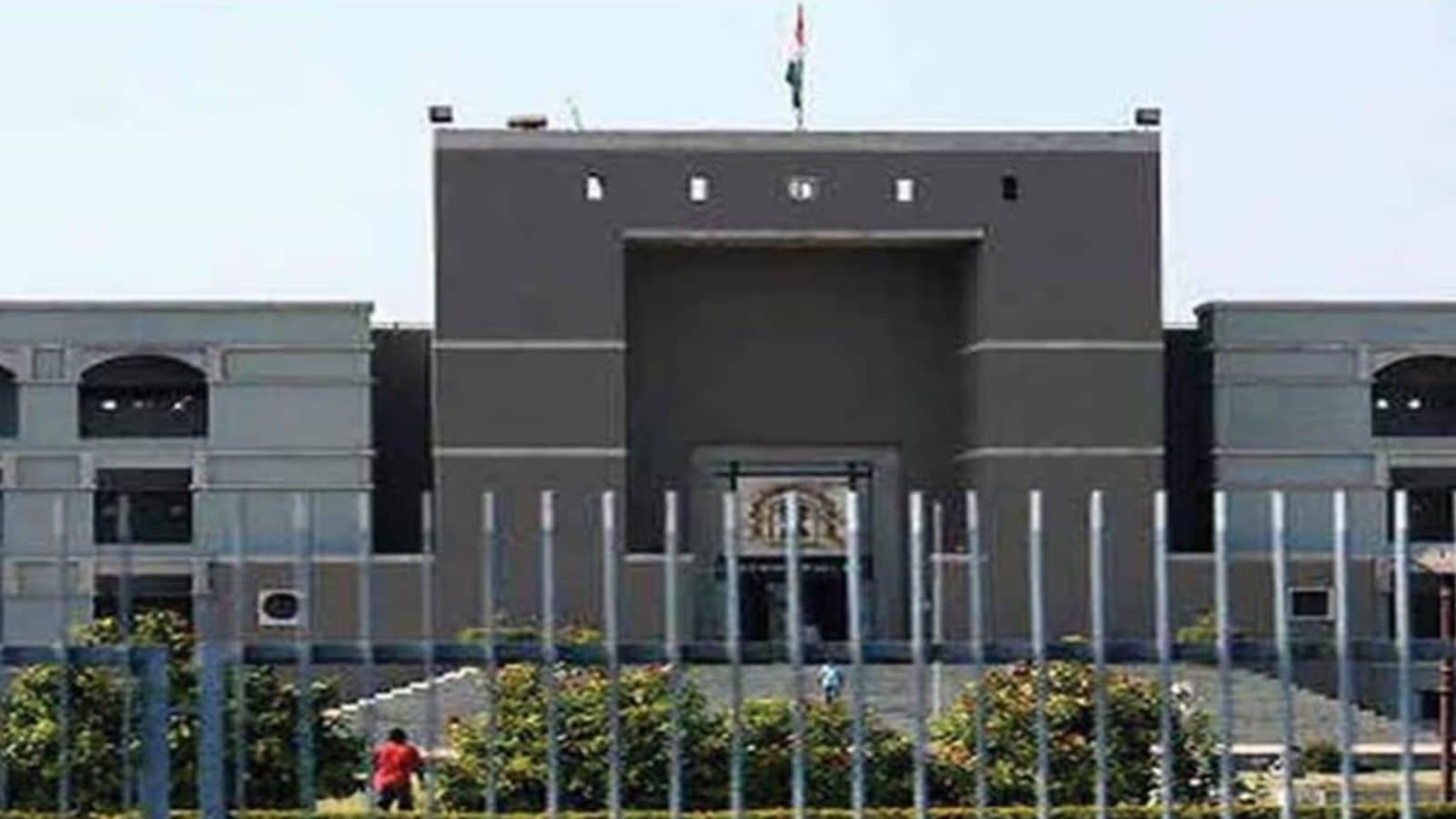
The Gujarat High Court Saturday quashed and set aside a notification issued by the Ahmedabad Commissioner of Police under section 144, to prevent unlawful assembly stating that it appeared to be “arbitrary” and therefore, “violative of the fundamental rights”. The petitioners in the case were prominent citizens including academicians who faced FIRs following their participation in protests against the implementation of the Citizenship Amendment Act (CAA).
The HC also directed the state government to take “due care” of the procedural aspects and give “wide publicity” on social media to make the public aware about the notifications, when they are implemented in the future.

The Gujarat HC was hearing a 2019 petition, where the petitioners which include professors at the Indian Institute of Management, Ahmedabad Navdeep Mathur, Ankur Sarin, Professor Raghavan Rangarajan from the Ahmedabad University and businesspersons Sanjiv Anil Shah and Archana Sanjiv Shah, had sought quashing of the orders as well as directions to the state. The petitioners had contended they were protesting against the implementation of the CAA in Ahmedabad in 2019 and the police registered an offence against them for violation of the notification issued under Section 144 of the Code of Criminal Procedure, 1973. The petitioners contended that they did not have any knowledge of the issuance of any such notification at the time of the protest as the same had not been publicised. The petitioners also placed on record that since the year 2016 to 2019, such “notifications were issued by the authority concerned from time to time, and issuance of such Notifications amount to curtailment of the fundamental right of the petitioners of holding a protest against the elected Government in a peaceful manner.”
The petitioners were represented by advocate BS Soparkar.
Although the public prosecutor Hardik Dave, appearing for the state, submitted that the impugned notifications had “expired long back and therefore, there was no no need for those notifications to be declared as illegal”, Justice MR Mengdey of the Gujarat High Court, in a judgment pronounced on December 4, held that “even if the notifications have lived their lives and are no more in force today, their validity is required to be considered, as, if the same is not done, the petitioners and many others would be facing prosecution for violation of the notification which stands declared arbitrary.”
The court also rejected the argument of the state that the petitioners could have made representation to the respondent authority against the notifications and said that by nature Section 144 of the Code is intended to “meet emergent situations” and is “not intended to be either permanent or semi-permanent in character”. The court held that the authorities have “clearly circumvented the said provision by issuing the notifications one after the other”.
The court judgment states, “If the Notifications impugned in the present petition are perused, they do not give any impression of the situation. Prevalent at the relevant time required the authorities concerned to take recourse to the power under S.144 of the Code. As per the settled legal position, these powers being amenable to the judicial review and scrutiny, exercise of it, requires to appear reasonable and therefore, the authorities exercising these powers are also required to give their reasons for the same… The Notifications questioned in the present petition do not bear any reasons given by the authorities for issuing the same.”
The court further states, “When, by exercise of powers under S.144 of the Code, the fundamental rights or constitutional rights of a class of citizens are being affected, the exercise needs to be transparent. The scheme of the provision of S.144 of the Code itself makes it clear that the authority exercising these powers is required to come to a conclusion that it is necessary to exercise these powers to prevent disturbance to public peace and tranquility…”
Story continues below this ad
Considering the petitioner’s case that such orders, when implemented, must be given wide publicity as the public remains unaware about the enforcement of the same, the court said, “The public at large has no access to such official gazette. In the era, where several modes of mass communication, including social media platforms are available, it is incumbent upon the Respondent authorities to publish such Notifications / Orders by using such modes…”
The court order also considered the submission of the petitioner that the state authorities have been issuing similar such Notifications under Section 37(1) of the Gujarat Police Act and stated, “As per the settled legal position, the powers available to the authorities concerned under S.144 of the Code as well as Section 37 of the G.P. Act are comparable to each other and their purpose is to achieve the objective for preservation of public peace and tranquility and prevention of disorder. Therefore, the principles, which apply to exercise of powers under S.144 of the Code, would also apply to be exercised under Section 37 of the G.P. Act.”


 5 min read