Journalism of Courage



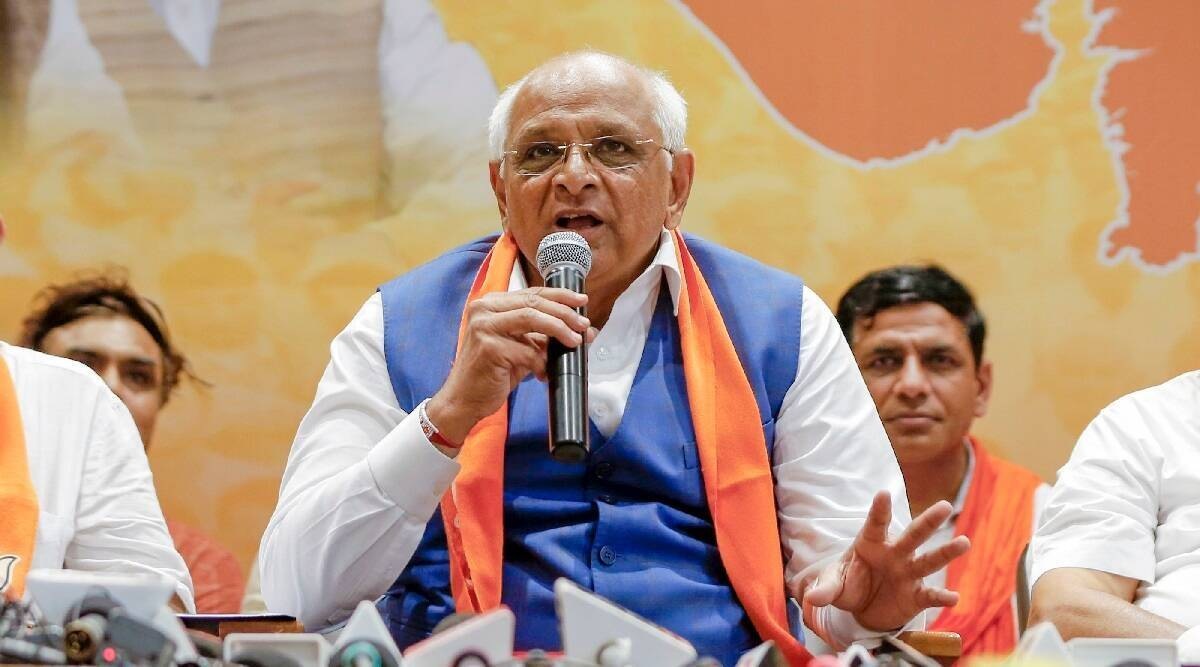 The projections say the state’s economy is expected to dip further and grow only by 0.6 per cent during 2020-21.(File)
A sharp dip in Gross State Domestic Product (GSDP) will be the main concern as Gujarat Finance Minister Kanu Desai is all set to present the incumbent government’s final budget Thursday before the state heads for elections later this year.
Gujarat’s GSDP that grew at 17.7 per cent in 2012-13 (at current prices) has fallen steadily to 9.8 per cent, as per the government’s quick estimates for 2019-20. The projections say the state’s economy is expected to dip further and grow only by 0.6 per cent during 2020-21.
Though the sudden slide from 2019-20 to 2020-21 is largely due to the Covid-induced nationwide lockdown and related restrictions, the government would be hard-pressed to explain how the growth percentage of Gujarat has trailed to single digits in the past decade.
Despite the recent fall in GSDP growth rates during the last decade, the state has clocked an average growth of 11.64 per cent (at current prices) between 2011-12 and 2020-21. This is only a tad higher than the 10 per cent growth it achieved between 2001-10. In terms of the GSDP composition, the contribution from agriculture has fallen from 17.8 per cent in 2011-12 to 13.1 per cent in 2019-20. However, manufacturing sector’s contribution rose from 28.4 per cent to 35.8 per cent during the nine-year period.
Populist budget
The budget session of the Gujarat Assembly will begin Wednesday and end on March 31. With assembly elections around the corner, the upcoming budget — also the first by the Bhupendra Patel government — is expected to be populist with the focus on freebies and subsidies.
Currently, major subsidies provided by the state government have grown five-fold from Rs 4,975 crore in 2010-11 to an estimated Rs 19,768 crore by the end of 2020-21. Power subsidy to the agriculture sector is the largest contributor at Rs 9,733 crore, followed by an additional subsidy worth Rs 2,366 crore provided by the agriculture and cooperation departments.
In March last year, the previous Vijay Rupani government presented a Rs 2.27-lakh crore budget – Gujarat’s biggest so far – as it tried to recover from the impact of the first wave of the pandemic.
However, the major announcements, including providing 22 lakh jobs in five years, the introduction of “light metros” in four cities – Vadodara, Rajkot, Bhavnagar and Jamnagar, and launching housing for industrial workers under PPP mode, found little traction as the government continued to fight the second and third waves of Covid during the current fiscal.That said, with revenues from GST and VAT rising between April 2021 and February this year, the state government is expected to continue increase its spending for the upcoming financial year.
Industry expectations
In an election year, the industry expects the state government to present a populist budget where the stress will be on agriculture. “But we are expecting a relaxation in VAT (Value Added Tax) for PNG (Piped Natural Gas) used by industries. PNG prices have risen by almost 40 per cent during last year. When the government is insisting on shifting to green fuel, the prices will also have to be controlled,” says Vinod Agarwal, chairman of CII, Gujarat.
In addition, the industries also expect the government to expedite the subsidies that are long due.
According to industry sources, the government might make a budgetary provision for setting up a defence industrial corridor in Gujarat. Currently, there are two such corridors – one each in Uttar Pradesh and Tamil Nadu.
MSMEs represented by the Gujarat Chamber of Commerce and Industry (GCCI) have requested the government to either do away with professional tax or convert it into an online process. The industry body have also sought rationalisation of stamp duty on mortgage against loans for MSMEs and make it par with rates prevalent in Maharashtra and Madhya Pradesh.
Public debt
Though under control, the government will be wary about public debt estimated at Rs 3.2 lakh crore for 2021-22. According to government projections, this debt is expected to touch Rs 3.7 lakh croreby 2022-23 and cross Rs 4.1 lakh crore by 2023-24 . The public debt as percentage of GSDP stood at 16 percent in 2018-19, is estimated to have climbed to 17.46 in 2022-23. Open Market Borrowings account is the most dominant component of public debt at 77.85 percent as on March 31, 2021.

 4 min read