3 min read

Journalism of Courage



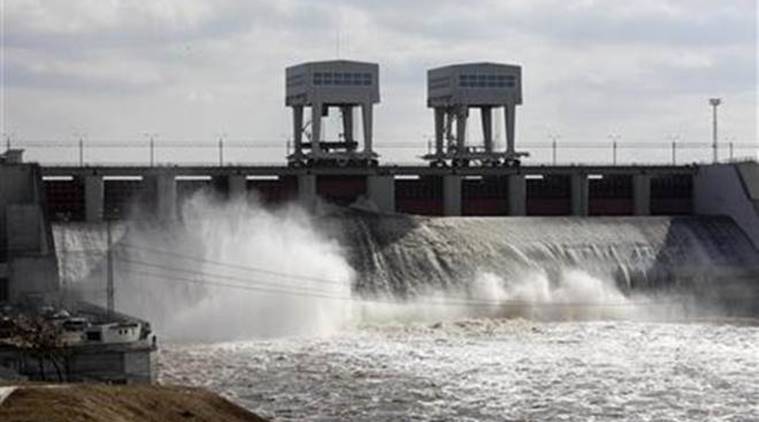 NHPC Ltd, which currently operates eight hydropower projects in J&K, has entered into agreements with JKSPDC and the Jammu and Kashmir Power Development Department (JKPDD) to execute projects like the Ratle Hydroelectric Project, which has a capacity of 850 MW.
The government’s decision to remove special status for Jammu and Kashmir and bifurcate the region into two Union Territories has state-owned hydropower generator NHPC Ltd hopeful of recovering over Rs 1,000 crore in dues from the Jammu and Kashmir State Power Development Corporation (JKSPDC) sooner, said chairman and managing director Balraj Joshi.
Dues from JKSPDC, a PSU, are currently valued at Rs 1,091 crore and, including the late payment surcharge, it owes NHPC Rs 1,491 crore, according to Joshi. This makes up over 50 per cent of the total Rs 2,001.74 crore owed to NHPC from various distribution companies as on May 2019, shows data on the PRAAPTI portal.
“We expect that, with the changed situation, the central government can have a larger say and we will recover our dues faster,” Joshi told The Indian Express.
NHPC Ltd, which currently operates eight hydropower projects in J&K, has entered into agreements with JKSPDC and the Jammu and Kashmir Power Development Department (JKPDD) to execute projects like the Ratle Hydroelectric Project, which has a capacity of 850 MW.
It also has a joint venture with JKSPDC and PTC India to develop the 1,000 MW Pakal Dul project and construct the 624 MW Kiru project.
According to Joshi, the J&K government’s tussle with NHPC Ltd over control of older projects like the Salal hydroelectric power station has died out as such projects have become unattractive due to falling tariffs.
“Initially, there was talk that J&K government wanted those projects, but now they have come to realise that all those projects have become old and the tariffs have fallen substantially, so there is no point getting those projects in its kitty,” he said.
The Salal project was a point of conflict because it was transferred to NHPC Ltd at a time when the arrangement of memoranda of understanding (MoUs) and allotment were not practiced, according to Joshi.
“But, as far as Uri-II and their later projects are concerned, we have a properly, well-defined MoU in which we have said we will be able to return this project on reaching the acceptable terms and conditions,” he said.
“But, you need a kind of capacity to run these projects. You have to have the technical capacity and the financial capacity also, because you have to keep on doing the maintenance works,” he said. “Right now, I don’t think J&K is very much poised to actually operate these projects, so there is no point (transferring the projects to them). They will not be able to run those projects nicely,” he added.