4 min read
© The Indian Express Pvt Ltd



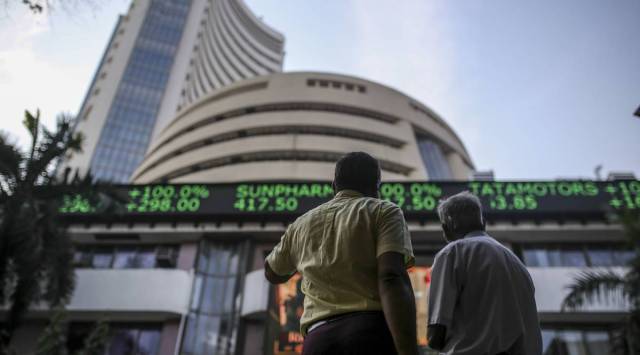 FPIs have withdrawn Rs 1.21 lakh crore from the stock markets and Rs 16,682 crore from the debt market in 2022. FPIs started pulling out after inflation spiked, and the central banks began hiking interest rates. Analysts said the Russian invasion of Ukraine accentuated the FPI withdrawals with the global economic slowdown making inflows more challenging.
Foreign portfolio investors (FPIs) pulled out from the Indian markets in a big way in 2022 with the highest-ever yearly net outflow of Rs 1.34 lakh crore.
According to data from NSDL, FPIs invested Rs 50,089 crore in 2021, Rs 1.03 lakh crore in 2020 and Rs 1.35 lakh crore in 2019. The huge outflow, which was surpassed by a significant margin withdrawal of Rs 80,419 crore in 2018, came amid aggressive rate hikes by central banks globally.
However, 2017 witnessed record inflows of Rs 2 lakh crore, according to NSDL data.
The outflow follows the sharp rise in inflation worldwide and rate hikes by global central banks led by the US Federal Reserve. The US Fed has already raised rates by 425 bps this year, moving policy into restrictive territory. Since May this year, the RBI has increased the repo rate by a cumulative 225 basis points (bps) to rein in elevated inflation. The MPC hiked the repo rate by 40 bps in May and 50 bps in each of the three successive meetings. A basis point is one-hundredth of one percentage point.
FPIs have withdrawn Rs 1.21 lakh crore from the stock markets and Rs 16,682 crore from the debt market in 2022. FPIs started pulling out after inflation spiked, and the central banks began hiking interest rates. Analysts said the Russian invasion of Ukraine accentuated the FPI withdrawals with the global economic slowdown making inflows more challenging.
“FPIs have turned cautious in recent days. Concerns about Covid spread in China is a negative sentiment, and the strong economic data from the US indicate a continuation of the Fed’s hawkish stance, pushing bond yields up and equities down. Only reversal of this trend will trigger a rebound in the market,” said V K Vijayakumar, Chief Investment Strategist at Geojit Financial Services. Credit Suisse noted foreign portfolio investment (FPI) flows could be constrained, given that pressured risk appetite in CY23 can impact equity flows in emerging markets (EM) Asia funds. On the other hand, domestic institutional investors (DII) inflows are now more meaningful than FPI flows, rolling 12 months at a record high of $ 40 billion as against $ 20 billion (around Rs 165,000 crore) of FPI outflows, the firm said.
Of the major contributors to DII flows, Credit Suisse expects insurance ($12 billion a year), Employees’ Provident Fund Organization (EPFO) ($7-8 billion) and Systematic Investment Plans (SIPs) ($18-20 billion a year) to sustain, even as non-SIP retail flows continue to moderate due to higher rates and improvement in real estate. “This should keep valuation multiples supported,” said Neelkanth Mishra, Co-Head of Equity Strategy, Asia-Pacific and India Head of Research at Credit Suisse. FPI investors net sold $ 32 billion of Indian equities from October 2021 to July 2022 and have net bought $ 15 billion since then.
“We found that despite heavy selling, India’s weight remained unchanged, suggesting the outflows were mainly due to redemption pressure at global, EM or APAC equity funds, via which most FPIs invest in India,” Mishra said at a media round-table conference.
DIIs now own a record 15 per cent of the BSE-500 shares, just 3.3 percentage points below the share of FPIs, which has now declined to nine-year lows.