4 min read
© The Indian Express Pvt Ltd



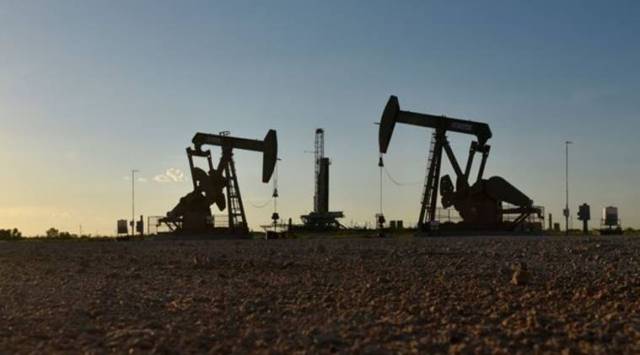 The new pricing formula attempts to balance demands of consumers as well as producers.
The price of domestic natural gas for May has been set at $8.27 per million British thermal units (mBtu), up from $7.92 for most of April in line with the new domestic gas pricing formula introduced last month, as per a notification issued by the oil ministry’s Petroleum Planning and Analysis Cell.
Despite the increase in notified price, consumers will continue to be charged $6.50 per mBtu–the ceiling price of gas as per the new pricing regime. This means that this price revision is unlikely to result in price changes in case of fuels like compressed natural gas (CNG) for transportation and piped natural gas (PNG) for household use.
“…for the gas produced by ONGC (Oil and Natural Gas Corporation)/OIL (Oil India) from their nomination fields, the above-mentioned APM (Administered Price Mechanism) price shall be subject to a ceiling of US$6.50…for the same period (May),” the PPAC notification said.
On April 6, the Union Cabinet approved significant changes in the pricing regime for APM gas, which mainly refers to gas produced by legacy fields, or nomination fields, of national oil companies ONGC and OIL. Nomination fields are acreages that the government awarded to ONGC and OIL before 1999, after which auctions became the basis of awarding oil and gas blocks.
The price of APM gas, which accounts for about two-thirds of India’s natural gas production, was being determined as per the ‘modified’ Rangarajan formula since November 1, 2014.
Key changes in the pricing regime include benchmarking the price of APM gas to the price of imported crude instead of gas prices in four international gas trading hubs, and monthly, rather than biannual revisions in prices.
The new pricing regime also provides for floor and ceiling prices–$4 and $6.5 per mBtu, respectively–for ONGC and OIL’s APM gas with the intention of shielding consumers from high prices while ensuring that the producers are not forced to book losses on gas sales.
The revised pricing mechanism is based on recommendations of a panel headed by Kirit Parikh. The panel was constituted last year to delve into the extant gas pricing guidelines and recommend changes to balance the interests of gas consumers and producers, while also helping India achieve its aim of increasing domestic gas output and substantially increasing the share of natural gas in the country’s energy mix.
Over the past few years, ONGC and OIL had been petitioning the government for a floor price as they were forced to sell gas at a loss for a prolonged period when prices sustained below their cost of production.
On the other hand, gas consuming industries had been urging the government to ensure affordability of domestic natural gas.
The new pricing formula attempts to balance demands of consumers as well as producers.