4 min read

© The Indian Express Pvt Ltd



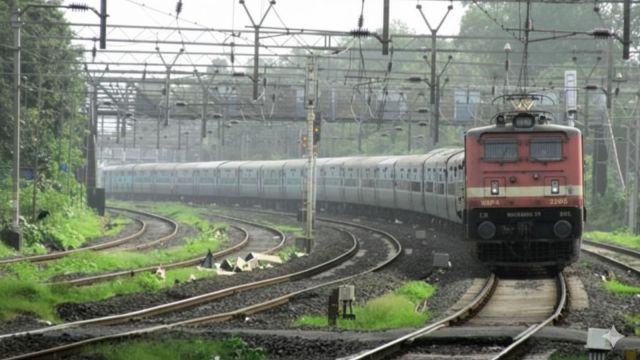 SWR is one of the 18 zones of the Indian Railways, with three divisions — Bangalore, Hubli and Mysore. It primarily caters to the state of Karnataka.
Noting that failures in signalling equipment in the South Western Railway (SWR) showed a declining trend, the Comptroller and Auditor General (CAG) of India stated such failures continue to occur in significant numbers. More effective maintenance mechanisms need to be in place to prevent these occurrences, show findings in a report tabled in the Parliament.
SWR is one of the 18 zones of the Indian Railways, with three divisions — Bangalore, Hubli and Mysore. It primarily caters to the state of Karnataka. While Bangalore is passenger-oriented, Hubli and Mysore are largely freight divisions. CAG data on signal failures shows a declining trend in the zone, with 3,337 cases recorded in 2018-19 (FY19), 3,941 in FY20, 2,537 in FY21, 2,834 in FY22 and 2,159 in FY23.
The signalling system in the Indian Railways controls the movement of trains to prevent collisions and accidents. It determines which train arrives at which platform, when signals turn green or red, and when a train is permitted to depart from a platform. In other words, it forms the foundation of safety for the entire railway network.
In its report on the working of signalling systems in SWR, tabled in the Parliament on Thursday, the CAG said a total of 14,808 signal failures or defects were recorded during the period from 2018-19 to 2022-23, averaging 2,961 cases per year. Of these, 8,547 failures were directly linked to errors in Signalling and Telecommunication (S&T) equipment such as track circuits, relays, cables and block instruments. The remaining 6,261 cases were attributed to other departments such as engineering, operating and electrical.
A signalling system consists of cable, mechanical lifting barriers, sliding booms, earth leakage detectors, integrated power supply, block instruments, control panel, relay room, track circuits, data loggers, etc.
“Despite the declining trend, cases of signal failures were substantial…This indicates the need for a more effective maintenance mechanism to eliminate signal failures, by proper monitoring with the aid of data loggers as a tool of predictive maintenance for ensuring failsafe signalling systems,” said the national auditor.
The CAG said signalling failures continued despite providing adequate time to fix the defects in equipment and complete the maintenance. It added that signalling failures are the potential reason behind accidents besides impacting punctuality of train operations. During the audit period, a total of 44 accidents took place in SWR, which includes 28 derailments, one accident at manned level crossing, six cases of signal passing at danger (SPAD) and nine due to other causes. SPAD is a situation when a train passes a stop signal without authorisation.
“Though six SPAD cases were reported during the review period, there was no action plan for providing Automatic Train Protection Devices — European Train Control System (ETCS), Train Collision Avoidance System (TCAS), Train Protection & Warning System (TPWS), despite these equipments being identified in the Vision-2024 document,” said the CAG.
The report also noted that a number of times, signalling errors occur because optical fibre cable and quad cables are frequently damaged due to digging work by contractors during line doubling, electrification, yard remodelling, etc. A contractor is liable to pay a penalty of Rs 1 lakh-1.5 lakh per location for these damages.
However, the CAG found that out of the Rs. 13.68 crore penalty imposed on contractors for 914 cable cuts cases between FY19 and FY23, the railways could recover only Rs 1.91 crore. An amount of Rs 11.77 crore was pending recovery as on March 31, 2023. The auditor said that SWR should prepare an integrated S&T cable route plan and share it with all stakeholders to reduce cable cuts.
The Indian Railways has identified that under the broad framework of its safety schemes, modern signalling plays one of the most important roles. These systems are Multi Aspect Colour Light Signalling (MACLS), Panel Interlocking (PI), Route Relay Interlocking (RRI), Electronic Interlocking (EI), Automatic Block Signalling, Axle Counters, interlocking of level crossings and provision of telephones at manned level crossings, etc.
The CAG also found a gap in the implementation of advanced technologies in signalling such as Train Actuated Warning Device (TAWD), Solid State Interlocking (SSI), Train Protection & Warning System (TPWS) and Mobile Train Radio Communication System (MTRCS) in SWR.