4 min read

Journalism of Courage



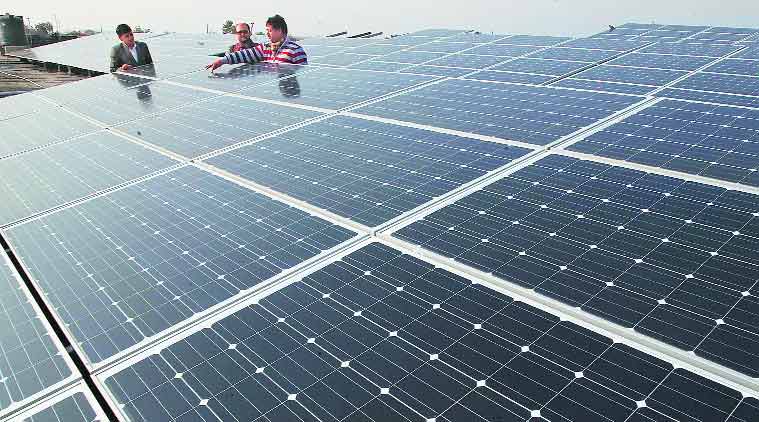 The DGS and Directorate General of Anti Dumping (DGAD) were merged to form DGTR in May 2018. (Representational Picture)
The European Union (EU) has, in a submission before the Directorate General of Trade Remedies (DGTR) of India on June 22, asserted that it “fails” to understand why the loss-laden Indian solar cell manufacturing industry has recently made an investment to further ramp up capacity instead of exploiting its 22 per cent idle capacity.
“The consequent drop in capacity utilisation suggests that the investment was not a good business decision, and its impact on the situation of the domestic industry needs to be taken duly into account in the injury analysis,” the EU submission asserted. The DGTR is currently hearing all the stakeholders — including China and EU — after the Directorate General of Safeguards (DGS) in January recommended a safeguard duty of 70 per cent on imported solar cells for a period of 200 days as they are “imported into India in such increased quantities and under such conditions so as to cause or threaten to cause serious injury” to the domestic manufacturing industry.
The DGS and Directorate General of Anti Dumping (DGAD) were merged to form DGTR in May 2018. In its submission, EU was quoting the data submitted by the Indian Solar Manufacturers Association (ISMA), which had stated that capacity utilisation in 2016-17 was 78 per cent when total installed capacity was 604 MW. It means 22 per cent capacity remained idle. ISMA had also stated that its installed capacity is estimated to rise to 1,653 MW in 2017-18, however, only 51 per cent of it would be utilised.
India imports approximately 90 per cent of its solar cells – majority from China. “India imports a small amount of its solar cells from the EU. However, European solar project companies, which have and will come to India, will be importing the cells from their respective countries because they have overcapacity in manufacturing,” said a senior sector expert anonymously.
The EU stated: “As regards the injurious situation of the domestic industry, data shows that it was already loss-making since the beginning of the period considered, i.e. well before the increase in imports. On the other hand, there are some key indicators such as total sales and production which show an improving trend. These two facts combined clearly indicate that there is no causal link between any injury suffered by the domestic industry and the increased imports.”
The EU added that since imports from China are already a subject of an anti-dumping investigation in India, it would be more appropriate to “wait for the results before resorting to such trade restrictive instrument”. Similarly, Chinese government pointed to an anti dumping investigation — which was terminated on March 23 this year by the DGAD — in its submission to the DGTR. “If the existence of injury cannot be established in an anti-dumping investigation, then serious injury or threat of serious injury should not have existed,” Chinese government stated.
The application for safeguard duty was filed on November 28, 2017, by the ISMA on behalf of five Indian producers: Mundra Solar PV Limited, Indosolar Limited, Jupiter Solar Power Limited, Websol Energy Systems Limited and Helios Photo Voltaic Limited, which collectively manufacture over 50 per cent of Indian solar cells. The firms claimed that due to the surge in imports “many domestic producers have kept their facilities almost idle and the heavy losses have crippled them”. The firms requested for imposition of provisional safeguard duty “to mitigate their injury”.
The US complained to the WTO in 2013, saying India’s solar programme was discriminatory because of mandatory local procurement norms and US solar exports to India had fallen by 90 per cent from 2011. US won the case in 2016, when WTO ruled India had broken trade rules by requiring solar power developers to use Indian-made cells and modules. India had to comply with the judgement by December 14 last year. On December 19, US complained to the WTO that India has failed to comply with the latter’s orders.