© The Indian Express Pvt Ltd
 6 min read


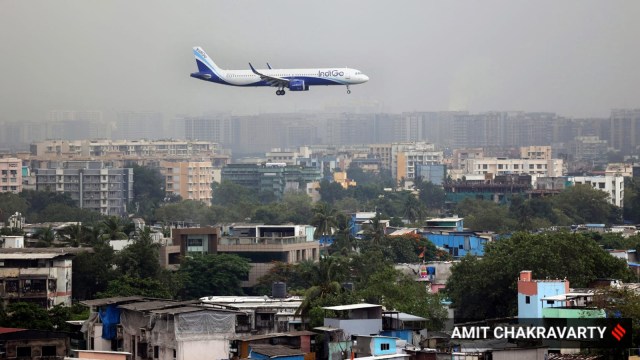 An IndiGo aircraft flies over Mumbai amid an ongoing nationwide crisis, now in its eighth day. (Express Photo by Amit Chakravarty)
Aviation regulator Directorate General of Civil Aviation (DGCA) on Wednesday constituted an eight-member oversight team to monitor IndiGo’s network and crew operations as the airline recovers from severe disruption in its flight operations. Two members of the oversight team will be deployed at the IndiGo headquarters in Gurugram on a daily basis and will submit daily reports on various operational parameters to the regulator. Additionally, another two-member team has been deployed at the IndiGo office to monitor flight cancellations, refunds and compensation to affected passengers, the airline’s on-time performance, and return of baggage stranded during the disruption.
The DGCA has also ordered its officers to carry out “immediate on-site inspections” at 11 airports to assess “safety, operational preparedness, passenger facilitation measures, and airline responsiveness during the ongoing disruption”. These 11 airports are Nagpur, Jaipur, Bhopal, Surat, Tirupati, Vijayawada, Shirdi, Kochi, Lucknow, Amritsar, and Dehradun.
Earlier on Wednesday, the regulator ordered IndiGo CEO Pieter Elbers to present comprehensive data and updates pertaining to the network-wide severe disruption in the flight operations of India’s largest airline. Elbers has been instructed to appear before the DGCA on Thursday (December 11) at 3 pm, and senior officials from all relevant departments of the airline have also been directed to attend the meeting.
The eight-member oversight team, which consists the regulators flight operations Inspectors (FOIs), will look into the airline’s overall aircraft fleet, average stage length of flights, pilot numbers, network details, crew utilisation levels and other crew scheduling related matters, daily flights and crew availability, sectors affected to to crew shortage, and standby crew per day per base, as per the DGCA order.
Meanwhile, the regulator and the Ministry of Civil Aviation (MoCA) have been holding frequent meetings with IndiGo in view of the crisis that has led to scores of flights getting cancelled on a daily basis since the middle of last week, throwing airline operations across India out of gear. Even as the airline said Tuesday that operations had stabilised, although with a lower number of flights, the government ordered a 10 per cent cut in the airline’s flight schedule.
IndiGo is India’s largest airline with a domestic market share of nearly 65 per cent, and its schedule has over 2,300 daily flights, around 2,150 of which are domestic flights. A 10 per cent curtailment in domestic flights would mean that the airline’s daily scheduled flights within the country would come down to less than 1,950. IndiGo is currently operating a lower number of flights than that. Sources close to the airline said that IndiGo was looking to gradually increase its flights to its regular levels over the next few days. But it will now have to abide by the schedule curtailment ordered by the government. The freed-up slots may be offered to other carriers if they have additional capacity that can be deployed.
In a statement on Tuesday, IndiGo announced that its operations have stabilised and normalised. IndiGo operated over 1,800 flights on Tuesday, operating to all destinations on its network, and its on-time performance (OTP) is back at over 80 per cent. The airline expects to operate around 1,900 flights on Wednesday. Friday was the worst day of the disruption with over 1,600 flight cancellations, but the situation has steadily improved since.
The airline’s weekly domestic flights had increased to 15,014 in the winter schedule, which took effect from October 26, from 14,158 weekly flights in this year’s summer schedule. IndiGo, however, faced crew shortages, primarily due to its inadequate preparation for the second phase of the new crew rest and duty norms that took effect on November 1.
The new FDTL rules stipulate more rest for pilots and rationalisation of their flying duties—particularly late night operations—in a bid to better manage pilot fatigue, which is a key risk to aviation safety. These new norms, which were stipulated in January last year were delayed in their implementation, and took effect in two phase—from July 1 and November 1—with the second phase rollout hitting IndiGo considerably. The new norms meant that airlines either had to have more pilots to maintain their schedule, or curtail their schedules in line with the new requirements.
In review meetings, IndiGo accepted that that the disruptions “have arisen primarily from misjudgement and planning gaps in implementing” the second phase of new FDTL rules, with the airline saying that the actual crew requirement for the new rules exceeded what it had anticipated, as per the DGCA. Given the scale of the disruption, the DGCA on Friday granted IndiGo a temporary one-time exemption from some night operations-related changes in the new FDTL norms for its Airbus A320 pilots. The temporary rollback, which will be in place till February 10, is likely to help IndiGo to get its act together and stabilise operations from heron. The DGCA has also granted a few other temporary relaxations to IndiGo.
But the government and the regulator have turned up the heat on IndiGo with the initiation of an inquiry by a DGCA panel into the disruption. The regulator also issued show cause notices to the airline’s chief executive officer Pieter Elbers and its chief operating officer Isidre Porqueras. Civil Aviation Minister K Rammohan Naidu has blamed lapses on IndiGo’s part for the disruption and said that strict action will be taken on the basis of the inquiry report to “set an example”. He said that sufficient notice was given by the DGCA to all airlines for the implementation of the new FDTL rules.