5 min read


© The Indian Express Pvt Ltd



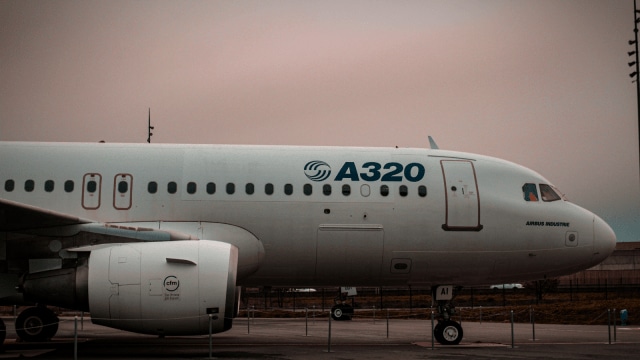 An Airbus A320 at the Airbus factory in Toulouse, France (Representative photo: Unsplash)
The urgent and mandatory system changes prescribed by Airbus have been carried out on all operational A320 family aircraft in India that were identified as being vulnerable to a potential software issue with a flight control computer, according to the country’s aviation safety regulator Directorate General of Civil Aviation (DGCA). Since Airbus’s notification about the risk and its fix on Friday evening, the carriers’ engineering and other concerned teams worked round the clock to implement the changes on scores of aircraft in under two days.
The rectification action primarily involved software changes, and while it had some bearing on the carriers’ flight operations in the form of delays and rescheduling, there was no major impact in terms of flight cancellations. The fix was prescribed after Airbus learnt that intense solar radiation could corrupt data critical to flight controls on a large number of its best-selling narrow-body aircraft type. There are over 11,000 A320 family aircraft—the most-flown commercial airliner globally—in operation all over the world, and over half of those were estimated to be vulnerable to the glitch.
IndiGo and the Air India group are the major Indian operators of A320 family aircraft—A320, A319, and A321—which form the bulk of India’s narrow-body aircraft fleet. As per data shared by the DGCA, a total of 338 Airbus A320 family aircraft of Indian airlines—IndiGo, Air India, and Air India Express—were initially identified as planes that required rectification action prescribed by Airbus late Friday. In all, IndiGo has around 370 A320 family jets in its fleet, Air India has 127, and its low-cost arm Air India Express operates 40 A320 family aircraft. But not all aircraft required software changes or hardware realignment.
The required action, typically lasting around a couple of hours per aircraft, was completed on 323 aircraft before Sunday morning. Among the remaining aircraft, six were non-operational as they were undergoing maintenance. The prescribed fix will be implemented on these aircraft before they return to service, it is learnt. Nine Air India aircraft, while initially identified as being at risk, were also inspected but did not require any system change.
Indian carriers were largely able to avoid flight cancellations, and managed to limit the disruption to some delays and rescheduling of flights.
Apart from four Air India Express flights, DGCA did not report any flight cancellations due to this issue. Despite the very short downtime for implementing the fix, some delays were unavoidable as a narrow-body jet typically operates multiple flights in a day and delays can quickly cascade.
The necessary changes were carried out on all the 200 IndiGo aircraft that required the rectification action. In the case of Air India, it was completed on 100 of 104 affected aircraft, with four aircraft under base maintenance. As for Air India Express, the required changes were made on 23 of the 25 affected planes, while two aircraft were under base maintenance.
Airbus CEO Guillaume Faury apologised to airlines and passengers for the recall, seen as the biggest in the European aerospace major’s history.
“I want to sincerely apologise to our airline customers and passengers who are impacted now. But we consider that nothing is more important than safety when people fly on one of our Airbus Aircraft – like millions do every day. Our teams are working around the clock to support our operators and ensure these updates are deployed as swiftly as possible to get planes back in the sky and resume normal operations, with the safety assurance you expect from #Airbus,” Faury posted on LinkedIn on Saturday.
Shortly after the announcement from Airbus on Friday, the European aviation regulator—the European Union Aviation Safety Agency (EASA)—issued an Emergency Airworthiness Directive (AD) requiring operators of the affected A320 family jets to implement the solutions prescribed by Airbus “before next flight”. The DGCA also issued a mandatory modification circular for Indian airlines to carry out the required changes.
“An Airbus A320 aeroplane recently experienced an uncommanded and limited pitch down event. The autopilot remained engaged throughout the event, with a brief and limited loss of altitude, and the rest of the flight was uneventful. Preliminary technical assessment done by Airbus identified a malfunction of the affected ELAC (elevator aileron computer) as possible contributing factor. This condition, if not corrected, could lead in the worst-case scenario to an uncommanded elevator movement that may result in exceeding the aircraft’s structural capability,” the EASA AD said.
ELAC is a flight control computer that processes pilot input to control the aircraft’s elevators and ailerons, which control the pitch and roll of the aircraft. A specific ELAC hardware and software combination was seen as the vulnerability that made the computer susceptible to data corruption due to solar flares or radiation. The fix prescribed by Airbus for the bulk of the affected aircraft involved a software change in the ELAC. In some older aircraft, the ELAC itself needed replacement.