3 min read
© IE Online Media Services Pvt Ltd



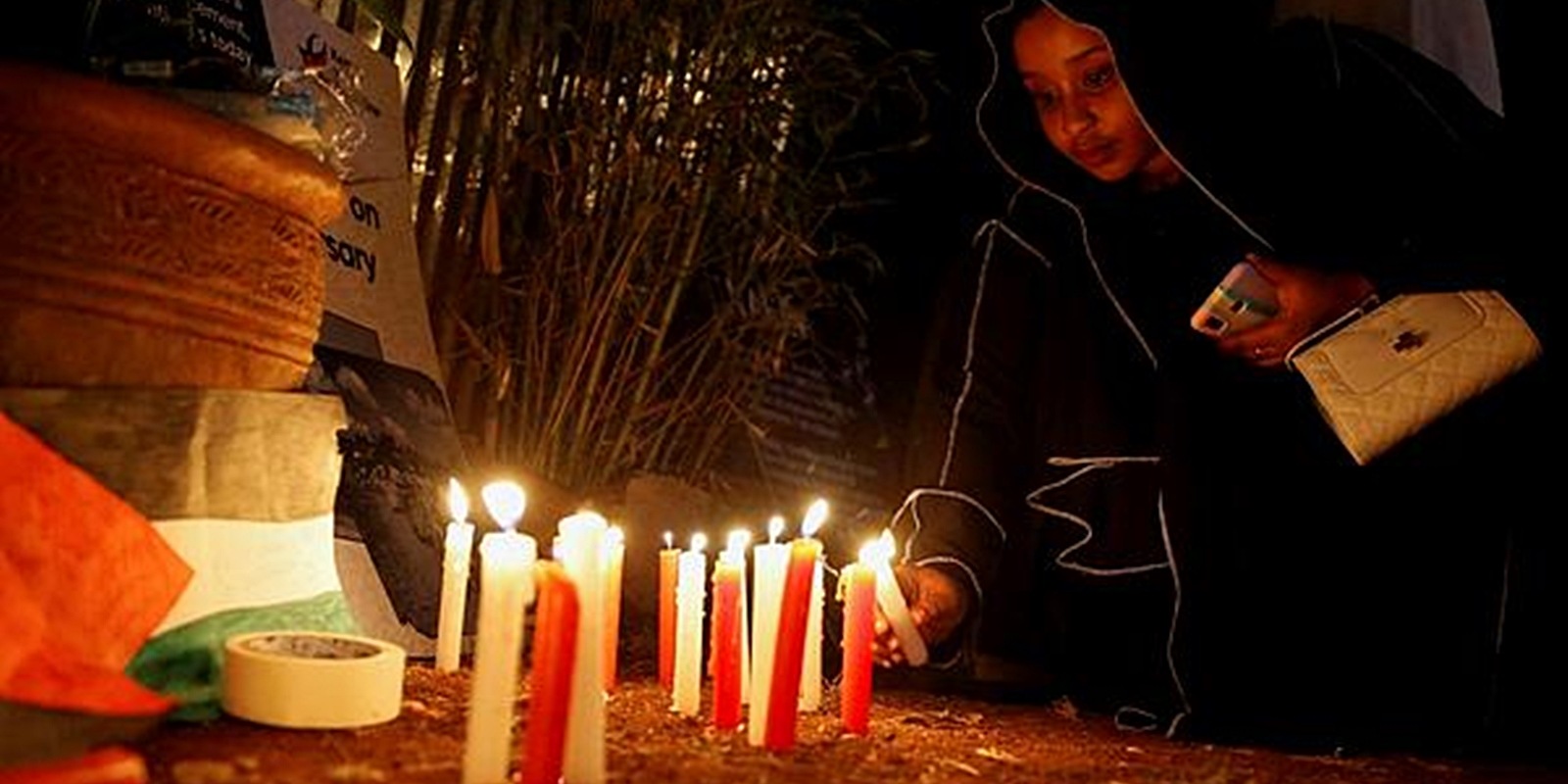 Fathiya Hassan attends a candlelight vigil in solidarity with Palestinians, amid the ongoing conflict between Israel and the Palestinian Islamist group Hamas, in Nairobi, Kenya October 14, 2023. (Reuters)
 Mahmoud Darwish: A towering figure of Palestinian poetry, Darwish is, according to Arab American poet Naobi Nihab Nye, “the Essential Breath of the Palestinian people, the eloquent witness of exile and belonging, exquisitely tuned singer of images that invoke, link, and shine a brilliant light into the world’s whole heart.” A good starting point for his work is ‘Mural’, which, according to critic Charles Bainbridge in a 2008 essay, is a “brilliant outcry at having little but language to uphold a sense of continuity.”
Agi Mishol: She was a popular Israeli poet who rose to acclaim by banishing the oppressor from her verses to examine the oppression . To express her metaphorical ability, critic John Taylor invokes pieces of hers in a 2008 essay in the Antioch Review which describe the “uprooting of Palestinian olive trees near Israeli settlements, a frequent act of humiliation and oppression… and a Palestinian woman, ‘only twenty / and your first pregnancy is a bomb,’ who blows herself up in a bakery .”
Noor Hindi: A Palestinian-American poet and reporter whose poem ‘Fuck your lecture on craft, my people are dying’ has a vast online fandom for responding to writing workshop techniques and subjects (‘Colonizers write about flowers. / I tell you about children throwing rocks at Israeli tanks’), Hindi is one of the most popular poets writing today. She has recently published a collection DEAR GOD. DEAR BONES. DEAR YELLOW. about language as a means of activism.
Yehuda Amichai: He was a prolific and world-renowned Israeli poet who wrote in Hebrew, and according to translator Robert Alter, “is the most widely translated Hebrew poet since King David.” His works have been translated by, among others, poets Ted Hughes and CK Williams. Fleeing Hitler’s Germany, he moved to Palestine as a 12-year-old and fought on the side of the Israeli army. In a 1992 Paris Review interview, he said all poetry is political because “real poems deal with a human response to reality, and politics is part of reality, history in the making.”
Fady Joudah: Born to Palestinian refugee parents in the United States and growing up in Libya and Saudi Arabia, Joudah, 52, is a practising physician in the US who also works with Doctors without Borders. He has translated multiple collections by Mahmoud Darwish. On some of his own pieces which deal with dispossession, he said in a 2008 interview, “I know our most natural tendency when we speak about the Other is to isolate ourselves as if we had nothing to do with them… [I want] the reader to feel we can’t just stop with the ‘they.’”