


© IE Online Media Services Pvt Ltd
Tags:


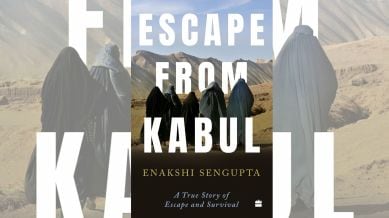
There was a fire on campus, but not an accidental one. Students had set it themselves, burning books, documents, and anything that could establish their association with the university. The year was 2021, and the city was Kabul.
“The situation continued to worsen. Markets were hardly operational; if people were seen on the roads, they were either fleeing to safety or were those who had come to Kabul trying to escape impending arrest from Taliban…” writes author Enakshi Sengupta in her latest book, Escape From Kabul: A True Story of Escape and Survival (HarperCollins Publishers). Escape, she writes, is a small word but contains “the meaning of emancipation, the possibilities of new horizons, and freedom from painful shackles, both physical and mental.”


What followed was a surprisingly pleasant year— until conversations about a potential U.S. withdrawal began circulating. The prologue of her book encapsulates the growing tension: “The word ‘escape’ has now become ever so meaningful. It was the only thing that people in Afghanistan could now think of.”
In her book, she traces the journeys of five women, from different parts of the world, whose harrowing escapes unfolded as the country fell back into the hands of the Taliban. It is a story of resistance and survival, of furtive phone calls and forged documents.
In a zoom interview with indianexpress.com, Sengupta tells us her story and the experiences that compelled her to write Escape From Kabul.
The motivation came, if I’m permitted to say so, in a rather unplanned way. As I’ve mentioned in the book, the story is loosely based on real events, but we have taken creative liberties in shaping it.
For five to six months, there had been a growing sense that Kabul would eventually fall. It was clear that NATO and U.S. forces were withdrawing and the Taliban was steadily advancing.
The signs were all there. Yet the university, whose real name I’ve withheld and instead referred to as ‘the Anglo-American University’ of Kabul, kept dragging its feet, perhaps hoping things would not deteriorate so quickly.
So when the evacuation finally happened, it happened rapidly and chaotically. Two of my colleagues and several of my students shared their personal narratives with me, and their experiences helped me shape the story. You’ll notice one of the names, Aruel Diaz, acknowledged in the book, along with those of my students. Their courage and honesty made me feel that this was a story worth telling—so the world could understand what was happening beyond the images we saw on television of people running after aircrafts or an airport overflowing with desperate families.
I wanted to write about the emotional reality of that moment. Yes, they needed to be evacuated. Yes, they needed a safe haven. But imagine being told: “You have two days. Pack your belongings. Leave your home. You may return—or you may never return.” Imagine leaving your home, your job, your university, your family—with no clarity about your future. Some of my students were barely 17 or 18, moving alone for the first time in their lives. That turmoil, that uncertainty, was something I wanted to capture.
I also wanted to portray the unexpected sisterhood that forms in such moments—women coming together for a single purpose, suppressing their differences because they must survive as a group. That is why I chose female characters from diverse backgrounds.
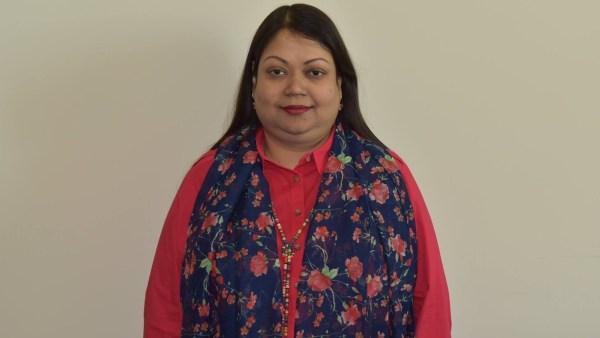
I’m a very factual person, and that comes directly from my academic background. Accuracy matters to me. Even in my first book—if you’ve read it —you’ll notice that although I had to build narratives, I always grounded them in research.
For example, in this book I wrote about the “Hotel Arena,” which is actually Hotel Serena. I’ve never been there, and I’m not permitted to go there, so I had to rely entirely on research. I spoke to people who had seen it, dug into video archives, and gathered as much material as I could—though the hotel has since been shut down by the Taliban. Only after doing that extensive homework did I write even that small section.
Whether it’s describing the space or mentioning details like the croissants served there, everything I include has a basis in research. That’s how academia has shaped my storytelling: facts first, story later.
One of the biggest misconceptions I wanted to challenge is the way Afghan women are often portrayed. People assume they are passive or powerless simply because they live under restrictive systems. But from what I’ve seen—and from what my colleagues who have worked closely with them have shared—Afghan women are extraordinarily strong. They are courageous, intelligent, and deeply resilient.
Many people only see those who managed to leave the country during mass evacuations and think that they are the exception. But even the women who remain, who are controlled by their families or constrained by circumstances, possess incredible potential. They excel academically—especially in STEM. I’ve heard stories of girls building robots, performing brilliantly in science, and doing exceptionally well in sports. If they were given a stable, secure environment, I truly believe Afghan women would shine, and the entire country would prosper alongside them.
Another misconception is about Afghanistan itself. The little that I saw of Kabul left me impressed. The roads were clean—sometimes cleaner than my own city—and the people were remarkably polite and helpful. This was before the rise of the Taliban again, of course, but my experience was of a warm and gracious society. Afghanistan is not just conflict and tragedy. It is a place of culture and potential.
For me, courage and survival aren’t fixed ideas—they evolve constantly. What survival means to you may be very different from what it means to me, and even in my own life the definition has changed many times. As a child, survival meant earning a scholarship because my mother made it clear that without it, I wouldn’t be allowed to continue my studies. Later, when my husband became critically ill, survival took on an entirely different meaning. And during my years working in Northeast India, survival meant navigating difficult situations, getting the work done, and proving myself. Each phase reshaped my understanding of what it means to endure.
Because I practise Buddhism, I also see survival through the lens of suffering and its cessation. We all suffer in different ways, and our task is to find a path through it—to continue, to exist, even if we don’t emerge as “winners.” Courage, in that sense, is often just the willingness to look for a way forward. My MBA director, from the University of Nottingham, once told us: “Don’t bring me problems; bring me four possible solutions. I’ll help you choose the right one.” I still carry that advice with me. In any tough situation, I try to find my own set of solutions. That mindset has kept me going.
Even today, living with two autoimmune disorders keeps me on my toes. My immunity is practically nonexistent, but there’s no point in complaining. Instead, I focus on finding ways to manage it—and I believe I am.
So, after writing Escape from Kabul, I have realised even more deeply that courage and survival are not singular moments. They keep reappearing in different shapes and forms throughout our lives. And each time, we have to find our way through—one solution, one step at a time.


