Journalism of Courage
 4 min read


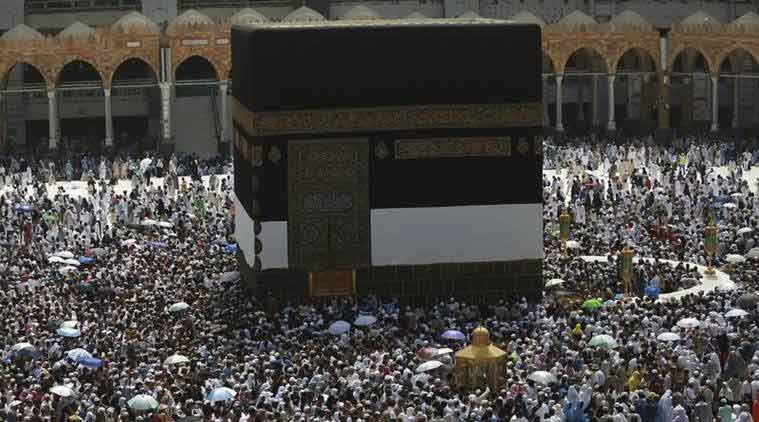 Riyadh updated rules in 2014, allowing women above 45 years to go in groups (File image/Agencies)
It took the Centre three years and a recommendation by a high-powered committee to change its own rules in line with Saudi’s decision to allow women above 45 years in groups of four or more to go for Haj without mehram, or a male escort. Prime Minister Narendra Modi mentioned it in his last Mann Ki Baat address of 2017 on December 31.
In 2014, when Saudi Arabia carried out the annual updating of Haj guidelines, the rule on not allowing women without a male escort was changed, subject to the condition that they travelled in a group and were above 45 years.
In October last year, a committee formed by the Ministry of Minority Affairs (MoMA) to look into the Haj policy recommended that women above 45 years, unaccompanied by a man, should be allowed on Haj pilgrimage in groups of four, provided their school of thought permits.
Until 2017, mehram, an unmarriageable kin, as the male escort of women Haj travellers remained an essential feature of India’s policy. A separate quota — of 200, which the committee recommends raising to 500 — is kept for women whose “only mehram” gets selected for Haj in a particular year but the woman failed to complete the formalities on time. This year, soon after Modi mentioned the matter, Minority Affairs Minister Mukhtar Abbas Naqvi announced that all 1,200 or so women who have applied to go to Haj without a mehram will not have to go through the lottery system, which is used to choose the other pilgrims.
Retired IAS officer Afzal Amanullah, who had chaired the MoMA committee, told The Indian Express on Monday that he could not put a date to when the rule was changed but while going through relevant documents the committee members found that the Haj agreement between India and Saudi Arabia mentions the provision of women above 45 travelling in a group without mehram.
“I do not know how long that provision has been a part of the agreement but I know for certain that it was there last year,” Amanullah said. “When we checked with the Saudi Embassy before finalising the report they told us that there is no bar on women above 45 travelling without mehram, and that visas would be issued to them in a group.”
He said, “India has been arbitrarily disallowing women without mehram — that is when we included it in the report.”
In October, two months before Modi mentioned it in his Mann Ki Baat radio address, the committee had submitted its report. The report said: “The conditions of male Mehram accompanying ladies should be insisted only for ladies below 45 years of age. Ladies above 45 years of age, who wish to go for Haj but who do not have a male mehram and their school of thought permits should be allowed to travel in groups of four or more.”
Rajya Sabha MP Husain Dalwai, a member of the Haj Committee of India, said: “In 2014, Saudi Arabia allowed women above 45 years to travel for Haj without a male mehram…. But that was on condition that they travelled in a group. The first group of women travelled to Saudi Arabia without mehram for Haj (in) 2015.”
Sources in Saudi Arabian Embassy in Delhi also confirmed that the relevant change of rules had taken place in 2014.
The 2017 Haj guidelines of Pakistan also quote the Saudi taleemat (guidelines), saying that women above 45 years can go for Haj without mehram but in a group.