The court said that “at no point of time the accused had ever used any kind of force against the prosecutrix.” (Representational/Express Photo)
IF a Muslim youth “elopes” with a minor girl and marries her under the Muslim personal law and the minor “resides with him as his wife,” can he be treated as an “offender” of having committed sexual assault under the Protection of Children from Sexual Offences Act (POCSO)? Raising this question, a special court in Delhi observed last week that there is “clear conflict” between Muslim personal law and provisions of POCSO. Additional Sessions Judge Vinod Yadav, acquitting an 18-year-old man who was married to a 15-year-old minor – both Muslims — and faced charges of rape, kidnapping and under sections of POCSO Act, said that as per POCSO, the minor girl was a “child not capable of giving consent for her marriage and consummation thereof” but “her personal law clearly authorises her to go ahead and get married at that age”. The youth was also accused under Section 6 of POCSO — punishment for aggravated penetrative sexual assault.
“Therefore, a clear conflict is apparent between the Muslim Personal Law and the provisions of the Act with regard to the marriage of a Muslim girl. The Act treats her as a child not capable of giving consent for her marriage and consummation thereof whereas her personal law clearly authorises her to go ahead and get married at that age. The Parliament probably did not foresee the aforesaid issue,” ASJ Yadav said.
In the present case, an FIR was filed under sections of POCSO Act based on a complaint by the girl’s mother who said that the boy had enticed her daughter and taken her away.
The police then slapped charges of rape, kidnapping and sexual assault under the POCSO Act. After the victim recorded her statement before the magistrate, the victim did not go with the parent and was, instead, sent to Nirmal Chhaya, a children’s home in Delhi.
“Before proceeding to analyze the rival contentions, it has to be borne in mind that the accused as well as the prosecutrix are Muslims. It is a fact that under the Muslim Personal law with which the accused and prosecutrix are governed permits them to contract a valid marriage provided the prosecutrix had attained the age of puberty. The prosecutrix had definitely attained puberty, as is evident from her MLC which shows that she had her last menstrual period 20-25 days back,” the court stated.
The court further said that POCSO Act was enacted “with the objective that the children of tender age are not abused and their childhood and youth are protected against exploitation” and that they are “given facilities to develop in a healthy manner and in condition of freedom and dignity”.
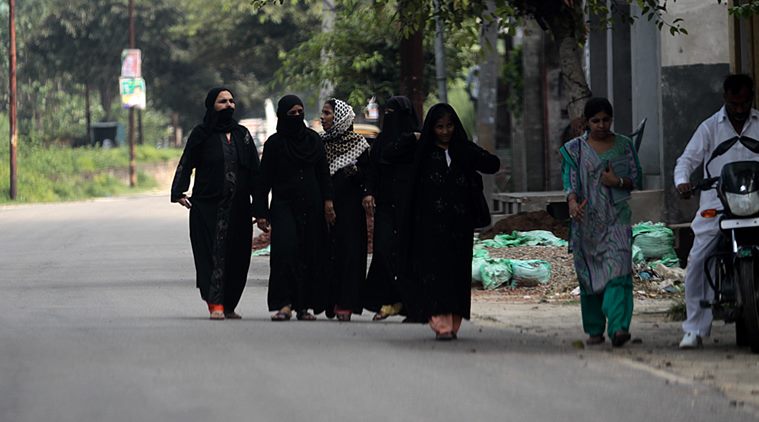
The court said that “at no point of time the accused had ever used any kind of force against the prosecutrix.”
Story continues below this ad
“If, everything had happened with the sweet will of the prosecutrix then can the accused be held guilty of committing sexual assault upon her in the teeth of the admission made by the prosecutrix as well as the accused?”
“In the present case also, the element of ‘taking away’ or ‘enticement’ is found to be lacking. In view of the material on record, it appears that prosecutrix was willing and consenting party and it seems that everything had happened with her sweet will. In these circumstances, the factum of kidnapping of prosecutrix does not stand proved. If the law laid down in the aforesaid authorities is applied to the facts of the present case, then it would be absolutely clear that the accused is not on the wrong side of law in the matter,” the court added.
Kaunain Sheriff M is an award-winning investigative journalist and the National Health Editor at The Indian Express. He is the author of Johnson & Johnson Files: The Indian Secrets of a Global Giant, an investigation into one of the world’s most powerful pharmaceutical companies.
With over a decade of experience, Kaunain brings deep expertise in three areas of investigative journalism: law, health, and data. He currently leads The Indian Express newsroom’s in-depth coverage of health.
His work has earned some of the most prestigious honours in journalism, including the Ramnath Goenka Award for Excellence in Journalism, the Society of Publishers in Asia (SOPA) Award, and the Mumbai Press Club’s Red Ink Award.
Kaunain has also collaborated on major global investigations. He was part of the Implant Files project with the International Consortium of Investigative Journalists (ICIJ), which exposed malpractices in the medical device industry across the world. He also contributed to an international investigation that uncovered how a Chinese big-data firm was monitoring thousands of prominent Indian individuals and institutions in real time.
Over the years, he has reported on several high-profile criminal trials, including the Hashimpura massacre, the 2G spectrum scam, and the coal block allocation case. Within The Indian Express, he has been honoured three times with the Indian Express Excellence Award for his investigations—on the anti-Sikh riots, the Vyapam exam scam, and the abuse of the National Security Act in Uttar Pradesh. ... Read More


 4 min read


 The court said that “at no point of time the accused had ever used any kind of force against the prosecutrix.” (Representational/Express Photo)