Journalism of Courage



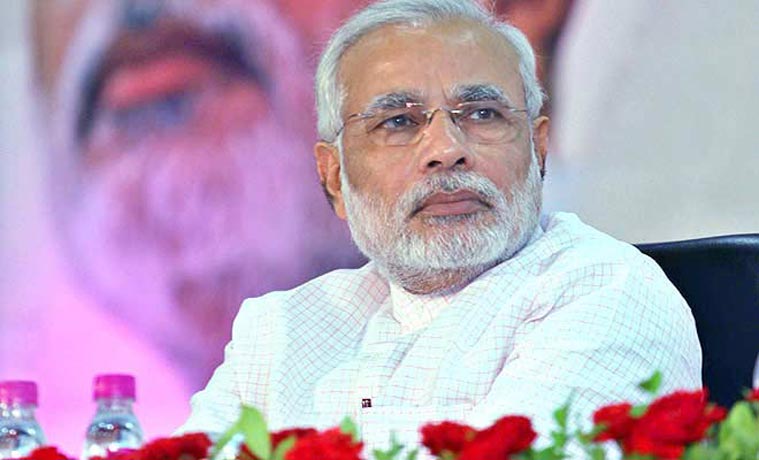 Prime Minister Narendra Modi.
In his first comments on the Right to Information Act since the NDA came to power, Prime Minister Narendra Modi Friday said “transparency” in the government is a prerequisite for people to have “trust” in the system.
“The process of accessing information should be transparent, timely and trouble-free. Delayed information does not help solve the problem but increases it. Timely information can halt a wrong decision. We will emphasise this,” he said.
Inaugurating a two-day national convention to mark the completion of 10 years of the transparency law, Modi called the RTI “an instrument for bringing good governance”.
[related-post]
In a 22-minute speech, Modi said the government must learn from the RTI applications that are filed, and reform the system based on the queries. Citing the e-auctions of coal blocks and spectrum initiated by his government, Modi said these decisions are so transparent that there would be no scope for using the RTI.
The PM also said that while RTI could provide information about a “process” — he gave the example of building a bridge — it did not provide information about the quality of the final “product”. “The attention we pay to the process through the RTI, we also need as to pay equal attention to the product. That’s when change is possible,” he said.
“Secrecy could have been the norm during old times, but I don’t think there is need for such secrecy now,” he said.
He also referred to his own state, saying that in Gujarat, he had seen “several examples of the poorest of poor people using RTI”.
While the BJP had promised to bring in the RTI it its manifesto for the 1998 Lok Sabha elections, it was implemented only in 2005 by the UPA government.
Several RTI activists, led by Aruna Roy, boycotted the inaugural session as many other activists were not invited for it. The boycott comes amid reports that the Intelligence Bureau ran background checks on several RTI activists.
Modi said there was a need to find out why RTIs were filed on specific issues. “To bring reform, we must change our fundamental behaviour,” he said.
“Even a small query in an RTI application can force a change in a major policy,” he said, adding that his Digital India initiative would also lead to transparency.
Modi said RTI gives people the “right to question the system”, and that is the foundation of a democracy.
Minister of Finance and I&B Arun Jaitley, who spoke before Modi, cited the pace at which the RTI has transformed the system within a decade, leading to effective governance. “It has transformed us during the last few decades and particularly in the last decade, from a society that relished in secrecy,” he said.
He said administrators of the RTI Act have to use their discretion to see whether the Act is being used for empowerment, to avoid harassment, for the benefit of the common man or if it being used by for collateral purposes.
He added that the administrators have to do a balancing act between “strengthening the exercise of this right and preventing possible abuse in the implementation of this particular legislation”.

 3 min read