2 min read
Stay updated with the latest - Click here to follow us on Instagram

Journalism of Courage



 One of 24 convicted in the Gulberg Society massacre waves to the relatives and friends as he is taken away by police outside the Special Court. Express Photo/Javed Raja
Arguing that the Gulberg Society massacre during the 2002 post-Godhra riots was a “rarest of rare” case, the Supreme Court-appointed Special Investigation Team (SIT) on Monday sought capital punishment or life term for all 24 convicts. The hearing will continue on Thursday.
The SIT sought that 13 convicts, found guilty of lesser offences, be treated at par with the 11 convicted for killings since they were very much part of the unlawful assembly. As many as 69 people, including former Congress MP Ahsan Jafri, were killed during a mob attack on the society on February 28, 2002, a day after the Sabarmati Express burning incident in Godhra.
The verdict in the case was pronounced on June 2.
[related-post]
During the hearing on quantum of punishment, SIT counsel R C Kodekar made an 11-page written submission before the special designated court, stating that “the crime committed by the accused persons is falling in the category of the Rarest of the Rare case and there is no alternative but to impose the death sentence”.
The SIT said the offence can’t be termed a “simple murder” because it has “shocked the conscience of the society”. “Thus, the crime test has to be fully satisfied ie.,100% and criminal test ie., 0%, no mitigating circumstances favouring the accused. Thus, punishment other than life imprisonment would not meet the ends of justice…”
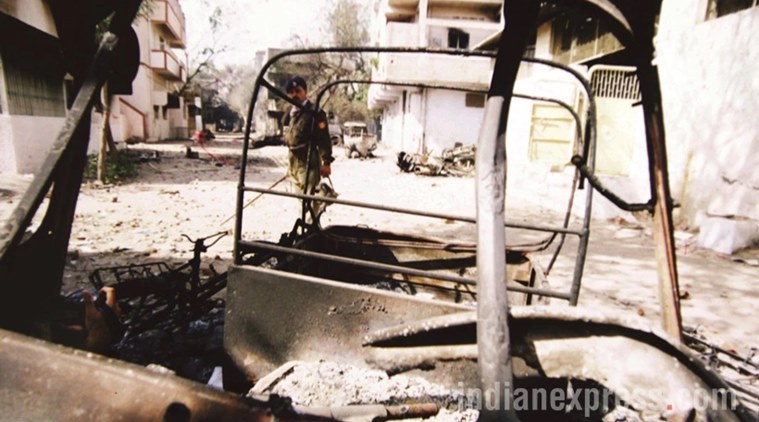 File photo of Gulberg Society after the incident
Defence lawyer Abhay Bharadwaj argued that the court has not believed the prosecution’s claim of a planned conspiracy, rape and private firing by the accused, which makes it clear that the case lacks in “total certainty” of crime, and therefore, maximum punishment was not applicable.
Stay updated with the latest - Click here to follow us on Instagram