3 min read
Stay updated with the latest - Click here to follow us on Instagram
© IE Online Media Services Pvt Ltd



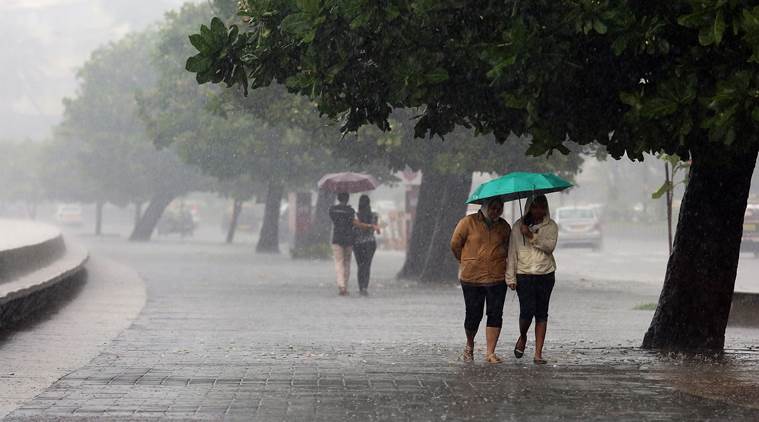 The IMD said that these particular systems are specifically for rainfall, though it can be tweaked to provide similar forecasts for thunderstorms, cold waves and weather events. (Express photo by Prashant Nadkar/Representational Image)
The India Met Department (IMD) on Friday launched two “very high resolution” Ensemble Prediction Systems, to generate ten-day probabilistic weather forecasts. In simple terms, the new systems in place can provide rainfall forecasts with probabilities allowing better lead time to prepare for extreme weather events. These systems also use a higher resolution 12 km grid scale, instead of the 23 km resolution that has been in use.
Ministry of Earth Sciences Secretary M. Rajeevan said that the systems in place are due to the acquisition of Rs 450 crore worth of high power computing systems. He also said that these systems will improve upon the existing deterministic forecasts that are prone to high margins of errors.
“We have been issuing deterministic forecast at the district level that has been useful for planning for agricultural purposes, so the next logical step is block level forecast,” he said. “When you go for very small spatial scale, when you want to issue forecast for heavy rainfall or extreme weather forecasts then a deterministic forecast can generate large errors. The ensemble prediction model is more useful for this purpose,” he added.
However, the IMD said that these particular systems are specifically for rainfall, though it can be tweaked to provide similar forecasts for thunderstorms, cold waves and weather events. “The new system will tell us the probability of rainfall according to its intensity and volume. This will be colour coded for ease of interpretation,” said IMD Director General KJ Ramesh.
The IMD also said that these systems will help disaster management authorities in making better emergency response decisions. However, the Met Department said that this model will not specifically be helpful in providing the exact nature and intensity of thunderstorms. “This morning we had a discussion, we will be having some groups within MoES institutions to discuss thunderstorms. In India, people working in thunderstorms are very few… but we will be spending more time on research,” said Rajeevan.
Stay updated with the latest - Click here to follow us on Instagram