Journalism of Courage

Let's take a look at why holding companies stay cheap even when their assets soar. When does the discount shrink or vanish? And can retail investors turn this disconnect into long-term gain?
By offering flight, train and bus bookings on one integrated platform with superior mobile UX and local-market tuning, online travel agency Ixigo is shaping up as a dark horse in India’s travel-tech race.

Prestige Estates Projects Ltd is now one of the largest listed real estate developers in India by sales. But while the company’s booked revenue is building a base for future growth, that growth will be closely scrutinised for timeliness, discipline, and cash flow impact.

SRF’s stock is well placed to benefit from improved pricing, but no one knows what the prices will be in the future. Here are three trends that could drive this company’s stock price.
Cement major UltraTech has announced a ₹1,800 crore bet on wires and cables. If the new venture succeeds, it could bring an additional ₹9,000–12,000 crore in annual revenue by the end of the decade, reinforcing the company’s role in India’s infrastructure economy.
Key factors influencing Bajaj Housing Finance Limited's valuation include asset quality, profitability, and growth potential. Its GNPA remains impressively low at under 0.35%, but concerns arise from its unseasoned loan portfolio.

Vijay Kedia built his fortune not by chasing trends but by holding conviction. He focused on small, underappreciated companies with clear market opportunities, trustworthy promoters, and room to scale. A look at the patterns that guide Kedia’s entry and exit, how he identifies businesses worth holding for a decade, and how he evaluates risk in companies that look cheap but may not be scalable.

Between FY21 and FY24, Hyundai Motor India’s net profit jumped over 3x and its operating margin expanded from 10.4% to 13.1%. The stock is already valued at ~24x earnings, close to Maruti’s historic average. With margins near their peak and competition intensifying, the question is: can Hyundai grow and deliver consistent shareholder returns, like Maruti once did?

Suzlon Energy remains resilient amid global tariff tensions, backed by a strong domestic order book and growing retail investor confidence. With steady earnings from OMS and limited import exposure, it’s well-positioned for near-term growth, but long-term sustainability hinges on policy support and new orders after FY27.
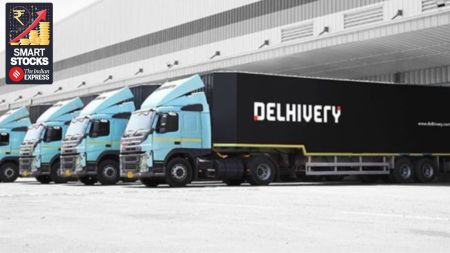
Delhivery has seen its stock fall from Rs 670 in July 2022 to Rs 247 now. But a recent distressed acquisition of rival Ecom Express might just be the catalyst it needs. With a strong balance sheet, growing PTL business, and signs of easing competitive pressure, could Delhivery finally be positioned to deliver value to public investors?
Between 2018 and 2021, Deepak Nitrite’s stock delivered staggering returns: revenue jumped from Rs 1,700 crore in FY18 to over Rs 8,000 crore by FY23, and EBITDA soared from Rs 198 crore to over Rs 1,500 crore. But that momentum has slowed. The stock has fallen in the last three years. The company is now gearing up for its next act: moving toward value-added polymers and specialty solvents. This pivot could make Deepak Nitrite a global player in performance materials. But can it replicate its past success?

In 2018, Berkshire Hathaway invested $300 million in Paytm. It was Buffett’s first direct equity bet in India. Five years later, it exited quietly and at a loss. An earlier insurance venture had also ended without scale. Two bets, no lasting footprint. Was it a missed opportunity — or proof that India isn’t built for Buffett-style investing?

Since 2013, Cholamandalam Finance’s EPS has grown from Rs 0.5 to Rs 41, and its return on equity has remained above 15%. The company has posted an impressive 5-year CAGR of 23% in AUM and 30% in pre-tax profits. But can this stellar performance continue?

InterGlobe Aviation’s share price surged significantly post-pandemic as the airline increased its market share and expanded operations. Can the low-cost airline sustain its growth in the next five years?

In the first nine months of FY25, Voltas grew its AC volumes by 42% and managed to inch its market share back up to around 20.5%. The company’s joint venture in appliances, Voltbek, posted 59% volume growth in December 2024 and crossed 10% market share in multiple categories during the quarter. The signs are clear: Voltas is no longer playing defense. But is this shift durable, or is it just a short-term spike driven by demand?

While most lenders focus on salaried customers in metros, India Shelter has quietly built a high-margin lending machine in small-town India, where few dare to go. Its loan book has grown over 40% year-on-year, return on equity (ROE) stands at 14%, and bad loans are just 1.3%. The market is starting to take note — but the real test still lies ahead.

While many still know LT Foods only for its rice, its stock has told a different story — delivering more than 1400% returns in the last five years. The real question is: Can an everyday food business like this keep growing and continue rewarding its investors?

Bharti Airtel, once on the brink of being overshadowed by the aggressive pricing war in India’s telecom sector, has staged a remarkable comeback. From facing intense competition during the Jio revolution to making strategic moves in 5G deployment, Airtel’s resilience has positioned it as a formidable player once again. A look at how the company regained its ground in the cutthroat telecom market.

From Rs 2,000 crore revenue in FY15 to over Rs 8,000 crore today, KEI compounded its way into investor portfolios and sector leadership. But as we step into 2025, the story is changing. New entrants with strong financial resources and access to raw materials are entering the wires and cables space. So here’s the big question: Can KEI sustain its momentum?

After a meteoric rise between 2021 and 2024, the stock prices of Jupiter Wagons and Titagarh Rail Systems faced sharp corrections. However, a recent rebound has attracted investors’ attention, leading to the question: Can new growth avenues revive their momentum?
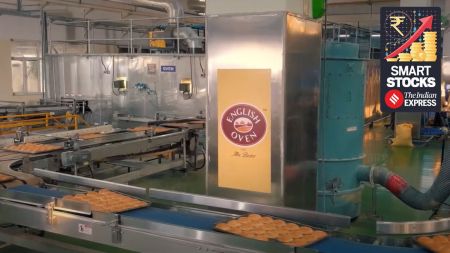
With 46% CAGR over four years, dominant QSR partnerships, and an expanding export footprint, Mrs Bectors Food Specialties, is becoming more profitable with each incremental rupee of revenue. But does the market truly appreciate the scale of what’s being built?
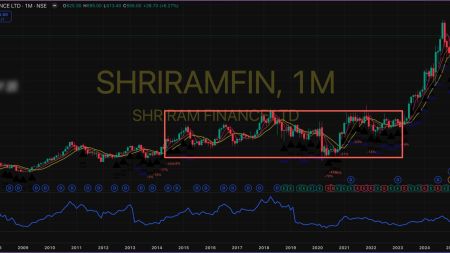
A sharp turn in interest rates is usually a make-or-break moment for lenders. For Shriram Finance, it might just be the catalyst needed to support its dream run.

After a decade of stagnant stock performance, Kaveri Seeds has staged a strong comeback. The company, once heavily reliant on cotton seeds, has successfully diversified into high-margin crops like maize and hybrid rice. Could this shift propel it toward sustained growth?

Eicher Motors has long been a favourite among investors, transforming from a Rs 30 stock in 2009 to a multi-bagger success. While Royal Enfield remains its core, the company has evolved into a two-pronged powerhouse, with Volvo-Eicher Commercial Vehicles' industrial engine. Now, as it ventures into global markets, the key question arises: can the company sustain its momentum?

Trent’s stock has plunged 37% since mid-October 2024, but it still continues to outpace competitors thanks to its fast fashion success with Zudio. However, with Shein’s re-entry into the Indian market and evolving retail landscape, can Trent maintain its dominance?