Journalism of Courage
The SC reversed a decision of the Delhi High Court, and held that under Section 138, the cause of action is linked to the cheque, not to the underlying transaction.
The case represents an emerging schism in the digital age: the use of copyright claims to potentially silence criticism and the power dynamics between individual creators and 'significant social media intermediaries' like YouTube
The HC Division Bench called the the apprehension of unrest 'an imaginary ghost created by them for their convenience sake and to put one community against other community under suspicion and constant mistrust.'
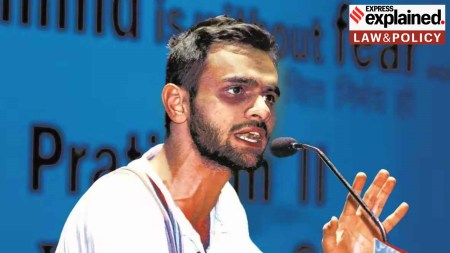
The UAPA, in its original state, did not address terrorism at all. Behind its current, sweeping form is a series of incremental and bipartisan amendments
The issue pertained to whether electricity wheeled from an SEZ to the DTA could attract customs duty. While electricity imports carried a nil rate of duty, the centre sought to levy duty on electricity cleared from SEZs into the domestic market via a series of customs notifications from 2010
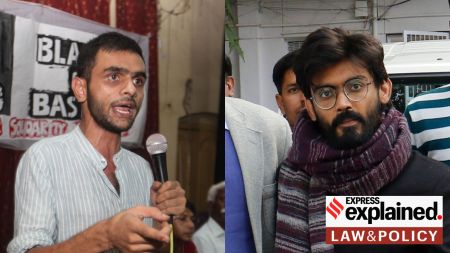
The apex court has used a framework of differentiated roles of the alleged conspirators, distinguishing the 'architects' of the conspiracy and its 'facilitators'.
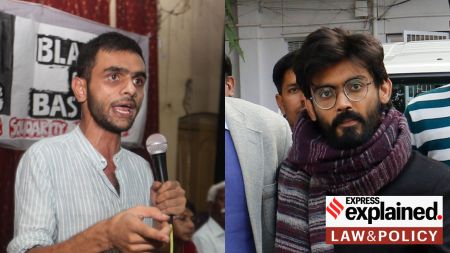
The accused have all been charged under terror charges in the stringent Unlawful Activities Prevention Act, Arms Act and various provisions under the penal law
The Supreme Court has ruled on the bail pleas of several activists accused in the 2020 Northeast Delhi riots conspiracy case. While the verdict offers relief to some, it reinforces a stringent stance on others under the UAPA.
Upholding a Rajasthan High Court ruling, a Bench of Justices Dipankar Datta and A G Masih clarified that the open or general category is not a closed compartment reserved for candidates of a particular social group
The Supreme Court has ruled that so long as criminal courts retain the power to permit or prohibit travel on a case-by-case basis, authorities cannot refuse to renew or issue passport to a citizen, who is an accused in a criminal case
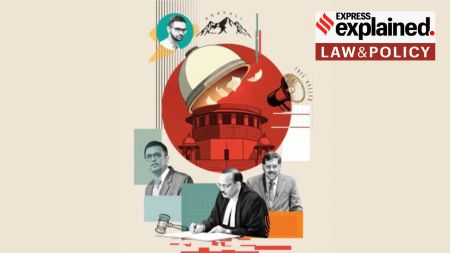
In 2025, the conversation on the judiciary was dominated by off-court controversies. In 2026, the focus shifts back to the courtroom as the SC takes up several important issues related to citizens’ rights, freedoms and religious beliefs.
The Bench of Justices Sanjay Kumar and Alok Aradhe last week set aside the order of the division Bench of the Rajasthan High Court that had allowed the villages to retain their names
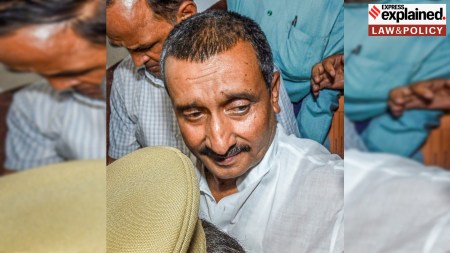
The Delhi High Court had held that an MLA was not covered under the definition of a public servant in the POCSO Act. The Supreme Court has prima facie rejected this view
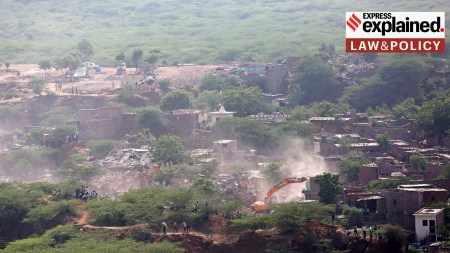
Since the mid-1990s, the court has relied on two long-running public interest cases to regulate mining, construction, forest loss and urbanisation around the Aravallis.

In effect, probate functioned as a pre-emptive filter, forcing scrutiny at the planning stage, before property or assets were distributed. It was mandatory for certain religious communities in Mumbai, Kolkata and Chennai.
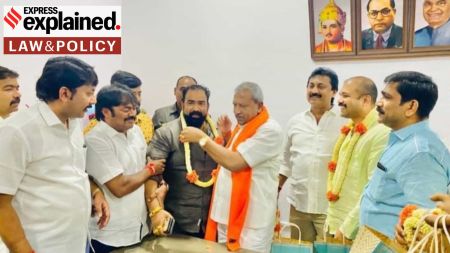
A recent decision of the Karnataka HC to grant a reprieve from KCOCA charges to a BJP MLA from Bengaluru in the murder case of a real estate operative on the grounds of erroneous invocation of the law has come as a setback to the police
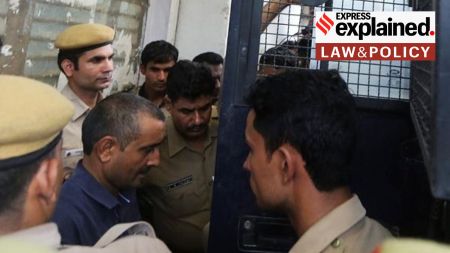
Delhi High Court Kuldeep Sengar Sentence Suspension Explained: The trial court had ruled that Sengar qualifies as a ‘public servant’, relying on the definition under the Prevention of Corruption Act. But the Delhi HC said the IPC definition must be considered. Here are the details.
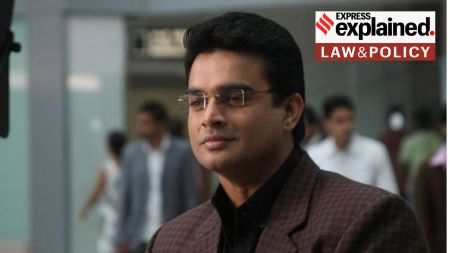
India does not have a standalone statute to define personality rights. Courts have assembled these through a combination of intellectual property law and constitutional principles. Here is what to know
Last week the Bombay High Court suspended a two-year sentence imposed by the Nashik Magistrate Court, but refused to stay his conviction, making him eligible for disqualification as an MLA. Here is what to know
The Bill also recognises social exclusion beyond the caste factor and penalises discrimination based on “morality, social acceptance, political inclination, sexuality or any other basis”.

A working paper from the Department for Promotion of Industry and Internal Trade provides an insight into how India may address the use of copyrighted content to train artificial intelligence models
Delhi is not the first government to attempt to cap or regulate private school fees. From Tamil Nadu’s fee-fixation model to Gujarat’s hard caps, states across India have experimented with various legal frameworks to curb commercialisation in education
Describing Harish Rana's condition as “pathetic”, the court indicated it would consider if life-sustaining treatment can be withdrawn. Assisted suicide remains outside constitutional protection, but the legal picture is complex.
A writ petition has been filed questioning the functioning of the Vrindavan temple management committee constituted by the court in August. Here's why
A PIL seeking a nationwide ban on sex selective surgeries and an administrative recognition of intersex persons has been referred to a three-judge Bench of the apex court