Journalism of Courage
US Tariff Effects On Markets: If US cues are anything to go by, investors can expect more weakness in the Indian markets as well. The slide in the stock markets was not helped by the comments of US Federal Reserve Chairman Jay Powell. We break down the latest effects of the Trump tariffs.
China’s GDP growth in the months of January, February and March exceeded the expectations that most analysts had. However, these data do not show the adverse impacts of Trump’s trade tariffs.
The probe into semiconductors, pharmaceuticals, and critical minerals will impact India apart from China. Pharmaceuticals and semiconductors were excluded from the new tariffs regime announced on April 2
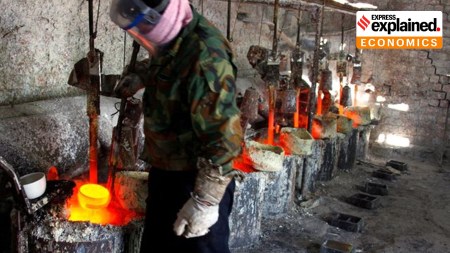
Given China’s dominance in rare earths mining and refining, and their uses ranging from making smartphones to defence equipment, major repercussions could follow.
Trump trade policy fallout: The US President’s thoughtless shoot-first, think-later policies and seemingly mindless flip-flops are hurting investors, sentiment, and the US economy. Meanwhile, China has switched to a softer diplomacy that could end up with greater success than its earlier wolf-warrior strategy
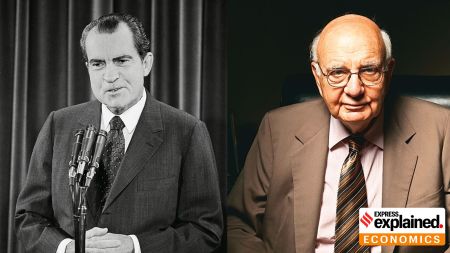
In terms of their impact on the international trading and monetary system, Donald Trump’s reciprocal tariffs are comparable to Richard Nixon’s 1971 dollar devaluation and Paul Volcker’s 1980s' interest rate hikes

Trump’s tariffs have sent the value of the US dollar plummeting. This is similar to what happened to the UK pound in 2022 after then Prime Minister Liz Truss unveiled her bold mini-budget
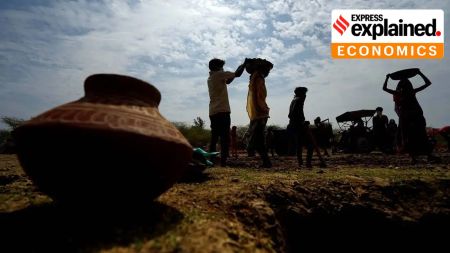
Concerns regarding the NREGA wage rate include increasing divergence from the notified minimum wage rate, discrepancies in state-wise wage rates, and poor inflation indexation
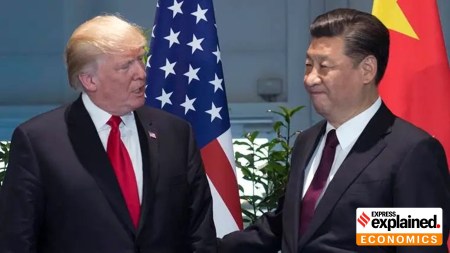
US China Tariffs Explained: Trump has attempted to narrow what had become an unprecedented trade war between the US and most of the world to now a showdown between the US and China. This is what the whole thing always was about, perhaps. We explain.

Every day, 500 words on a word (or expression) that has appeared in The Indian Express
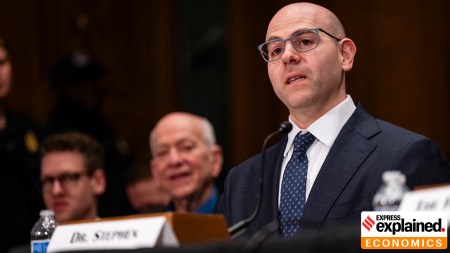
A lot of the Donald Trump Administration’s recent tariff actions have the imprint of an essay by Stephen Miran, who has the US President’s ear on trade issues intertwined with national security concerns. Here's what Miran's arguments are.
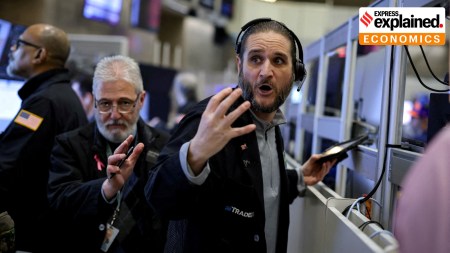
A bear market (or for that matter, all types of market decline) takes place when investors are more motivated to sell than to buy stocks
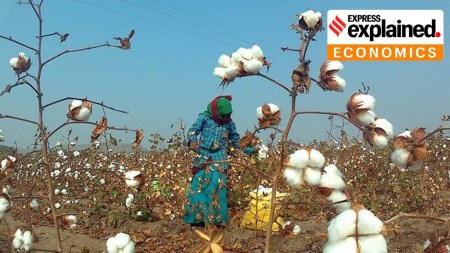
The pink bollworm has brought down India’s cotton production by a quarter in the last decade. While a few seed companies have developed new genetically modified hybrids resistant to the dreaded insect pest, regulatory barriers are coming in the way of their commercialisation.

Market corrections are fairly common in the US. Since 1929, the S&P 500 has logged a correction 56 times, according to a Reuters analysis of data from Yardeni Research.
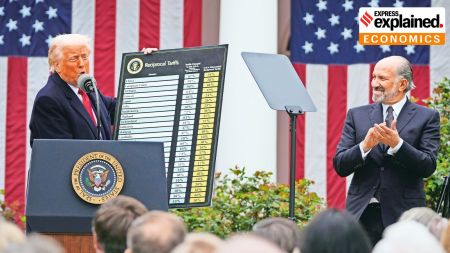
When Donald Trump first spoke about reciprocal tariffs, his idea was fairly straightforward: the US would simply levy the same tariffs on imports from a particular country as the tariffs levied by that country on imports from the US.
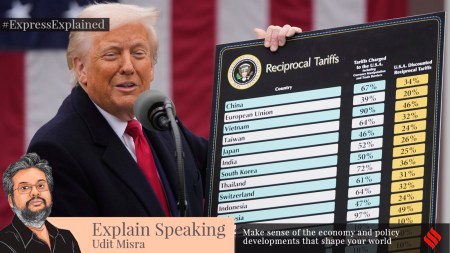
Several countries with low per capita incomes have been hit by the highest tariffs. The tariffs will almost certainly have very significant economic consequences for the US and the rest of the world. There could be high inflation, slower growth, and worse. Here’s how.
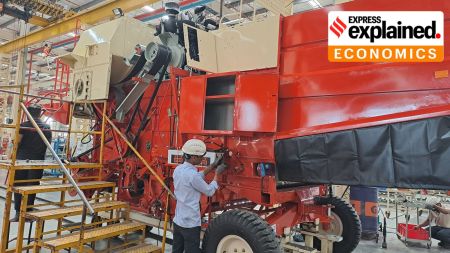
Globally, the market for farm machinery is bigger than that for tractors. That is starting to happen in India too, with rising agricultural labour shortages driving demand for farm machinery from harvesters to rotavators.
Given the lack of clarity around Trump's impending imposition of tariffs on multiple countries on April 2, assets such as stock markets, gold, currency exchange rates and even real estate may be impacted. What's the thinking behind it?

The India BioEconomy Report, released by the Department of Biotechnology, says there is ample opportunity for this sector to grow to about $300 billion by 2030, and to $1 trillion by 2047.
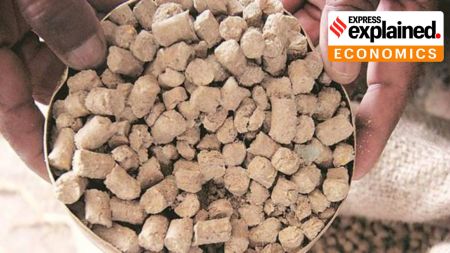
Amid the threat of tariffs, the Trump administration is seeking greater market access for American agricultural produce in India. Cotton, corn and soyabean are the three main crops of interest for the US
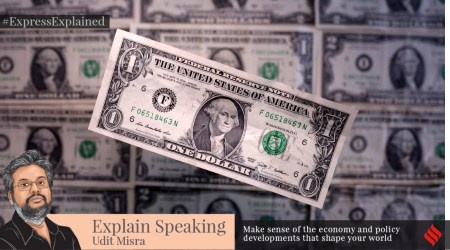
To turn around the United States’ trade deficit, Donald Trump has two policy options: imposing tariffs on imports or devaluing the US currency. Here’s what the second option entails, the likelihood of it being exercised, and its possible impact.

Stock prices are down, but the RBI has said that the bank’s financial health remains stable

This summer, India’s top grid operator is anticipating power shortages from April to October, with May and June flagged as “high-risk months”. Here's why.
The exchange rate between the dollar and the euro saw a sharp change between the day Trump won the election and the day he took oath of office, with the euro weakening. But since then, the euro has staged a big recovery against the dollar. What is happening, and why?
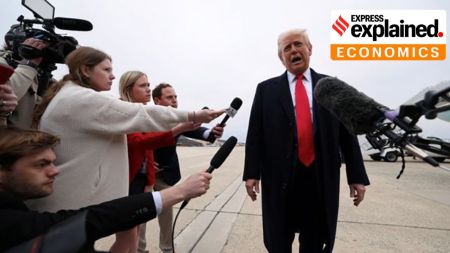
The Chinese retaliatory tariffs have not been sweeping and across-the-board. But even while selective, they have hit where it hurts the most.