4 min read
Stay updated with the latest - Click here to follow us on Instagram
© IE Online Media Services Pvt Ltd



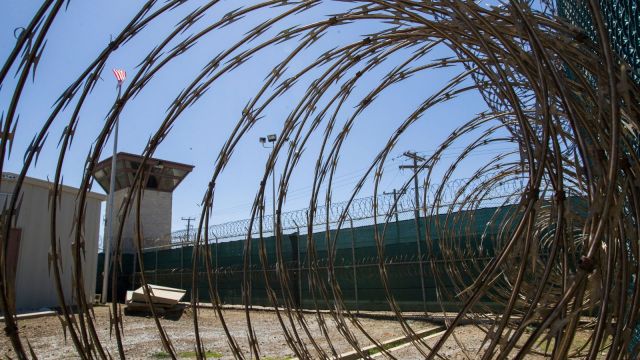 The control tower is seen through the razor wire inside the Camp VI detention facility in Guantanamo Bay Naval Base, Cuba. (AP photo)
US President Donald Trump announced on Wednesday that the US will use a detention centre at Guantanamo Bay, Cuba, to hold tens of thousands of what he described as the “worst criminal aliens”. The announcement came during the signing of the Laken Riley Act, with Trump stating, “We’re going to send them out to Guantanamo.”
Trump later signed a presidential memorandum directing federal officials to prepare facilities at the US naval base for detainees. Border czar Tom Homan confirmed that US Immigration and Customs Enforcement (ICE) would run the facility, although specific details of the plan remain unclear.
Guantanamo Bay, widely known as “Gitmo,” has been used to house terrorism suspects since the September 11, 2001, attacks, but it also has a small, separate facility known as the Migrant Operations Centre. This centre has historically held migrants intercepted while attempting to enter the US by boat, primarily from Haiti and Cuba.
The facility occupies only a small part of the base and currently lacks the capacity to house the 30,000 detainees, Trump suggested. Homan indicated that the administration plans to expand the existing centre to accommodate additional detainees.
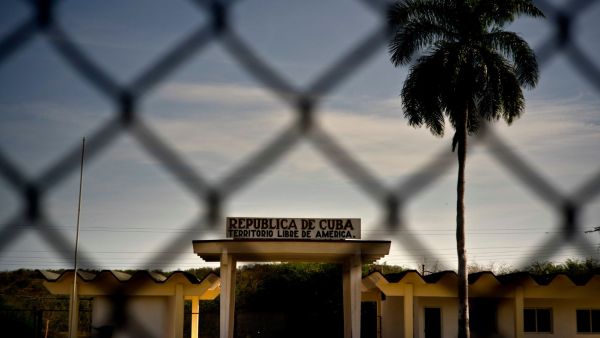 A building in Cuba carries the Spanish message ‘Republic of Cuba. Free American Territory,’ behind a gate marking the border with the US Guantanamo Bay naval base in Cuba. (AP photo)
According to administration officials, the expanded detention facility will house the “worst of the worst.”
Homeland Security Secretary Kristi Noem and Homan both used that phrase while speaking to reporters outside the White House. A White House statement clarified that the facility would provide additional detention space for “high-priority criminal aliens unlawfully present in the United States.”
An anonymous administration official told reporters that the facility would detain “dangerous criminals” and individuals who are “hard to deport.” Some countries refuse to accept deported individuals, complicating removal efforts.
The International Refugee Assistance Project described the existing migrant centre as maintaining “prison-like” conditions where detainees are “trapped in a punitive system” with little oversight. Deepa Alagesan, a senior supervising attorney at the organisation, estimated that only a few dozen people are currently held at the centre and expressed concern about expanding its capacity.
“It’s definitely a scary prospect,” Alagesan said.
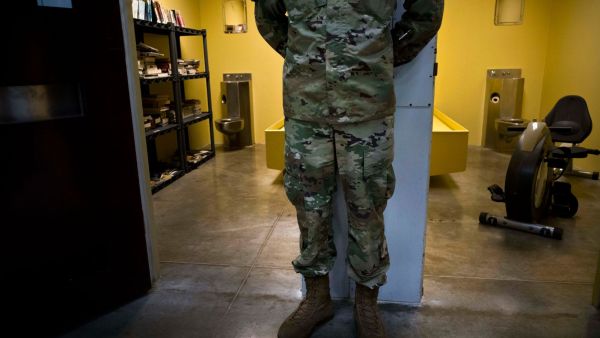 A US soldier stands between two cells, one used as a library and the other a gym, inside the Camp VI detention facility at the Guantanamo Bay US naval base in Cuba. (AP photo)
Stay updated with the latest - Click here to follow us on Instagram