2 min read
Stay updated with the latest - Click here to follow us on Instagram
© IE Online Media Services Pvt Ltd



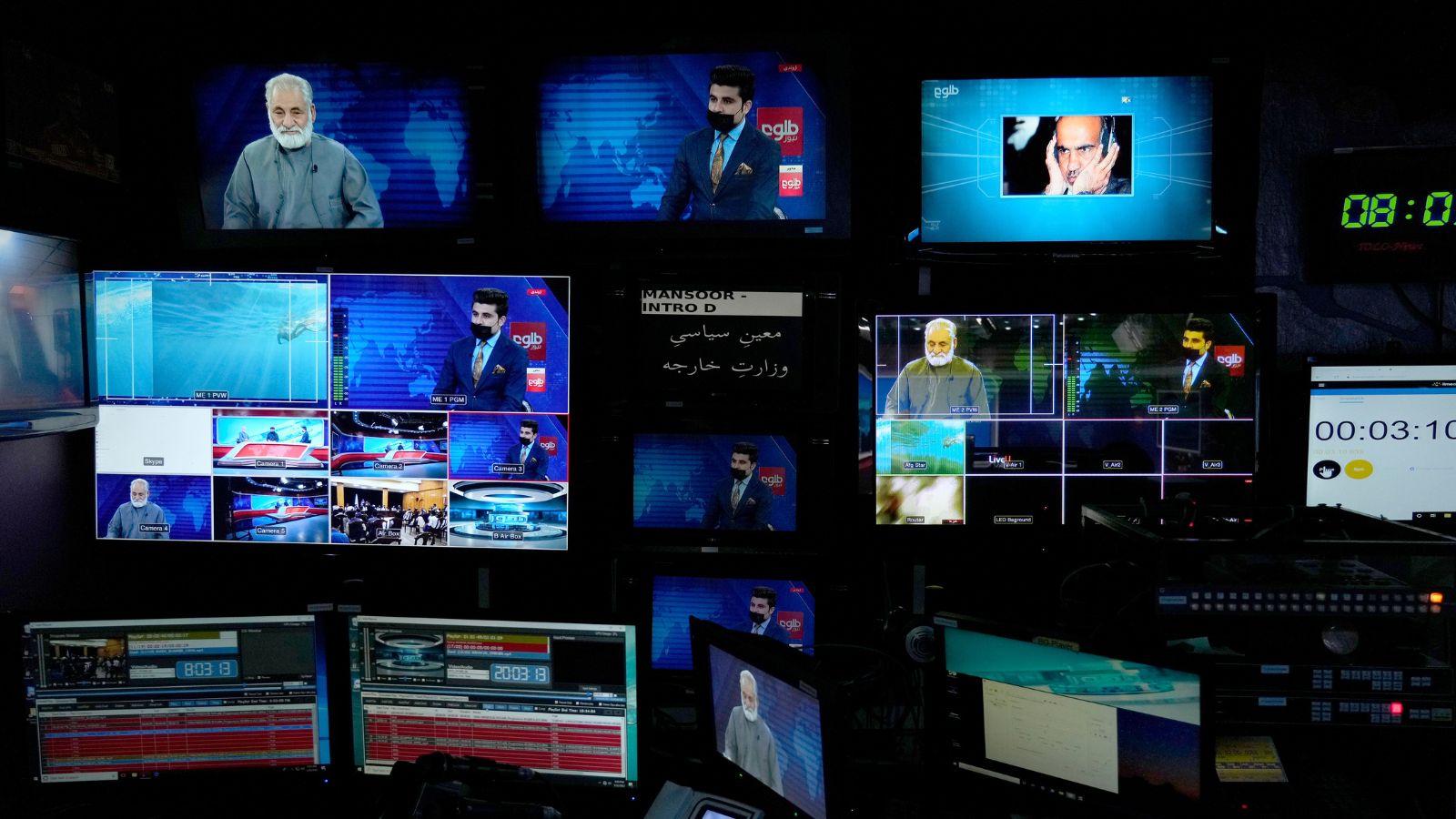 TV anchor Nesar Nabil is seen on studio monitors wearing a face mask to protest the Taliban's new order that female presenters cover their faces, as he reads the news on TOLOnews, in Kabul, Afghanistan, Sunday, May 22, 2022. (AP Photo/Ebrahim Noroozi, File)
The Taliban’s police force has deployed 90,000 CCTV cameras to monitor the daily lives of six million people in Kabul, tracking everything, from licence plates to facial expressions.
“We monitor the entire city of Kabul from here,” Khalid Zadran, a spokesperson for the Taliban police chief, told the BBC.
Zadran added that in certain neighbourhoods, if they detect anything suspicious or criminal, they contact the local police for action.
While authorities claim the surveillance network is intended to combat crime, critics warn it could be used to enforce the Taliban’s strict morality codes under Sharia law. The system’s growing sophistication highlights the regime’s increasing control over law and order.
The cameras are also equipped with facial recognition capabilities, categorising individuals by age, gender, and whether they have a beard or mask, BBC reported.
“On clear days, we can zoom in on individuals [who are] kilometres away,” Zadran said.
Amnesty International has raised concerns, stating that installing cameras “under the guise of ‘national security’ sets a template for the Taliban to continue their draconian policies that violate fundamental rights of people in Afghanistan—especially women in public spaces.”
Many Afghan women fear the surveillance system will be used to monitor their hijabs, while human rights activists and protesters worry it could further endanger their safety. However, the Taliban insists that surveillance is handled solely by city police, not the morality police—the Ministry for the Propagation of Virtue and Prevention of Vice.
Residents also report being forced to fund the surveillance network. A woman, who lives in central Kabul, on condition of anonymity told the BBC that households were asked to pay thousands of Afghanis for cameras installed near their homes.
“If families refused to pay [for the cameras], they were threatened with water and power cuts within three days. We had to take loans to cover the costs,” she said as quoted by BBC.
“People are starving—what good are these cameras to them?” she added.
Since the Taliban took power, international aid to Afghanistan has been cut off, leaving 30 million people in desperate need of assistance.
Stay updated with the latest - Click here to follow us on Instagram