Stay updated with the latest - Click here to follow us on Instagram
© IE Online Media Services Pvt Ltd
 3 min read


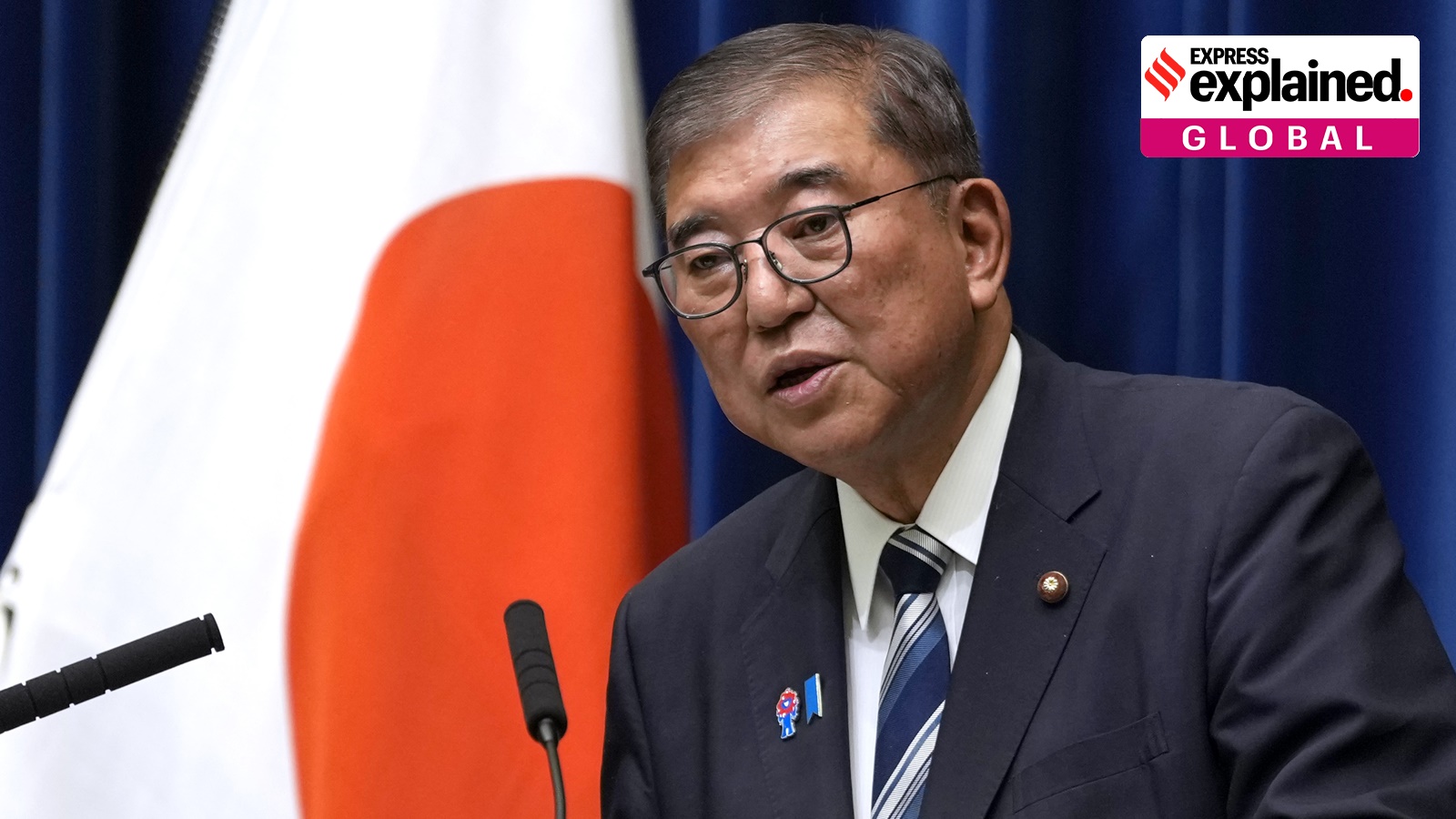 Japan PM Resigns: Japanese Prime Minister Shigeru Ishiba speaks during a news conference at the prime minister's office in Tokyo, Japan, Sunday, Sept. 7. (Photo: AP)
With Prime Minister Shigeru Ishiba stepping down, Japan’s ruling Liberal Democratic Party (LDP) has launched a leadership contest that will determine the country’s next leader. A party election is scheduled for October 4, Reuters reported, with Ishiba staying on in a caretaker role until then.
Ishiba, 68, announced at a press conference that he must take responsibility for a string of stinging election defeats. In less than a year in office, Ishiba has presided over his ruling coalition’s loss of majorities in both chambers of parliament, as voters expressed frustration over rising living costs.
He directed the Liberal Democratic Party, which has governed Japan for most of the post-war era, to conduct an emergency leadership contest, while confirming he would remain in office until a successor is chosen. “I would like to pass the baton to the next generation,” Reuters reported him saying.
The resignation comes as Japan finalised a trade agreement with the United States aimed at easing President Donald Trump’s heavy tariffs. Trump said he was “a little bit surprised” by Ishiba’s move. Asked by reporters if he planned to visit Japan and South Korea later this year, he replied: “We’ll see.”
Attention now turns to who might succeed him.
Both placed strongly in last year’s leadership contest, trailing Ishiba. “All indications are that it will come down to them facing off against each other,” Jeffrey Hall, a lecturer at Kanda University of International Studies, told Reuters.
Because the LDP no longer controls either chamber of parliament, there is also a theoretical path for an opposition leader to take power.
Among those floated are Yoshihiko Noda, a former prime minister now leading the Constitutional Democratic Party, and Yuichiro Tamaki, of the Democratic Party for the People, who has called for tax cuts, stronger defence and more nuclear energy.
(With inputs from Reuters)
Stay updated with the latest - Click here to follow us on Instagram