


Tags:



For months, Israelis had heard only about hostages being killed or declared dead in the Gaza Strip. The “lucky” families were those whose loved ones’ remains were retrieved by soldiers, at great risk, and brought home to Israel for burial.
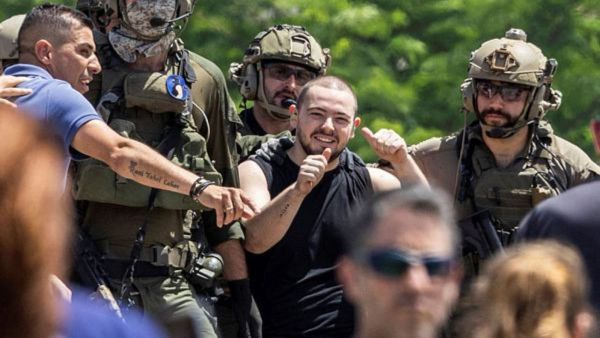
So the audacious rescue Saturday of four living hostages instantly raised morale in Israel and offered at least a momentary victory for the country’s embattled prime minister, Benjamin Netanyahu.

But by Sunday, euphoria was giving way to a harsher reality. The heavy air and ground assault that accompanied the rescue killed scores of Palestinians, including civilians, according to Gaza health officials, puncturing Israel’s claims that the operation was a resounding success, at least internationally. And the operation failed to resolve any of the deep dilemmas and challenges vexing the Israeli government, according to analysts.
Eight months into its grinding war in Gaza, Israel still appears to be far from achieving its stated objectives of dismantling Hamas’ military and governing capabilities. And Israelis fear that time is running out for many of the hostages. About one-third of the 120 who remain have been declared dead by Israeli authorities.

At the same time, Israel’s leadership is grappling with an escalation of hostilities across the northern border with Lebanon and battling increasing international isolation and opprobrium over the war in Gaza, including allegations of genocide that are being heard by the International Court of Justice in The Hague.
The rescue mission “doesn’t solve a single one of the problems that Israel has been facing ever since Oct. 7,” Nahum Barnea, a leading Israeli political columnist, wrote in the popular Yediot Ahronot newspaper on Sunday.
“It doesn’t solve the problem in the north; it doesn’t solve the problem in Gaza; and it doesn’t solve the slew of other problems that threaten Israel in the international arena,” he added.
The decision on Sunday of Benny Gantz, a former military chief and Netanyahu’s main political rival, to pull his centrist National Unity party out of the emergency wartime Cabinet left Netanyahu even more exposed.
The stability of Netanyahu’s government now appears to be hanging in the balance.
Pressure has been building on the Israeli government to reach a deal with Hamas for the release of all remaining hostages. But the fate of Israel’s proposal for a truce and a hostage and prisoner swap, as outlined by President Joe Biden more than a week ago, is still uncertain. The Biden administration and Israeli officials say they are still awaiting a formal response from Hamas to determine whether negotiations can resume.
Israelis are now debating whether the hostage rescue operation will help or hinder the prospects for such a deal — one that, should it go ahead, could threaten Netanyahu’s hold on power, with those on the far right in his ruling coalition vowing to quit and bring down his government.
The rescue of the four hostages is likely to bolster the arguments of those who say that Israeli military pressure on Hamas and continued ground operations in Gaza are necessary to bring the rest of the hostages’ home.
But for many Israelis and relatives of the scores of remaining hostages, the return of only four crystallized the obvious — that such complex military operations can probably only save a few of them and come at great risk to the military.
The Israeli news media has paid scant attention to the heavy death toll reported by officials in Gaza as a result of the rescue operation. Neither the Israeli military nor Palestinian health officials provided a breakdown of civilians and combatants killed in the raid.
The military’s chief spokesperson, Rear Adm. Daniel Hagari, made clear the limits of what the military could do in a briefing with reporters Saturday, saying of the remaining hostages, “We know that we can’t do operations in order to rescue all of them because there aren’t always the conditions that allow that.” The largest number of hostages to have been released — more than 100 — were freed under a deal for a temporary cease-fire and a hostage and prisoner swap in November.
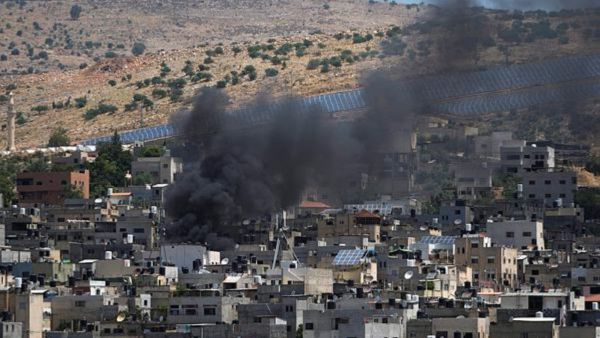
The operation also underscored Israel’s predicament: Without forces on the ground, the military would not be able to conduct any such rescue operation or continue to dismantle Hamas’ capabilities. But Hamas has made any progress on a hostage deal conditional on an Israeli commitment for a permanent cease-fire and the full withdrawal of its troops from Gaza.
For Hamas — which lost four of its remaining bargaining chips Saturday — the deadly Israeli operation could harden its position. The group hinted that the rescue operation could make things worse for the remaining captives.
“The operation will pose a great danger to the enemy’s prisoners and will have a negative impact on their conditions and lives,” the spokesperson for the group’s military wing, Abu Obeida, said in a statement Saturday.
Experts said some of the remaining hostages might now be moved from civilian apartment buildings, like those that housed the four who were rescued Saturday, to harsher conditions in underground tunnels where they will be harder to reach.
“Hamas will try to draw lessons” from the operation and take more precautions to keep the hostages inaccessible, said Avi Kalo, an Israeli lieutenant colonel in the reserves and a former head of the military intelligence department focused on soldiers missing in action.
“For Hamas this is not a turning point,” he said, adding that the group still held plenty of hostages. “Four less is not something that changes the reality dramatically,” he added.
Some Israelis were comparing Saturday’s high stakes operation to the fabled Entebbe raid of nearly 50 years ago, when Israeli commandos rescued more than 100 mostly Israeli hostages being held in Uganda by pro-Palestinian airplane hijackers. Netanyahu’s brother, Yonatan, the commander of that raid, was killed during the mission.
Netanyahu himself sought to link the two Sunday, announcing that just as the Entebbe raid was retroactively named Operation Yonatan, in his brother’s memory, the government had approved the military’s proposal to name Saturday’s raid “Operation Arnon,” in honor of Arnon Zamora, the Israeli police commando who was killed in a firefight during the mission in Gaza.
Many Israelis had accused Netanyahu, whose approval ratings plummeted after Oct. 7, of trying to capitalize on the rescue by rushing to greet the freed hostages at the hospital near Tel Aviv, Israel, where they were recuperating and reuniting with their families.
His office then issued reams of photographs and video clips from the hospital, where Netanyahu also made a public statement, breaking the customary avoidance of government activity on the Jewish Sabbath.
Relatives of hostages who have not returned said they had not received any such personal attention from the prime minister. Avi Marciano, whose daughter Noa, a soldier, was abducted on Oct. 7 and killed in Gaza, wrote in a Facebook post Saturday that in the six months since her death was announced, “The prime minister hasn’t come. He hasn’t called either.”
The departure of Gantz and his party spelled the end of the broader emergency government and served as an indictment of Netanyahu’s murky wartime policies.
Gantz joined the government soon after Oct. 7 out of what he said was a sense of national responsibility and became a key member of Netanyahu’s war Cabinet. Three weeks ago he issued an ultimatum, saying he would withdraw from the government by June 8 unless Netanyahu charted a clear and strategic path forward, including making decisions and plans for how to release the remaining hostages in Gaza and for the postwar governance of the territory, among other issues.
Gantz had planned to address the nation Saturday night, but because of the hostage rescue he postponed his highly anticipated announcement by 24 hours. His party’s departure will not immediately bring the government down; Netanyahu and his remaining partners still command a majority in parliament.
But Gantz accused Netanyahu of delaying crucial decisions for narrow political reasons, sending a clear signal that even after Saturday’s dramatic raid, not much had changed.


