Pressure mounts for global roadmap to phase out fossil fuels
India’s Environment Minister Bhupender Yadav held a bilateral meeting with China’s Special Envoy on Climate Change, Liu Zhenmin, on Wednesday to coordinate their strategy on these issues.
Written by Pratip Acharya
Brazil | Updated: November 20, 2025 05:35 AM IST
3 min read
Whatsapp
twitter
Facebook
Reddit
The other issues are mainly the concerns of the developed nations, who want to see enhanced mitigation actions in pursuance of the 1.5 degree Celsius target, and greater transparency in reporting of climate actions.
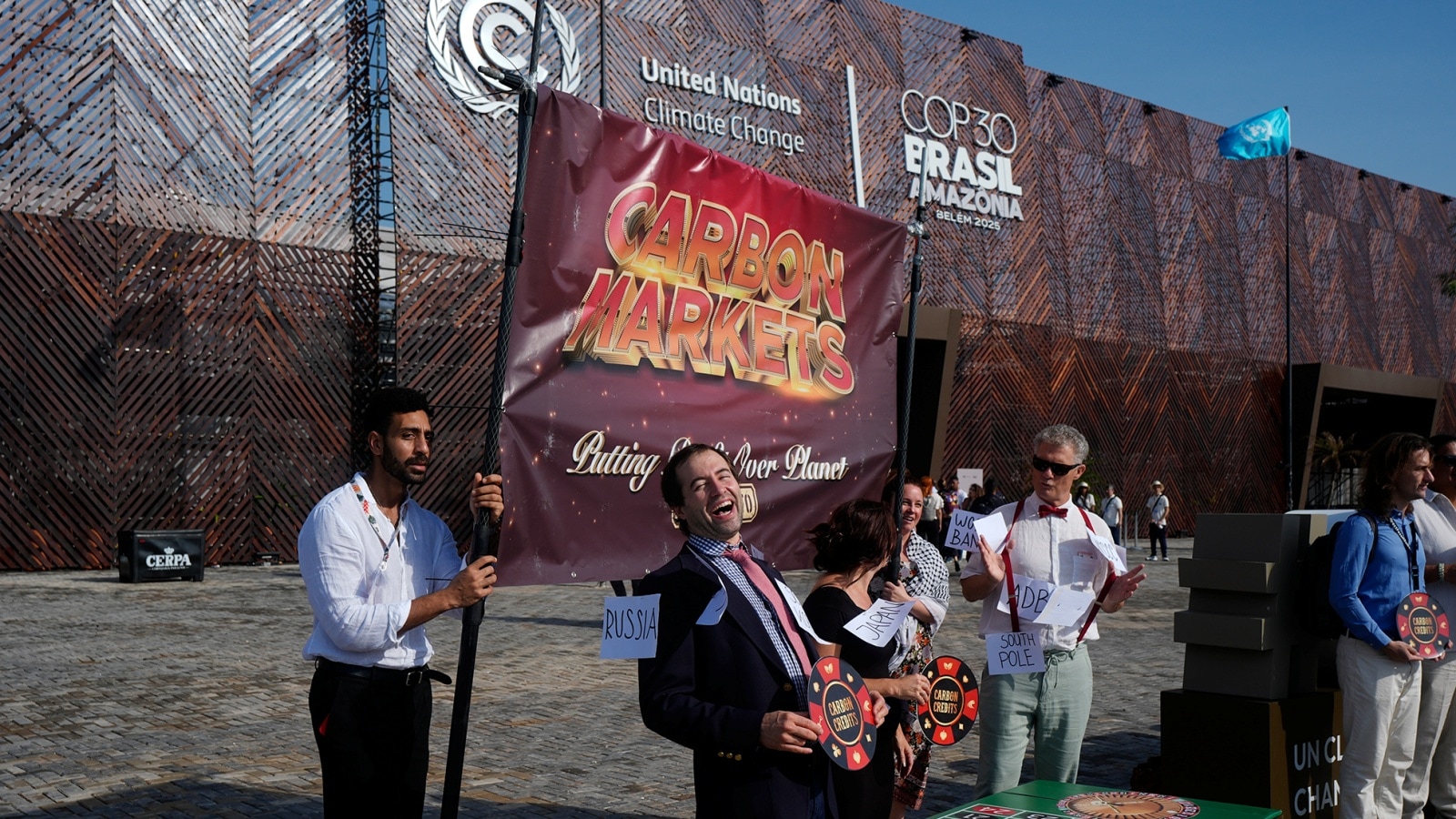
As Brazil worked overtime to get everyone to agree on a ‘political’ package on some of the long-standing contentious issues, a number of countries stepped up pressure for a roadmap on an early phase-out of fossil fuels.
On host Brazil’s initiative, countries at the COP30 climate conference are working to finalise a separate ‘political’ agreement, taking on board some of the long-standing concerns of different countries, including those on provision of climate finance and trade-related unilateral measures, which India has been raising along with some others.
India’s Environment Minister Bhupender Yadav held a bilateral meeting with China’s Special Envoy on Climate Change, Liu Zhenmin, on Wednesday to coordinate their strategy on these issues.
Meanwhile, more than 80 countries, led by European nations and small island states, have been pushing for the inclusion of a roadmap on fossil fuel phase-out in this package.
“The EU supports the idea of inclusion for a roadmap to phase out fossil fuels. We are very particular about the ambition in reduction of emission. Even though, we don’t use the word ‘roadmap’ but we in Europe are very much sure about phasing out fossil fuels in the days to come since we plan to reduce our emission rate furthermore, by nine-percent by 2040,” EU climate commissioner Wopke Hoekstra told reporters on Wednesday.
A first draft of this ‘political’ agreement, a result of days of consultations facilitated by Brazil, had come out on Tuesday, listing options for addressing these contentious issues. It reflected the wide divergences in positions of different countries on these issues. A fresh draft is expected later Wednesday evening.
Among the four issues are two that India, along with many other developing countries, has been raising for the last one year.
Story continues below this ad
One of them pertains to the full implementation of Article 9.1 of the Paris Agreement, which says developed nations “shall provide” financial resources to the developing nations for dealing with climate change.
The second issue that India, China and some other developing countries have been flagging relates to trade-related restrictive measures like the EU’s Carbon Border Adjustment Mechanism (CBAM) that puts tariffs on imported goods whose carbon footprint during manufacturing is more than what is allowed within the EU. India, China and others have been arguing that CBAM was a discriminatory trade practice disguised as climate action.
The other issues are mainly the concerns of the developed nations, who want to see enhanced mitigation actions in pursuance of the 1.5 degree Celsius target, and greater transparency in reporting of climate actions.
The writer is in Belem to cover COP30 as part of his fellowship on investigative journalism on climate reporting under the Ministry of Foreign Affairs of Denmark
Pratip Acharya is a seasoned journalist based in Mumbai reporting for The Indian Express. With a career spanning over a decade, his work demonstrates strong Expertise and Authority in critical urban issues, civic affairs, and electoral politics across Eastern and Western India.
Expertise & Authority
Current Role: Journalist, The Indian Express (IE), reporting from Mumbai.
Core Authority: Pratip's reporting focuses sharply on local democracy and development, specializing in:
Urban Governance and Civic Affairs: Providing in-depth analysis of municipal decision-making, city planning, and local infrastructure, essential for informed urban reporting.
City Politics and Environment: Covering the political dynamics of Mumbai and surrounding areas, alongside critical environmental challenges impacting the metro region.
Electoral Coverage (High-Stakes Experience): He has extensive experience in high-stakes political reporting, having covered major elections, establishing his Trustworthiness in political analysis:
National: Lok Sabha elections in 2014 and 2019.
State: West Bengal Assembly elections in 2016 and Maharashtra Assembly elections in 2019.
Major Assignments (Ground Reporting): Pratip demonstrated commitment during crises by conducting ground reporting throughout the Covid-19 pandemic since its breakout in 2020, offering first-hand accounts and analysis of the public health crisis.
Experience
Extensive Experience: Starting his career in 2014, Pratip has built his foundation across multiple prominent English dailies:
Started at The Times of India in Kolkata (2014).
Relocated to Mumbai (2016) and worked with The Free Press Journal and Hindustan Times before joining The Indian Express.
Pratip Acharya's diverse experience across major publications, coupled with his specialized focus on the intricate details of urban governance and a track record of covering major electoral and health crises, establishes him as a trusted and authoritative source for news from India's critical metropolitan centres. ... Read More


 3 min read