© IE Online Media Services Pvt Ltd
 40 min read


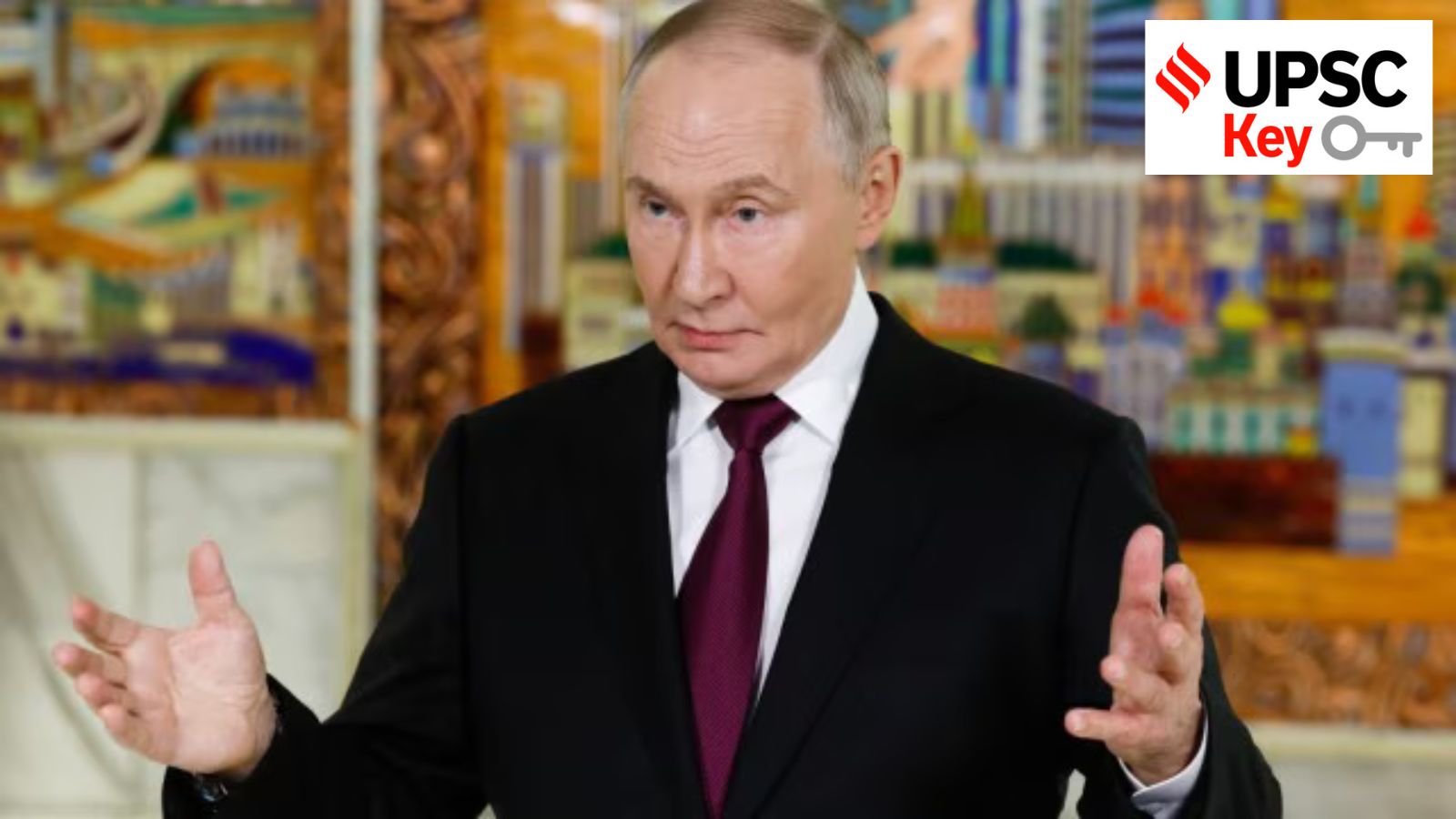 Russian President Vladimir Putin, who last visited India in December 2021, will be laid the red carpet by the South Block, which is preparing for the 23rd annual summit in the last 26 years. Know more in our UPSC Key. (AP)
Important topics and their relevance in UPSC CSE exam for December 3, 2025. If you missed the December 2, 2025, UPSC CSE exam key from the Indian Express, read it here.
Syllabus:
Preliminary Examination: Current events of national and international importance.
Mains Examination: General Studies-II: Bilateral, regional and global groupings and agreements involving India and/or affecting India’s interests
What’s the ongoing story: Underlining the “pressure over India” and the need to “continue and enlarge the volume of our bilateral business” and “not letting anyone interfere in that”, the Kremlin said Tuesday that Russian President Vladimir Putin and Prime Minister Narendra Modi will discuss a labour mobility pact and the supply of S-400 air defence systems and the Sukhoi-57 fighter aircraft to India.
Key Points to Ponder:
— Know about the speciality of S-400 air defence systems and the Sukhoi-57 fighter aircraft
— How is the pressure from the US impacting the bilateral relationship between India and Russia?
— What are the areas of cooperation and conflicts between India and Russia?
— Understand the historic background to their relationship
— How is India bridging the gap between India and Russia?
— What is the significance of Russia for India?
— How can India and Russia further strengthen their relationship?
(Note: The visit has not happened yet so keep track of all the developments that will happen during the visit.)
Key Takeaways:
— In an online media interaction, organised by Russian news agency Sputnik India ahead of Putin’s visit to India on December 4-5, Kremlin spokesperson Dmitry Peskov, responding to the issue of 25 per cent US penalty tariff on India for buying Russian oil.
— He said, “Tariffs between India and the United States is rather a question of bilateral relations between India and the United States. What concerns us is the way we are going to continue and enlarge the volume of our bilateral business with India, not letting anyone interfere in that. And this will be definitely discussed.”
— On the reduction of oil imports from Russia, Peskov, who is also Putin’s Deputy Chief of Staff, said, “Some companies are slowing down the purchase. Some companies are enlarging the purchase. The system is very flexible, and it responds to additional pressure from third countries, very vividly and in a very sophisticated way…”
NATION: From PM’s private dinner to President’s banquet: India all set for Putin’s state visit
— Putin, who last visited India in December 2021 just a couple of months before the Russian army invaded Ukraine, will be laid the red carpet by the South Block, which is preparing for the 23rd annual summit in the last 26 years.
— According to officials in the Ministry of External Affairs, the two sides are working on the labour mobility agreement that will enable Indian skilled and semi-skilled professionals to work in Russia’s construction, healthcare and hospitality sectors. The document has been finalised, and the internal processes in the last stage, it is learnt.
— According to sources, the private dinner in Lok Kalyan Marg residence of the Prime Minister on December 4 is a reciprocal gesture from PM Modi, who had been hosted in Moscow by Putin in July 2024.
— Putin will also be given the ceremonial reception at the Rashtrapati Bhawan on December 5 morning, followed by bilateral talks between Modi and Putin at Hyderabad House. The two leaders will then go to Bharat Mandapam for a meeting with the business leaders from both countries, followed by the launch of the Russia Today’s India operations.
— Officials said that India’s trade deficit with Russia will be discussed during Putin’s state visit. Right now, the bilateral trade is to the tune of $68 billion, of which Indian exports are just about $4 billion. .
EDITORIAL: Turn soft spot for Russia into hard gains for Delhi
— C Raja Mohan writes: Despite Delhi’s ritual celebration of Moscow as India’s “best friend forever”, the reality is less flattering. Indo-Russian ties have been reduced to a thin gruel over the years. Its narrow government-to-government interface has little traction among India’s new elites or its dynamic private sector.
— In Moscow too, India remains marginal to the Russian elites preoccupied with America, Europe, and China. If the relationship has endured, it is thanks largely to Putin’s personal commitment rather than a structural Russian interest.
— Putin’s visit is a chance to break out of this drift. But reinvigoration cannot be built on the familiar menu of defence sales — S-400s and S-500s, Su-57s, or yet another nuclear reactor — nor on the short-term bonanza of discounted oil.
— A durable transformation requires building a substantive commercial, technological, and scientific partnership. Without an economic foundation, Delhi’s lofty rhetoric about promoting “multipolarity” with Moscow will ring hollow.
— The numbers underline the challenge. India exports barely $5 billion a year to Russia (compare this with its $11 bn exports to Bangladesh). There is much room for growth. Russia is a $2.5 trillion economy.
— Nearly four years into the Ukraine war, it is evident that the West cannot defeat Russia at its own borders. President Volodymyr Zelenskyy’s shift from demanding a “just peace” to a “dignified peace” reflects Kyiv’s weakening hand and the inevitability of Western concessions. It is only a question of when and how much.
— Delhi has every interest in a stable peace in Ukraine. The war has severely stressed India’s doctrine of multi-alignment. The idea that Delhi could maintain strong ties with all the major powers collided with Russia’s confrontation with the West and its consequences for India’s commercial ties with the US and Europe.
— Worse, the war tightened Russia’s dependence on China, the rising power with which India has multiple disputes. Only a Russian accommodation with the West can loosen this unfavourable external environment that India faces.
— Europe, India’s most important partner after the US, has also been unsettled by Delhi’s stance on Ukraine. Unlike Trump, Europe has avoided punitive measures against Delhi. As India seeks deeper links with Europe, it would prefer to see peace between Europe and Russia. Putin’s visit gives Delhi an opportunity to reaffirm its support for reconciliation in the old continent.
— In many ways, the difficult negotiations over Ukraine open the door to a potential restructuring of relations among the US, Europe, and Russia. India must navigate this flux by strengthening ties with all three.
— A quarter century ago, when Putin made his first visit to India as president in 2000, he sought to end Russia’s post-Soviet neglect of India. That opportunity was missed by both sides. This week offers a fresh chance for Modi and Putin to put the relationship on a stronger, more modern footing.
Do You Know:
— India-Russia bilateral relations date back seven decades. The bilateral diplomatic relations have gone through several periods since their formal establishment in 1947 but have remained strong and even grown. The recent visit of Prime Minister Modi to Russia demonstrates India’s commitment to its partnership with Russia as it has been a longstanding and reliable partner for India. The India-Russia relations have been a key pillar of India’s foreign policy.
Other Important Articles Covering the same topic:
📍UPSC Issue at a Glance | India-Russia Relations: 4 Key Questions You Must Know for Prelims and Mains
Previous year UPSC Prelims Question Covering similar theme:
(1) Recently, India signed a deal known as ‘Action Plan for Prioritization and Implementation of Cooperation Areas in the Nuclear Field’ with which of the following countries? (UPSC CSE 2019)
(a) Japan
(b) Russia
(c) The United Kingdom
(d) The United States of America
Previous year UPSC Mains Question Covering similar theme:
What is the significance of Indo-US defence deals over Indo-Russian defence deals? Discuss with reference to stability in the Indo-Pacific region. (UPSC CSE 2020)
Syllabus:
Preliminary Examination: Current events of national and international importance.
Mains Examination: General Studies-II: Government policies and interventions for development in various sectors and issues arising out of their design and implementation.
General Studies-III: Challenges to internal security through communication networks, role of media and social networking sites in internal security challenges, basics of cyber security; money-laundering and its prevention.
What’s the ongoing story: Facing backlash over the telecom department’s order for smartphone companies to preload the state-owned cyber-security application Sanchar Saathi, Union Minister for Communications and Development of North Eastern Region Jyotiraditya Scindia Tuesday said users were free to not register on it, and would be able to delete the application.
Key Points to Ponder:
— Know about the ‘Sanchar Saathi’ application.
— What is International Mobile Equipment Identity (IMEI)?
— Read about the Telecommunications Cybersecurity Amendment Rules, 2025.
— What are the concerns related to the Sanchar Saathi app?
— What are the major cyber security threats in India?
— What are the cybersecurity measures taken by the government?
— What is the cybersecurity framework in India?
Key Takeaways:
— The government’s confidential order of November 28 to phonemakers has sparked concerns – around privacy and potential surveillance, with stakeholders ranging from Opposition lawmakers to the civil society criticising the order in public, and some smartphone companies pushing back against it in private, and planning to formally flag their concerns with the government.
— The government’s November 28 order, however, required smartphone companies to ensure that the app’s functions are not “disabled” or “restricted”. Scindia did not comment on, or clarify, how the app could be deleted if its functions cannot be disabled or restricted. Queries sent to the Department of Telecommunications (DoT) did not elicit a response until publication.
— A senior government official said that the clause preventing disabling the app’s functions in the DoT directive means that “manufacturers must not hide, cripple or pre‑install a non-functional version of the app and later claim compliance”. “Nowhere it has been mentioned in the clause that the Sanchar Saathi App cannot be deleted by the end user,” the official said.
— The Sanchar Saathi application is currently available to be downloaded from both Apple’s and Google’s app stores, but users, as of now, have a choice whether to install it on their devices. The government official said the app saw more than 6 lakh downloads on December 2. If the smartphone companies were to stick to the government’s directive, the app would come pre-installed in a new device, or be made available with a software update on all devices sold earlier and in use now.
— The Sanchar Saathi app allows tracking and blocking lost or stolen phones anywhere in India, based on the IMEI of the phones. The International Mobile Equipment Identity (IMEI) is a unique 15-digit code and can be used for identifying, verifying, tracking and blocking phones.
— The app, according to the government, can also assist police authorities in tracing stolen or lost devices, and potentially prevent counterfeit phones from entering the black market. The app also allows users to report suspected fraud communications via calls, SMS, or platforms like WhatsApp.
— To operationalise the move, the DoT is drawing powers from the Telecommunication Cybersecurity Amendment Rules, 2025, which were notified in October. Specifically, the order has cited Section 8 (3) of the rules, which mandates that no person should intentionally remove, obliterate, change, or alter the unique telecommunication equipment identification number.
— Since the Sanchar Saathi app enables users to report stolen phones based on their IMEI, the government is using this particular provision as the legal backing for its order.
— On the Sanchar Saathi app, registration with a phone number is mandatory to access its features. As per FAQs in the Sanchar Saathi app, it can detect the active mobile number in an Android phone and send an automatic message for registration to the DoT. However, on iOS devices, users have to press send on the registration message; it does not get sent automatically.
— An analysis of Sanchar Saathi’s Android application (.apk file) on the open source application testing service Mobile Security Framework (MobSF) found that several codes allow the app to undertake multiple tasks related to user data.
— It can take pictures and videos with the camera, read call logs, read data from external storage (like memory cards), and access phone features which can “determine the phone number and serial number of this phone, whether a call is active, the number that call is connected to and so on”. According to MobSF’s analysis, all these permissions fall under the “dangerous” category.
— The platform’s short privacy policy states that the application does not automatically capture any personal information without prior notification. If personal information is requested, the user will be informed of the purposes, and “adequate security measures will be taken” to protect that data, it states. It prohibits sharing personally identifiable information (PII) with third parties (public/private), except when required by law enforcement.
— However, the app’s privacy policy lacks some elements that are considered the industry standard for privacy protection. For instance, it has no explicit statement about users’ rights, does not allow users to request a correction or, more importantly, deletion of their data from the app, and has no opt-out mechanism. Based on the privacy policy, it is unclear how long it stores the data it has access to.
From the Explained Page- “Understanding concerns around Sanchar Saathi”
— This is the first time the government has issued a directive mandating the installation of a state-backed application on phones. While such a move would be unusual in most Western democracies, it is not entirely without precedent. Russia recently directed smartphone companies to preinstall the state-backed messaging platform MAX, a rival to WhatsApp, which critics say could be used to track users.
— Besides, when the Telecommunications Act was being finalised in 2023, several concerns were raised that the law might be broad and cover online platforms as well. While the government had then said that no such overlaps would happen, the telecom cybersecurity rules, which draw their powers from the Telecom Act, are now being used to issue directions to tech companies.
— The platform’s short privacy policy states that the application does not automatically capture any personal information without prior notification. If personal information is requested, the user will be informed of the purposes, and “adequate security measures will be taken” to protect that data, it states. It prohibits sharing personally identifiable information (PII) with third parties (public/private), except when required by law enforcement.
— “If the application requests you to provide personal information, you will be informed for the particular purposes for which the information is gathered and adequate security measures will be taken to protect your personal information,” the policy states.
— However, the app’s privacy policy lacks some elements that are considered the industry standard for privacy. For instance, it has no explicit statement about users’ rights, does not allow users to request a correction or, more importantly, deletion of their data from the app, and has no opt-out mechanism. Based on the privacy policy, it is unclear how long it stores the data it has access to.
From the Explained Page- “Where Sanchar Saathi stands on consent, constitutional test on privacy”
— The recent directive by the Department of Telecommunications (DoT) mandating the pre-installation of the Sanchar Saathi application on all mobile phones has raised several legal and ethical concerns.
— While the government cites “telecom cyber security” and the need to curb counterfeit devices as the rationale, the forced installation of a state-owned app onto personal devices is being viewed by legal experts as a potential violation of the fundamental right to privacy.
— Clause 7(b) of the directive explicitly requires manufacturers to ensure the app is “readily visible” and that its functionalities are “not disabled or restricted”. However, Telecom Minister Jyotiraditya Scindia on Tuesday (December 2) verbally clarified that the app is “optional” and users can delete it.
— The directive must also be seen through the lens of the Supreme Court’s landmark 2017 judgment (the KS Puttaswamy case), which affirmed privacy as a fundamental right. The judgment laid down a three-fold test for any state intervention into privacy: legality (existence of a law), necessity (a legitimate state aim) and proportionality (a rational nexus between the object and the means).
— Experts argue the Sanchar Saathi mandate fails this test. “There is no statutory basis for such a requirement,” said Mishi Choudhary, a technology lawyer and online civil liberties activist. “Merely through an executive order, the State wants to enter our phones and lives, failing the necessity and proportionality argument.”
— Talha Abdul Rahman, an Advocate on Record at the Supreme Court who was involved in the right to privacy case, said that such surveillance exercises require legislative oversight and cannot be done through delegated legislation. “Whatever curtailment of fundamental rights you want to do, it has to be done by law. It cannot be done by notifications issued under the rules,” he said.
— He drew a parallel to the legal challenge to Aadhaar, noting that the government eventually had to bring in a specific Act to ensure the continuation of the scheme.
Other Important Articles Covering the same topic:
📍Sanchar Saathi app: All the data govt-mandated app collects from your phone
Previous year UPSC Prelims Question Covering similar theme:
(2) In India, it is legally mandatory for which of the following to report on cyber security incidents? (UPSC CSE 2017)
1. Service providers
2. Data centres
3. Body corporate
Select the correct answer using the code given below:
(a) 1 only
(b) 1 and 2 only
(c) 3 only
(d) 1, 2 and 3
Previous year UPSC Mains Question Covering similar theme:
What are the different elements of cyber security ? Keeping in view the challenges in cyber security, examine the extent to which India has successfully developed a comprehensive National Cyber Security Strategy. (UPSC CSE 2022)
Syllabus:
Preliminary Examination: Current events of national and international importance.
Mains Examination: General Studies-II: Welfare schemes for vulnerable sections of the population by the Centre and States and the performance of these schemes; mechanisms, laws, institutions and Bodies constituted for the protection and betterment of these vulnerable sections.
What’s the ongoing story: Nipun Malhotra and Harshita Kumari wrote: Recently, the Supreme Court issued a notice to the central government on a petition seeking the explicit inclusion of haemophilia — a rare bleeding disorder — under the Rights of Persons with Disabilities Act, 2016 (RPwD Act).
Key Points to Ponder:
— What are rare diseases?
— What are the provisions of the Rights of Persons with Disabilities Act, 2016 (RPwD Act)?
— ‘The rights of persons with long-term health conditions must be grounded in social justice and equality.’ Elaborate.
— What is the United Nations Convention on the Rights of Persons with Disabilities (UNCRPD)?
— What is an example of affirmative action in India?
— What are the challenges faced by the Rights of Persons with Disabilities?
Key Takeaways:
— The petitioners argued that haemophilia results in serious mobility limitations, continuous medical dependency, and recurrent hospitalisations, affecting everyday functioning. Despite this, individuals with haemophilia reportedly continue to be denied reservation benefits, educational support, and welfare entitlements available to other recognised disabilities.
— Observing that “the objective of the RPwD Act is inclusion, not exclusion”, the Bench emphasised that the rights of persons with long-term health conditions must be grounded in social justice and equality.
— At first glance, this may seem puzzling — haemophilia, thalassaemia, and sickle cell disease are already listed within the 21 specified disabilities in the RPwD Act. The ongoing exclusion, therefore, raises critical questions: What gaps in implementation persist despite statutory recognition? Why is further inclusion being sought?
— Addressing these requires a closer examination of the Act’s legislative evolution, its intent, and how it diverges from the earlier Persons with Disabilities Act, 1995.
— The Persons with Disabilities Act, 1995, was enacted in response to India signing the “Proclamation on the Full Participation and Equality of People with Disabilities in the Asian and Pacific Region”.
— It was later replaced by the Rights of Persons with Disabilities Act, 2016, which followed India’s ratification of the United Nations Convention on the Rights of Persons with Disabilities (UNCRPD) in 2007.
— The 2016 legislation was transformative in three major ways.
(i) It shifted from a narrow, medicalised framing of disability to a socio-medical model that recognises how social barriers — not just impairments — restrict participation.
(ii) It significantly broadened the scope of legal protection by expanding eligibility from seven disabilities under the 1995 law to a comprehensive set of 21 disabilities.
(iii) It introduced a rights-based vocabulary consistent with the UNCRPD, replacing welfare-oriented terminology with enforceable guarantees of equality, dignity, and full participation.
— While the Act guarantees a set of rights to all persons with disabilities — including equality and non-discrimination, the right to live in the community, protection from abuse and violence, inclusive education, accessible voting, and access to justice — the real differentiation emerges when it comes to entitlements.
— These are reserved for persons with benchmark disabilities (40 per cent or more of a specified disability), who are entitled to 5 per cent reservation in higher education, 4 per cent reservation in government employment, and free education between 6 and 18 years of age.
— However, the 4 per cent reservation in government jobs applies only to five categories of disabilities: Blindness and low vision; Deaf and hard of hearing; Locomotor disability; autism, intellectual disability, specific learning disability, and mental illness; and multiple disabilities arising from the above categories, including deafblindness.
— A closer reading of who qualifies for reservation reveals three structural concerns. First, disabilities that are normatively perceived as “visible” or traditionally understood appear to take precedence, whereas “invisible” yet significantly disabling conditions are omitted.
— Second, the reservation framework continues to mirror the original seven disability categories from the 1995 Act, undermining the expanded intent of the 2016 law.
— Third, this creates a structural double whammy: Those excluded from reservation are often simultaneously screened out of employment as “medically unfit,” leaving them without either a fair chance in open competition or any affirmative action recourse under the PwBD quota.
— In this sense, the case represents a pivotal opportunity to bring the rights-based intent of the RPwD Act into full implementation — ensuring that dignity and equal opportunity are not conditional on the type or visibility of a disability.
Do You Know:
— The International Day of Persons with Disabilities (IDPD) is annually celebrated on December 3, with the global observance being first celebrated annually in 1992, following its proclamation by the United Nations General Assembly Resolution 47/3.
— In 2006, the Convention on the Rights of Persons with Disabilities (CRPD) was adopted. It seeks to provide equality of opportunity for people with disabilities by implementing the 2030 Sustainable Development Goals.
— The theme for 2025 is “fostering disability-inclusive societies for advancing social progress.” The theme reaffirms the commitment of world leaders convened at the Second World Summit for Social Development to create a more just, inclusive, equitable, and sustainable world for all.
Other Important Articles Covering the same topic:
Previous year UPSC Prelims Question Covering similar theme:
(3) India is home to lakhs of persons with disabilities. What are the benefits available to them under the law? (UPSC CSE 2011)
1. Free schooling till the age of 18 years in government-run schools.
2. Preferential allotment of land for setting up a business.
3. Ramps in public buildings.
Which of the statements given above is/are correct?
(a) 1 only
(b) 2 and 3 only
(c) 1 and 3 only
(d) 1, 2 and 3
Syllabus:
Preliminary Examination: Current events of national and international importance.
Mains Examination: General Studies-II: Important International institutions, agencies and fora- their structure, mandate.
General Studies-III: Conservation, environmental pollution and degradation, environmental impact assessment.
What’s the ongoing story: Montek S Ahluwalia and Utkarsh Patel write- “COP30 left many questions unanswered. The withdrawal of the US from the Paris Agreement meant that the world’s largest economy, and the second-largest polluter, is no longer part of the global effort to combat climate change. Developing countries had consistently said that the amount of external assistance promised at $300 billion per year by 2035 was inadequate. But that number at least emerged from COP29, when the US was part of the negotiations. With the exit of the US and many developed countries announcing cuts in external assistance because of fiscal constraints, there is little confidence about what level of international climate finance would be available.”
Key Points to Ponder:
— What are the major outcomes of the COP30?
— Read about the UN Framework Convention on Climate Change and the 2015 Paris Agreement.
— What are the implications of US withdrawal from the Paris Agreement?
— What are the risks of delaying decarbonisation for an emerging economy like India?
— What are the initiatives taken by the Indian government to promote renewable energy at the domestic and global levels?
— What steps should be taken to balance India’s energy needs and environmental concerns?
— What policy reforms are needed to attract large private and foreign capital for India’s clean energy transition?
Key Takeaways:
— “In this two-part article, we argue that despite these negative developments, India should stay firmly committed to net zero by 2070. There are two good reasons for this stance.”
— “One, decarbonisation need not conflict with growth. It is sometimes argued that the net-zero objective involves high costs and, therefore, any action should only be undertaken if large external assistance is available on highly concessional terms. This view ignores the fact that continuing on a fossil fuel-based trajectory also generates environmental costs. The health hazards of air pollution — which are especially severe in Indian cities — provide a compelling reason to shift out of fossil fuels as fast as possible.”
— “Furthermore, technology has now brought us to a point where decarbonisation can be pursued in some major sectors without incurring substantial additional costs. Failure to make an early start on decarbonisation will only lead to continued investments in conventional fossil fuel-based infrastructure, which will lead to unproductive stranded assets down the line. The alternative of shifting to green energy will unlock new opportunities for economic growth and employment generation in manufacturing, with a potential for exports.”
— “The scope for achieving high growth in India, while also reducing emissions, has been explored by many different quantitative models of the Indian economy. These models rely on the fact that the emissions associated with any given growth rate can be significantly reduced by (i) relentless pursuit of energy efficiency, which is dependent upon technological progress; (ii) electrification of all economically and technically viable end-uses so that fossil fuels used can be substituted by electricity, and (iii) combining this with shifting away from fossil fuels for electricity generation to renewables.”
— “Given the size of India’s economy and its growing sophistication, we will be expected to mobilise most of the additional investment needed from domestic sources. There will be a need for external financing, which could come in the form of a combination of foreign private flows (debt plus FDI) and non-concessional public flows (bilateral and multilateral development bank, or MDB, lending). There is no dearth of private capital in world markets for bankable projects. Fortunately, the Indian private sector has demonstrated its ability to develop and implement such projects.”
— “The way to increase the potential flow of capital is to undertake a range of domestic policy reforms. The most important thing is to ensure that the electricity distribution companies — the main buyers in the electricity market — are financially viable. This requires reform of the state distribution companies, combined with selective privatisation, as some states are now doing.”
— “These steps need to be supported by reform of the regulatory system to allow greater variability in pricing, at both the wholesale and consumer levels. Foreign private investors may also need a legal framework in which state-investor disputes can be resolved quickly. This is an issue that is relevant for FDI flows in general, and it is one of the key items on the FTA negotiations’ agenda.”
Do You Know:
— In 1992, at the Rio Earth Summit, 154 countries signed a multilateral treaty called the United Nations Framework Convention on Climate Change (UNFCCC). It aimed to stabilise greenhouse gas concentrations “at a level that would prevent dangerous anthropogenic (human-induced) interference with the climate system.”
— The treaty came into force two years later, and since then, countries which are part of the UNFCCC, meet every year at different venues. Today, there are 198 ‘parties’ or signatories of the Convention.
Other Important Articles Covering the same topic:
📍In accommodating some, ignoring others, COP30 signals key shift in power equations
📍Knowledge Nugget: What happened at COP30 in Brazil? 10 key takeaways for your UPSC Exam
Previous year UPSC Prelims Question Covering similar theme:
(4) With reference to the Agreement at the UNFCCC Meeting in Paris in 2015, which of the following statements is/are correct? (UPSC CSE 2016)
1. The Agreement was signed by all the member countries of the UN and it will go into effect in 2017.
2. The Agreement aims to limit the greenhouse gas emissions so that the rise in average global temperature by the end of this century does not exceed 2°C or even 1.5°C above pre-industrial levels.
3. Developed countries acknowledged their historical responsibility in global warming and committed to donate $ 1000 billion a year from 2020 to help developing countries to cope with climate change.
Select the correct answer using the code given below.
(a) 1 and 3 only
(b) 2 only
(c) 2 and 3 only
(d) 1, 2 and 3
Previous year UPSC Mains Question Covering similar theme:
Describe the major outcomes of the 26th session of the Conference of the Parses (COP) to the United Nations Framework Convention on Climate Change (UNFCCC)? What are the commitments made by India in this conference? (UPSC CSE 2021)
Syllabus:
Preliminary Examination: Current events of national and international importance.
Mains Examination: General Studies-II: Government policies and interventions for development in various sectors and issues arising out of their design and implementation.
What’s the ongoing story: A directive by the Department of Telecommunications (DoT) to online messaging companies like WhatsApp, Signal and Telegram will soon mean that users will no longer be able to access the applications without the SIM card with which they registered for the services on their phones.
Key Points to Ponder:
— What do you understand about SIM binding?
— What are the reasons for the rise in cyber fraud incidents in India?
— How is sim binding going to address that?
— What are the concerns raised by the companies?
— What are the steps taken by the government to protect against digital frauds?
— What are the various types of digital frauds?
Key Takeaways:
— The directive will also mean that the companion web services, such as WhatsApp Web, will not be available uninterrupted to users, as they will be automatically logged out every six hours.
— The department has said that the directive is a way to combat rising digital fraud in the country, but many in the industry believe that it will result in erosion of users’ privacy, could pose challenges for users on international travels, and introduce potential friction points in using such services across multiple devices.
— The government is drawing its regulatory powers from the Telecommunication Cybersecurity Amendment Rules, 2025, which were notified in October, and introduced the concept of Telecommunication Identifier User Entity (TIUE) under the scope of telecom regulations.
— As per the rules, a TIUE is an entity (other than a licensee, like telecom operators) that uses telecommunication identifiers – such as mobile numbers – to identify its users.
— These platforms are now required to ensure that, within 90 days, their services are “continuously” linked to the SIM card used to register on them, and not allow access without the SIM in the device. In technical terms, this is called SIM binding.
— As a result, the various associated web services (like WhatsApp Web) “shall be logged out periodically” – no later than six hours. Platforms will have to send a compliance report to the DoT within the next four months.
— Right now, services like WhatsApp verify a user’s identity by sending a one-time password (OTP) to their mobile number. But, to follow the DoT’s directive, they will have to start accessing the IMSI of their SIM cards. IMSI stands for International Mobile Subscriber Identity, and is a unique number that identifies every mobile subscriber globally. It is stored on the SIM card.
— For a global platform like WhatsApp, which has billions of users globally – and more than 500 million in India – it would mean re-engineering its service to meet Indian regulations, which are different from other countries.
— When the telecom cybersecurity rules were proposed earlier this year, the telecom industry had supported the need for SIM binding.
— Some representatives of telecom companies have now flagged concerns with the proposal. A senior industry executive said that these directions could pose a challenge to users who travel abroad and frequently use SIM cards from those countries to access communication services.
Do You Know:
— The Kaspersky report released in February 2025, found that one in every three internet users in India were targeted by web-borne threats last year. Between January and December 2024, the company detected 4,43,72, 823 Internet-borne cyberthreats on computers of users in India.
Other Important Articles Covering the same topic:
📍Why registering mobile phones’ IMEI number with the govt is now mandatory
Previous year UPSC Prelims Question Covering similar theme:
(5) Which among the following do/does not belong/ belongs to GSM family of wireless technologies? (UPSC CSE 2010)
(a) EDGE
(b) LTE
(c) DSL
(d) Both EDGE and LTE
Syllabus:
Preliminary Examination: Current events of national and international importance, Geography.
Mains Examination: General Studies-I, III: Important Geophysical phenomena such as earthquakes, Tsunami, Volcanic activity, cyclones etc., disaster management.
What’s the ongoing story: Cyclone Ditwah has been moving in the Indian Ocean region for almost a week now. It originated southeast of Sri Lanka on November 26 and moved slowly northwards along Sri Lanka’s eastern coastline, causing large-scale devastation.
Key Points to Ponder:
— What is the Coriolis force?
— What is a cyclone and what are its types?
— What are the favourable conditions for the formation of tropical cyclones?
— What are tropical depressions?
— What is the difference between cyclones and anticyclones?
— How is climate change impacting tropical cyclones?
— What are the challenges in cyclone disaster management in India?
Key Takeaways:
—Hundreds of people are reported to have been killed in Sri Lanka. The remnants of Ditwah have continued to move northwards, reaching the Indian coastline, and on Tuesday, were located about 40 km southeast of Chennai around noon.
— The Indian Ocean region is no stranger to tropical cyclones. Multiple cyclones are formed in the Indian Ocean every year, and many of them arrive on the Indian coastline, both from the Bay of Bengal side as well as the Arabian Sea side. Over the years, India has built an elaborate mechanism to deal with these cyclones and minimise their impact.
— Cyclone Ditwah has been slightly different. It originated at a place, south of Sri Lanka, which is not a usual location for the generation of cyclones. Unlike India, Sri Lanka is not used to receiving cyclones like these and, therefore, is not as well prepared to deal with them.
— Ditwah moved northwards along the Sri Lankan coastline, and was not directed towards the country’s landmass, as usually happens with cyclones heading towards India. This meant that, instead of dissipating quickly over land, the cyclone lingered along the coast for a long time, worsening the damage.
— This, even though Ditwah was only a moderately strong cyclone. Much stronger cyclones have hit the Indian landmass with very little damage compared to what Ditwah caused in Sri Lanka.
— Though not a regular phenomenon, like in India, the Philippines, Indonesia or China, cyclones are not completely unknown in Sri Lanka. Since the year 2000, the country has faced at least 16 cyclones, according to a report titled ‘Tropical Cyclones: hazard profile of Sri Lanka’. Most of them are very mild compared to what comes to the Indian coastline.
— Ditwah was just a ‘cyclonic storm’, the second weakest category. There at four categories of cyclones stronger than this, based on the wind speeds associated with them, and their damage potential. “Historically, very few cyclones have affected Sri Lanka, and their frequency is less,” Mrutyunjay Mohapatra, director general, IMD, told The Indian Express.
— Sri Lanka, located between 5 and 10 degrees north latitude, is closer to the equator than India. Cyclones generally form slightly away from the equator. That is because one of the key ingredients in cyclone formation, the Coriolis force that makes the cyclone spin, is not strong enough near the equator.
— Ditwah emerged from a low-pressure system that had developed in the southwest Bay of Bengal around November 25. This area in the north Indian Ocean basin is not commonly known for cyclone formation, but two favourable conditions happened at the same time, making the emergence of Ditwah possible.
— The Intertropical Convergence Zone, a region near the equator where northeast and southwest trade winds converge, resulting in lots of clouds and thunderstorms, was quite active during that time. Simultaneously, a system of equatorial waves — disturbances in the atmosphere that happen periodically in this region — also developed. The interaction of these two systems provided the required fuel for the emergence of Ditwah on November 27.
— The India Meteorological Department (IMD) runs the Regional Specialised Meteorological Centre (RMSC), which monitors the oceans in this region and issues alerts for cyclones. It serves all the regional countries — Bangladesh, Maldives, Myanmar, Oman, Pakistan, Sri Lanka and Thailand.
— The IMD had first predicted the formation of a depression as early as November 13, and issued an alert over the possibility of cyclogenesis on November 20. From November 23 onwards, IMD issued three-hourly and six-hourly weather updates of the system, indicating its development around November 26. All the information was shared with Sri Lanka in a routine manner.
— However, Sri Lanka does not have an elaborate evacuation mechanism that can shift hundreds of thousands of people at short notice. Despite the early warning and advance knowledge of the cyclone’s movement, it could only do a limited evacuation.
— The geography on the eastern coast also contributed to the damage. Exceptionally high rainfall (400 mm in 24 hours), three consecutive days of heavy rainfall over a small region due to the slow-moving Ditwah, resulted in landslides, flooding and inundation of the eastern coastal belt. Most of the losses happened because of that.
Do You Know:
— A cyclone is a large-scale system of air that rotates around the centre of a low-pressure area. It is usually accompanied by violent storms and bad weather. As per National Disaster Management Authority (NDMA), a cyclone is characterised by inward spiralling winds that rotate anticlockwise in the Northern Hemisphere and clockwise in the Southern Hemisphere.
Other Important Articles Covering the same topic:
📍UPSC Issue at a Glance | Decoding Cyclones: Formation, Naming and Climate Change Linkages
Previous year UPSC Prelims Question Covering similar theme:
(6) In the South Atlantic and South-Eastern Pacific regions in tropical latitudes, cyclone does not originate. What is the reason? (UPSC CSE 2015)
(a) Sea surface temperatures are low
(b) Inter-Tropical Convergence Zone seldom occurs
(c) Coriolis force is too weak
(d) Absence of land in those regions
Previous year UPSC Mains Question Covering similar theme:
Tropical cyclones are largely confined to the South China Sea, Bay of Bengal and Gulf of Mexico. Why? (UPSC CSE 2014)
|
ALSO IN NEWS |
|
| House panel: Need policy to bring down non-scheduled drug prices | Stating that lack of government regulatory control over “non-scheduled drugs” might lead to widespread profiteering, a Parliamentary Standing Committee on chemicals and fertilisers, which is looking into the rising prices of medicines, has asked the Department of Pharmaceuticals and the National Pharmaceutical Pricing Authority (NPPA) to come up with a policy to plug the loophole at the earliest. |
| For democracy’s sake, an index for legislatures | Vijender Gupta writes- Legislative quality influences law-making, oversight of the executive, public engagement and delivery of development outcomes. Currently, there are limited ways, mostly through RTIs, by which the state legislature’s quality and innovation can be measured. There is a need for an institutional mechanism through which state legislatures can assess their functioning, identify gaps, and strengthen their institutional performance. Measuring, tracking and comparing state-level legislative performance is necessary to evaluate democratic performance within India’s federal structure. Recognising this need, the National Legislative Index (NLI) seeks to provide a systematic, data-driven means of evaluating legislatures. The NLI, to be published annually, proposes India’s first state-wise benchmarking system to measure the productivity, transparency, and innovation of state assemblies and legislative councils. The NLI will incentivise healthy competition among states and accelerate the adoption of best practices (procedural, digital, and institutional). Its core objectives are to provide a comprehensive benchmarking mechanism; to distil a transparent annual score (0-100) for each legislature; to build national comparison around legislative quality and innovation; to identify gaps and challenges and thereby inform corrective reforms; to foster peer learning by highlighting inter-state disparities; to strengthen the role of the Speaker’s office as a driver of institutional excellence, and to encourage institutional reforms, digital and participatory practices. |
| India’s 3rd nuclear submarine soon, trials in final stages, says Navy Chief | India will commission its third nuclear submarine soon as it is in the final stages of trials, Chief of Naval Staff Admiral Dinesh Tripathi said Tuesday. The induction of INS Aridhaman will take India’s operational fleet of the Arihant-class nuclear-powered ballistic missile submarines (SSBN) to three, marking a significant step in strengthening the country’s sea-based nuclear deterrent. Expected to be commissioned around 2026-27, Aridhaman is designed to carry the longer-range K-4 submarine-launched ballistic missiles and will move India closer to sustained, near-continuous at-sea nuclear deterrent patrols, a key requirement of a credible second-strike capability. |
| Pune researchers find spiral galaxy like Milky Way from early universe | Indian researchers have discovered a massive galaxy that existed when the universe was just 1.5 billion years old — one of the earliest to have been observed so far — and with features that challenge the current understanding of how galaxies were formed in early universe.
Galaxies that formed so early in the life of the universe are expected to be not very well-structured, turbulent and unstable. But the one that Pune-based researchers have discovered is a well-defined spiral galaxy, remarkably similar in structure to our own Milky Way — the kind of galaxy supposed to have evolved much later. |
| PRELIMS ANSWER KEY |
| 1. (b) 2. (d) 3. (d) 4. (b) 5. (c) 6. (b) |
Subscribe to our UPSC newsletter. Stay updated with the latest UPSC articles by joining our Telegram channel – Indian Express UPSC Hub, and follow us on Instagram and X.
🚨 Click Here to read the UPSC Essentials magazine for November 2025. Share your views and suggestions in the comment box or at manas.srivastava@indianexpress.com🚨

Read UPSC Magazine