© IE Online Media Services Pvt Ltd
 25 min read


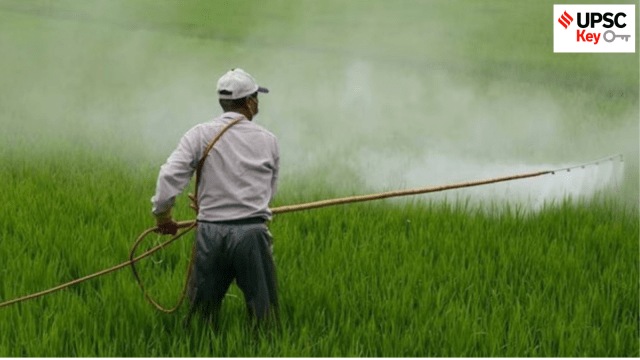 The world’s farmers used 60 million metric tonnes of commercial nitrogen fertilisers in 1980. By 2020, the sector used 107 million metric tonnes. Know more in our UPSC Key. (Representational)
🚨 Attention: UPSC Key is now all 7 Days a Week!🚨
Important topics and their relevance in UPSC CSE exam for June 13th, 2024. If you missed the June 12th, 2024 UPSC CSE exam key from the Indian Express, read it here.
🚨 The Indian Express UPSC Essentials brings to you the May edition of its monthly magazine. Click Here to read. Share your views and suggestions in the comment box or at manas.srivastava@indianexpress.com🚨
UPSC Syllabus:
Preliminary Examination: General issues on Environmental Ecology, Biodiversity and Climate Change
Mains Examination: GS-III: Environment
What’s the ongoing story- Emissions of planet-warming nitrous oxide gas rose by 40 per cent between 1980 and 2020, a study by the Global Carbon Project said on Wednesday.
Prerequisites:
— What is the Paris Agreement?
— What are greenhouse gases?
— What are the main sources of emission of nitrous oxide?
— What is the impact of nitrous oxide gas on the atmosphere?
Key takeaways:
— China (16.7 per cent), India (10.9 per cent), US (5.7 per cent), Brazil (5.3 per cent) and Russia (4.6 per cent) were the top five emitters of the gas more potent than carbon dioxide and methane.
— India has the lowest per capita emission of 0.8 kg N2O/person, the kg N2O/person figures for the other top emitters are China 1.3, US 1.7, Brazil 2.5 and Russia 3.3.
— High levels of nitrous oxide in the atmosphere can deplete the ozone layer and compound effects of climate change, the study said. On the earth, excess nitrogen contributes to soil, water and air pollution.
— Agricultural production and livestock rearing were the two key human-driven sources of nitrous oxide. In the last decade agricultural production, chiefly owing to the use of nitrogen fertilisers and animal manure, contributed to 74 per cent of the total anthropogenic nitrous oxide emissions, according to the study.
— “Agricultural emissions reached 8 million metric tons in 2020, a 67 per cent increase from the 4.8 million metric tons released in 1980,” said the study.
— The world’s farmers used 60 million metric tonnes of commercial nitrogen fertilisers in 1980. By 2020, the sector used 107 million metric tonnes. That same year, animal manure contributed 101 million metric tonnes for a combined 2020 usage of 208 million metric tonnes, as per the study.
— Among the 18 regions considered in this study, only Europe, Russia, Australasia, and Japan and Korea had decreasing nitrous oxide emissions.
— China and South Asia had the largest increases in nitrous oxide emissions from 1980 to 2020 at 92 per cent.
— Nitrous oxide is also emitted from natural sources such as oceans, inland water bodies and soil. These sources contributed to 11.8 per cent of the global emissions of the gas between 2010 and 2019.
— Agriculture activities and related waste generation, biomass burning, fossil fuels and industries together contributed to around six per cent of the global nitrous oxide emissions in 2010-2019, the study noted.
For Your Information:
— Balanced fertilisation — discouraging farmers from applying too much urea, di-ammonium phosphate (DAP) or muriate of potash (MOP), which only have primary nutrients in high concentrations — is likely to be a key policy goal for the government taking over after the Lok Sabha elections.
Points to Ponder:
— What initiatives have been taken by the government to reduce nitrous oxide emissions from agriculture?
— What are the global initiatives to reduce emissions from agriculture and animal rearing?
— What is the impact of imbalanced fertilisers?
— What steps need to be taken to address the issue of overuse of urea?
— What are the concerns with the government subsidies on fertilisers?
Post Read Question:
Other than poaching, what are the possible reasons for the decline in the population of Ganges River Dolphins? (UPSC CSE 2014)
1. Construction of dams and barrages on rivers.
2. Increase in the population of crocodiles in rivers.
3. Getting trapped in fishing nets accidentally.
4. Use of synthetic fertilizers and other agricultural chemicals in crop-fields in the vicinity of rivers.
Select the correct answer using the code given below.
(a) 1 and 2 only
(b) 2 and 3 only
(c) 1, 3 and 4 only
(d) 1, 2, 3 and 4
Other Important Articles Covering the same topic:
How the next government will push ‘balanced fertilisation’

UPSC Syllabus:
Preliminary Examination: Environment
Mains Examination: GS-III: Environment
What’s the ongoing story- Karnataka, Maharashtra, and Goa, three of the six states where the Centre has proposed eco-sensitive areas (ESA) to protect the Western Ghats, have sought a reduction in the extent of these ESAs to allow development works.
Prerequisites:
— What are the eco-sensitive areas (ESA)?
— What is the Kasturirangan panel report?
— What is the significance of the western ghats?
Key takeaways:
— The states flagged the need for rationalisation of these ESAs, spread over 56,825 sq km in the Ghats in their discussions with an expert panel appointed by the Centre to finalise a draft notification.
— Karnataka, where an area of 20,668 sq km was proposed as ESA, maintained its opposition to the K Kasturirangan panel report, which formed the basis for the original draft, saying the livelihood of people in the region would be hit.
— The Kasturirangan panel had identified 37 percent of the Ghats as ecologically sensitive and recommended prohibition or regulation of certain activities.
For Your Information:
What are Eco-Sensitive Zones?
— As per the National Wildlife Action Plan (2002-2016), issued by the Union Ministry of Environment, Forest and Climate Change, land within 10 km of the boundaries of national parks and wildlife sanctuaries is to be notified as eco-fragile zones or Eco-Sensitive Zones (ESZ).
— While the 10-km rule is implemented as a general principle, the extent of its application can vary. Areas beyond 10-km can also be notified by the Union government as ESZs, if they hold larger ecologically important “sensitive corridors.”
Points to Ponder:
— Why eco-sensitive zones are created?
— Why Western Ghats is considered a biodiversity hotspot?
— What are the key provisions of the draft notification of the Ecologically Sensitive Areas (ESA) in the Western Ghats?
— What are the various committees formed by the government for the protection of western ghats?
Post Read Question:
‘Gadgil Committee Report’ and ‘Kasturirangan Committee Report’, sometimes seen in the news, are related to (UPSC CSE 2016)
(a) Constitutional reforms
(b) Ganga Action Plan
(c) Linking of rivers
(d) Protection of Western Ghats
Other Important Articles Covering the same topic:
Explained: What are Eco-Sensitive Zones and why are there protests in Kerala against them?
UPSC Syllabus:
Preliminary Examination: General issues on Environmental Ecology, Biodiversity and Climate Change
Mains Examination: GS-II, III: Government policies, Environment, Diseases
What’s the ongoing story- A Second human case of bird flu subtype H9N2 was detected in India earlier this year — the first having been reported in 2019 — according to the World Health Organization (WHO). A 4-year-old child from West Bengal first reported symptoms in January this year, had to be admitted to intensive care unit for treatment twice, and was discharged finally in May.
Prerequisites:
— What is bird flu?
— What is the WHO risk assessment?
— What is H5N1?
— What is H9N2?
Key takeaways:
— In its risk assessment of the case, the WHO said it expects to see sporadic cases of bird flu in humans in India with the infection circulating in the poultry.
— “There are several subtypes of avian influenza and cases are picked up from time to time by the network of laboratories that monitor flu cases. Not all types are dangerous, but deaths due to the infection have been seen globally.”
— To prevent avian flu infection, people should minimise contact with animals and poultry and areas contaminated with their faeces. They should wash their hands with soap and water as often as possible, especially before and after handling animals. Those at high risk of severe disease such as children, older people and pregnant women should avoid participating in slaughtering, collecting eggs, or preparation of these foods, as per WHO guidelines.
For Your Information:
— Bird flu, also known as avian flu, refers to an infectious viral illness that mainly infects and spreads among poultry and some wild birds. There are different strains of bird flu virus, which have been circulating for a very long time among at least 100 bird species, including wild waterfowl, such as ducks and geese, without much harming them.
— “There are two types of H5N1 — low and highly pathogenic. While the low pathogenic type is usually seen in birds in the region — and has in fact caused at least two outbreaks in birds in Kerala — the highly pathogenic type is not commonly seen in birds, let alone animals.”
Points to Ponder:
— What are the preventive measures and recommendations of the WHO to control avian influenza?
— What are the symptoms of avian influenza virus infections in humans?
— What are the treatments available?
— How the H5N1 bird flu threatens the very existence of birds and mammals?
Post Read Question:
Other Important Articles Covering the same topic:
First bird flu case in India this year, confirms WHO: Here’s what you need to know
How the H5N1 bird flu threatens the very existence of birds and mammals
UPSC Syllabus:
Preliminary Examination: Indian Polity
Mains Examination: GS-II: Indian Polity
What’s the ongoing story- President Droupadi Murmu has turned down the mercy petition of Mohammed Arif alias Ashfaq, a Pakistani national and a member of the Lashkar-e-Taiba who was sentenced to death in the December 2000 Red Fort attack in which three Army personnel were killed.
Prerequisites:
— What are mercy petitions?
— What is Pardoning Power?
— What are the constitutional provisions related to the pardoning power of the President?
Key takeaways:
— According to Rashtrapati Bhavan, the mercy petition of Arif, received on May 15, was turned down on May 27.
— This is the second mercy plea rejected by President Murmu after she assumed office on July 25, 2022. In April 2023, the President rejected the mercy plea of Vasant Sampat Dupare, convicted of raping and killing a four-year-old in Nagpur.
— In Arif’s case, the Supreme Court had dismissed his review petition on November 3, 2022, affirming the death penalty awarded to him.
— The apex court, while upholding the death sentence, noted that there were no mitigating circumstances in his favour and that the attack posed a direct threat to the country’s unity, integrity and sovereignty.
— The attack, which took place on December 22, 2000, saw intruders opening fire at the 7 Rajputana Rifles unit stationed within the Red Fort premises, resulting in the death of three Army personnel.
For Your Information:
— Under Article 72 of the Constitution, “the President shall have the power to grant pardons, reprieves, respites or remissions of punishment or to suspend, remit or commute the sentence of any person convicted of any offence where the sentence is a sentence of death”. Similarly, Article 161 confers pardoning powers on the governor, but these do not extend to death sentences.
Points to Ponder:
— What are the limitations of the president’s pardoning power?
— What is the difference between the pardoning power of the President and the Governor?
Post Read Question:
With reference to the election of the President of India, consider the following statements: (UPSC CSE 2018)
1. The value of the vote of each MLA varies from State to State.
2. The value of the vote of MPs of the Lok Sabha is more than the value of the vote of MPs of the Rajya Sabha.
Which of the statements given above is/are correct?
(a) 1 only
(b) 2 only
(c) Both 1 and 2
(d) Neither 1 nor 2
Other Important Articles Covering the same topic:
Mercy petitions: How changes proposed in the BNSS ignore legal precedents
UPSC Syllabus:
Preliminary Examination: Indian Polity and Governance.
Mains Examination: GS-II: Government policies and interventions.
What’s the ongoing story- The Armed Forces are discussing possible tweaks to the Agnipath scheme for military recruitment including changes in the retention percentage of Agniveers from the current 25 per cent and increase in their training period.
Prerequisites:
— What is the Agnipath scheme?
— What is the objective of the Agnipath scheme?
Key takeaways:
— These changes, however, are not yet formal recommendations to the government. These are proposals that are still being discussed by the Armed Forces.
— One of the changes to the scheme being discussed within the Army is increasing the retention percentage from the current 25 per cent to 60-70 per cent for regular troops and nearly 75 per cent for technical and specialist soldiers, including Special Forces..
— In the Army, the training period for soldiers before the announcement of the Agnipath scheme was between 37 and 42 weeks.
— The reduction of this training period to 24 weeks for Agniveers has been adversely impacting their overall training, according to the feedback received by the Army.
— The Army is discussing that the training duration for Agniveers be increased to what it was originally for soldiers, while increasing the overall service period to around seven years from the current four years, so that gratuity and ex-servicemen (ESM) status could be granted to them.
— The move, if implemented, will also make Agniveers eligible for benefits applicable to ESM and the entire period of seven years of service as Agniveers will then likely be counted as part of pensionable service for those getting permanently retained in the force.
— Other suggestions include lateral absorption of graduates as technical personnel.
For Your Information:
— Announced in June 2022 after a gap of two years in military recruitment due to the Covid-19 pandemic, the Agnipath scheme was aimed at recruiting soldiers, airmen and sailors to the Armed Forces for a period of four years. At the end of the four-year tenure, up to 25% of them can apply voluntarily to join the services on a regular basis, subject to merit and organisational requirements.
— Unlike soldiers in regular service, Agniveers do not draw pensions post-retirement. Only the 25% of Agniveers who get absorbed into the forces after four years will receive pensionary benefits, although the initial four years of service will not be considered for these.
Points to Ponder:
— What are the concerns associated with the Agnipath scheme?
— What are the benefits of the Agnipath scheme?
— What reforms have been taken by the government in the defence sector?
Post Read Question:
Department of Border Management is a Department of which one of the following Union Ministries? ( UPSC CSE 2008)
(a) Ministry of Defence
(b) Ministry of Home Affairs
(c) Ministry of Shipping, Road Transport and Highways
(d) Ministry of Environment and Forests
Other Important Articles Covering the same topic:
Agnipath Scheme: why it was introduced, the opposition to it
UPSC Syllabus:
Preliminary Examination: Indian Polity and Governance.
Mains Examination: GS-II: Indian Polity and Governance.
What’s the ongoing story- Internal discussions within the government suggest that the demand for special category status by the BJP’s two key allies, TDP and JD(U) for Andhra Pradesh and Bihar, respectively, will be hard to meet since there are several states which may need a higher percentage of grants given their socio-economic and fiscal health.
Prerequisites:
— What is a Special Category Status?
— What are the criteria for SCS designation?
Key takeaways:
— One of the biggest benefits for states classified as a special category earlier was that 90 per cent of funds under centrally sponsored schemes was contributed by the Centre, with only 10 per cent being the state contribution. For all other states, the split was 60:40 with the Centre contributing just 60 per cent.
— Further, Normal Central Assistance from the Union government for special category states comprised 90 per cent grants and 10 per cent loan; for other states, it was 30 per cent grants, and 70 per cent loans.
Points to Ponder:
— What does The 14th Finance Commission say about the Special Category status?
— Which states are demanding the Special Category Status?
— What are the Benefits of SCS?
— What are the concerns related to SCS?
Post Read Question:
What is the significance of the special category status given to states? What are the concerns associated with it?
Other Important Articles Covering the same topic:
UPSC Syllabus:
Preliminary Examination: General issues on Environmental Ecology, and Climate Change – that do not require subject specialisation.
Mains Examination: GS-III: Environment and Disaster Management.
What’s the ongoing story- The ongoing spell of extreme heat in many parts of the country has once again reopened discussions on the inclusion of heatwaves as one of the notified disasters under the Disaster Management (DM) Act, 2005.
Prerequisites:
— What are heatwaves and the criteria for declaring them?
— What causes heatwaves?
— What is the Disaster Management (DM) Act, 2005?
Key takeaways:
— If the inclusion does happen, states will be allowed to use their disaster response funds to provide compensation and relief, and carry out a range of other activities for managing the fallout of a heatwave. Currently, states need to use their own funds for these activities.
— The DM Act was enacted in the wake of the 1999 Odisha super-cyclone and the 2004 tsunami. It defines a disaster as a “catastrophe, mishap, calamity or grave occurrence” arising from “natural or man-made causes” that results in substantial loss of life, destruction of property, or damage to the environment. It must also be of such nature which is “beyond the coping capacity” of the community.
— If such an event happens, then the provisions of the DM Act can be invoked. The provisions allow states to draw money from the two funds that have been set up under this law — the National Disaster Response Fund (NDRF) at the national level and the State Disaster Response Fund (SDRF) at the state level. The states first utilise the funds available in the SDRF, and only if the magnitude of the disaster is unmanageable with the SDRF, states seek the money from the NDRF. In the FY 2023-24, only two states drew money from the NDRF.
— While the entire money of the NDRF comes from the central government, states contribute 25% of the money in the SDRF (10% in case of special category states), the rest comes from the Centre. The money in these funds cannot be used for any purpose other than response and management of notified disasters.
— Currently, there are 12 categories of disasters which are notified under this Act. These are cyclones, drought, earthquake, fire, flood, tsunami, hailstorm, landslide, avalanche, cloudburst, pest attack, and frost and cold waves.
— There are primarily two reasons for the Centre not adding heatwaves as a notified disaster now:
1. Finance Commission Reluctance: States have put the demand of including heatwaves as a notified disaster before the last three Finance Commissions — the periodically established Constitutional body that decides on the distribution of financial resources between the Centre and states. However, the Finance Commissions have not entirely been convinced.
2. Practical Difficulties: Although unstated, the main reason behind the reluctance to add heatwave as a notified disaster is the potentially huge financial implication of the move.
— Inclusion of heatwaves as a notified disaster can improve its management. Heat-related illnesses and deaths would be better reported, and authorities would be more alert to minimise the impacts of heatwaves.
Points to Ponder:
— Why heatwaves were not included as notified disasters?
— What are the impacts of heatwaves?
— What measures should be taken to mitigate the impacts of heatwaves?
Post Read Question:
Consider the following:
1. Cyclones
2. Drought
3. Earthquake
4. Flood
5. Cold waves
How many of the above are notified as disasters under the Disaster Management (DM) Act, 2005?
(a) Only Two
(b) Only Three
(c) Only Four
(d) All Five
Other Important Articles Covering the same topic:
UPSC Issue at a Glance | Heatwaves: 5 Key Questions You Must Know for Prelims and Mains
UPSC Syllabus:
Preliminary Examination: Current event of national and international importance
Mains Examination: GS-III: Science and Technology, Space
What’s the ongoing story- Elon Musk-owned SpaceX’s Starship rocket accomplished its first fully successful test flight last week, with both its booster and spacecraft making a gentle splashdown after an hour-long sub-orbital space flight. This was SpaceX’s fourth attempt to launch the mammoth Starship.
Prerequisites:
— What are reusable rocket systems?
— What is the Apollo Mission?
— What is the NASA’s Artemis program?
Key takeaways:
— Starships’ booster (called Super Heavy) detached from the upper section (or the Starship spacecraft), to make a soft landing in the Gulf of Mexico. The spacecraft, however, travelled halfway around the planet to make a controlled splashdown in the Indian Ocean.
— Starship is a two-stage heavy lift-off vehicle designed to carry crew or/and cargo to Earth orbit, the Moon, Mars, and beyond.
— The Super Heavy booster consists of 33 Raptor engines that can produce 74 meganewtons of thrust. NASA’s biggest currently-operational rocket, the Space Launch System (SLS), generates 39 meganewtons off the pad.
— The Starship is eventually expected to be able to carry up to 150 tonnes of payload to low-Earth orbit, and at least 100 tonnes to the Moon and Mars. This is more mass than humankind has collectively soft-landed on the lunar surface so far.
— As Starship is capable of returning to Earth, it would also be able to bring back huge amounts of samples from the Moon and other planets, which could help scientists unlock numerous mysteries about our solar system and the origin of life.
— The rocket system is central to NASA’s Artemis program, which aims to put astronauts back on the Moon by 2030. It is also supposed to take astronauts to Mars before the end of the next decade.
For Your Information:
— The Indian Space Research Organisation and its partners successfully demonstrated a precise landing experiment for a Reusable Launch Vehicle at the Aeronautical Test Range (ATR), Chitradurga, Karnataka in April, 2023.
— The Reusable Launch Vehicle Autonomous Landing Mission (RLV LEX) test was the second of five tests that are a part of ISRO’s efforts to develop RLVs, or space planes/shuttles, which can travel to low earth orbits to deliver payloads and return to earth for use again.
Points to Ponder:
— What are the initiatives taken by ISRO in the field of reusable rocket systems?
— What is the space tourism?
— What is the significance of a reusable rocket system?
Post Read Question:
In the context of space technology, what is “Bhuvan”, recently in the news? (UPSC CSE 2010)
(a) A mini satellite launched by ISRO for promoting the distance education in India
(b) The name given to the next Moon Impact Probe, for Chandrayaan-II
(c) A geoportal of ISRO with 3D imaging capabilities of India
(d) A space telescope developed by India
Other Important Articles Covering the same topic:
ISRO’s Reusable Launch Vehicle Mission RLV LEX: Why the experiment was carried out
UPSC Syllabus:
Preliminary Examination: History of India
Mains Examination: GS-I: Modern Indian History
What’s the ongoing story- Members of the Satnami religious sect set fire to the office of the Superintendent of Police and pelted the office of the District Collector with stones in Baloda Bazar in central Chhattisgarh on Monday after alleged inaction over the desecration of a religious site at Amar Cave in the district.
Prerequisites:
— Who is Satnam Panth?
— Who was Guru Ghasidas?
— Who was Sant Ravidas?
Key takeaways:
— Members of the mostly Scheduled Caste Satnami Samaj or Satnam Panth live mainly in Chhattisgarh and contiguous areas of Madhya Pradesh.
— The desecrated shrine, known as Jaitkham, is located about 5 km from Giraud village in Baloda Bazar district, at the birthplace of Guru Ghasidas, an 18th century saint to whom the Chhattisgarh Satnamis trace their theological lineage.
— In 1657, a mendicant named Birbhan, who was inspired by the teachings of Kabir, founded a Satnami community in Narnaul in present-day Haryana.
— “Ritual and superstition were condemned, and allegiance was explicitly rendered to Kabir… Caste distinctions within the community of believers were forbidden… An attitude of sympathy with the poor and hostility towards authority and wealth is apparent [in Satnami preachings],” Irfan Habib wrote in his classic 1963 work.
— Initially, most Satnamis belonged to an “untouchable” caste engaged in leatherwork. The community has, however, moved away from the profession over time.
— In 1672, Satnamis living in present-day Punjab and Haryana rose in revolt against Aurangzeb’s ever-increasing tax demands.
— Aurangzeb all but wiped out the community, which would see a revival only in the mid-eighteenth century — in present-day Uttar Pradesh under Jagjivandas, and in present-day Chhattisgarh under Ghasidas.
— At the time of Ghasidas’ death, his following was estimated to be nearly a quarter million strong, belonging almost entirely to a particular Scheduled Caste.
— Over the years, many Satnamis adopted caste-Hindu practices, beliefs and rituals, and came to see themselves as part of the Hindu religious mainstream.
— Satnamis are now an increasingly assertive political force. Satnami leaders enjoy clout over not just members of the sect, but also over the rest of Chhattisgarh’s 13% SC population.
— The sect has been historically associated with the Congress, but since 2013, some Satnami gurus have shifted allegiance multiple times.
For Your Information:
— They were part of around 7,000 members of the Satnami Samaj, who had gone to Baloda Bazar from different parts of Chhattisgarh to protest the desecration of a Jaitkham – a structure that holds religious significance for the Satnam Panth sect – located in Amar Cave, around five kilometres from Giraudpuri village in Baloda Bazar district. The desecration had taken place on the night of May 16-17.
Points to Ponder:
— What is the socio-cultural significance of Kabir?
— Important Bhakti saints and their influences
— Important Sufi saints and their influences
Post Read Question:
Jaitkham religious shrine of Chhattisgarh is associated with which of the following saints?
(a) Guru Govind Singh
(b) Hazrat Nizamuddin Auliya
(c) Guru Ghasidas
(d) Mira Bai
Other Important Articles Covering the same topic:
Satnam Panth protests turns violent in Chhattisgarh
Subscribe to our UPSC newsletter and stay updated with the news cues from the past week.
The UPSC articles of Indian Express is now on Telegram. Join our Telegram channel- Indian Express UPSC Hub and stay updated with the latest Updates.
https://www.youtube.com/watch?v=wsnxUastCeM?si=MKuh7TUTYc0ImDrS

Read UPSC Magazine